Showing posts with label natural dye. Show all posts

Tuesday, 14 September 2021

Fladda / Alchemilla is finished and I love it


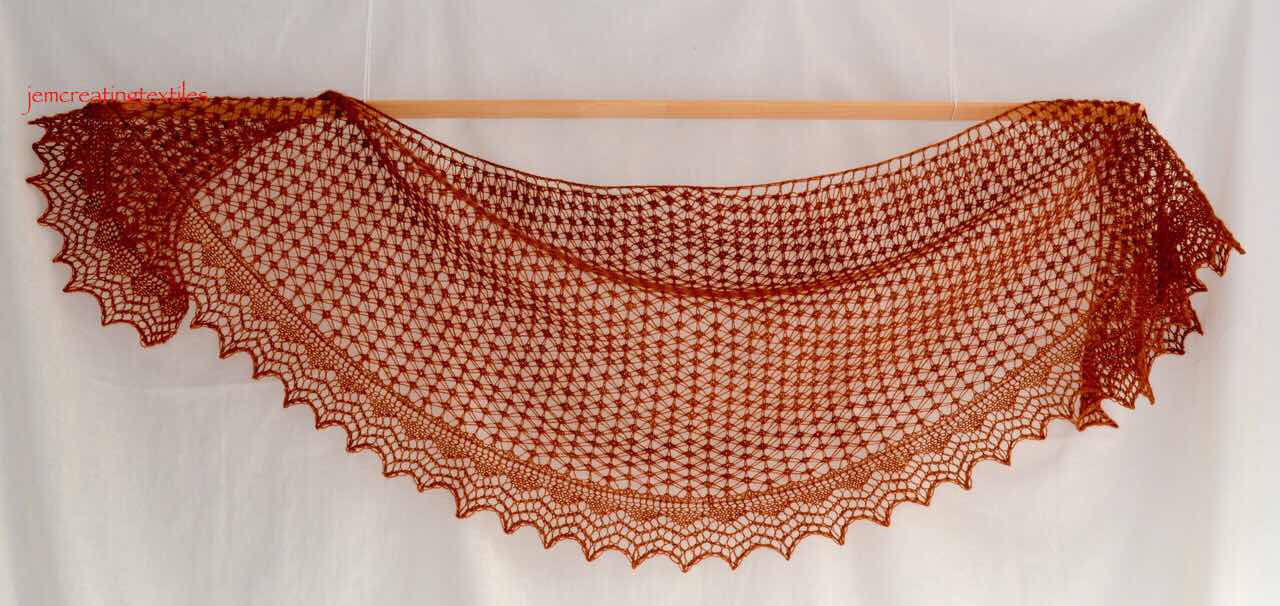
During June / July I was fortunate to attend a series of lace knitting workshops with Elizabeth Williamson, close by in Suffolk. During this time we saw a range of Elizabeth’s shawls, by range I mean in shape, colour, fibre, stitch pattern and challenge. You name it Elizabeth had an example. I fell in love with Elizabeth’s Fladda instantly, I loved the crescent shape and the openness of the design and determined to knit it. 


You will see that I also call it Alchemilla and that will be the name I use for it. Fladda is the name of the pattern, given by Elizabeth, it is a Shetland word. I decided that I would knit the pattern in my own naturally dyed yarn. I have had a couple of Alchemilla plants in pots on my patio and they have flowered profusely this year and given me real joy. 


Alchemilla plant


I also decided that this shawl would be great alongside my Hand Made Harris Tweed Skirt. The Alchemilla dyes  the yarn in a yellow hue and I decide I would do a sample dye using both madder and iron, after dyeing it yellow. 
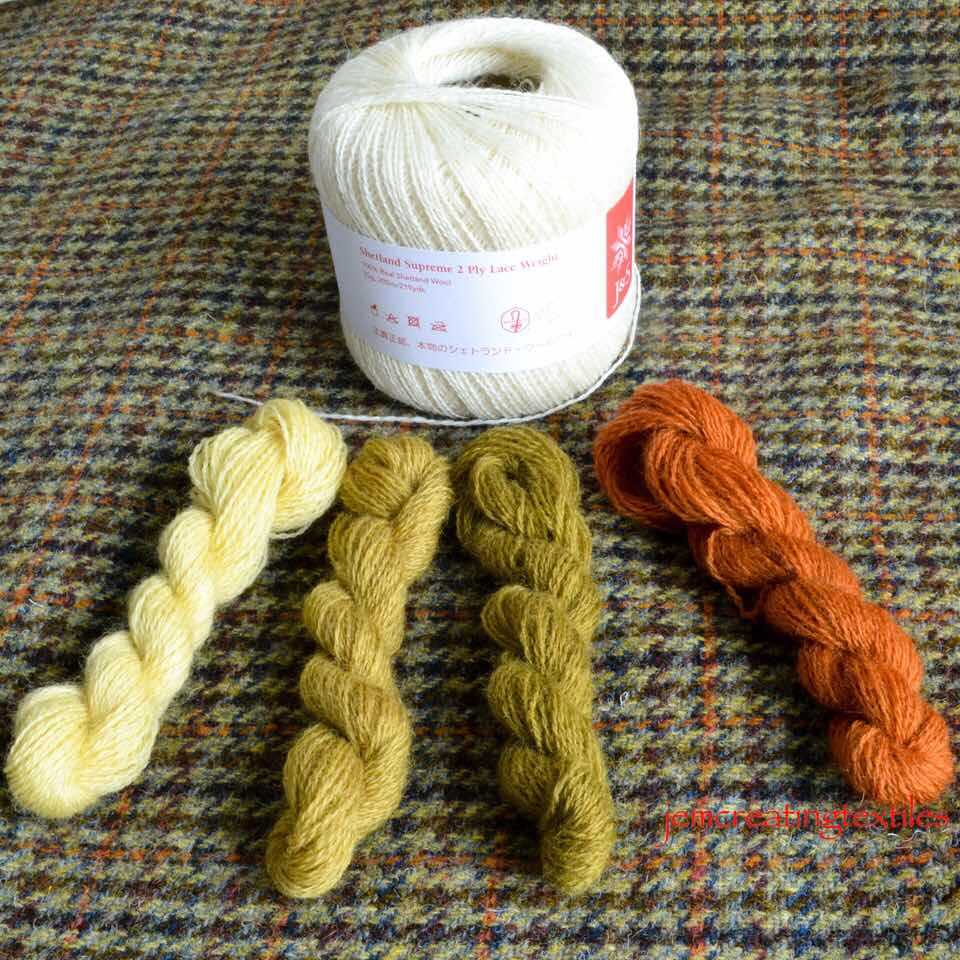


I lived with these skeins on the skirt for some days before deciding to go with the madder modified one. I am delighted with my choice and I am only sorry that there was not enough dye to do the green version as well.

The yarn I used was Jamieson and Smith 2 ply Supreme. It dyed beautifully and was a joy to knit. It is a thicker yarn than the 1ply supreme and 1 ply cobweb that I normally use but my eyes have been opened to the superb lace shawl that can be made with slightly thicker yarn and bigger needles and I will certainly be doing such a design again. (After sampling I choose to use 3.5mm needles.) 


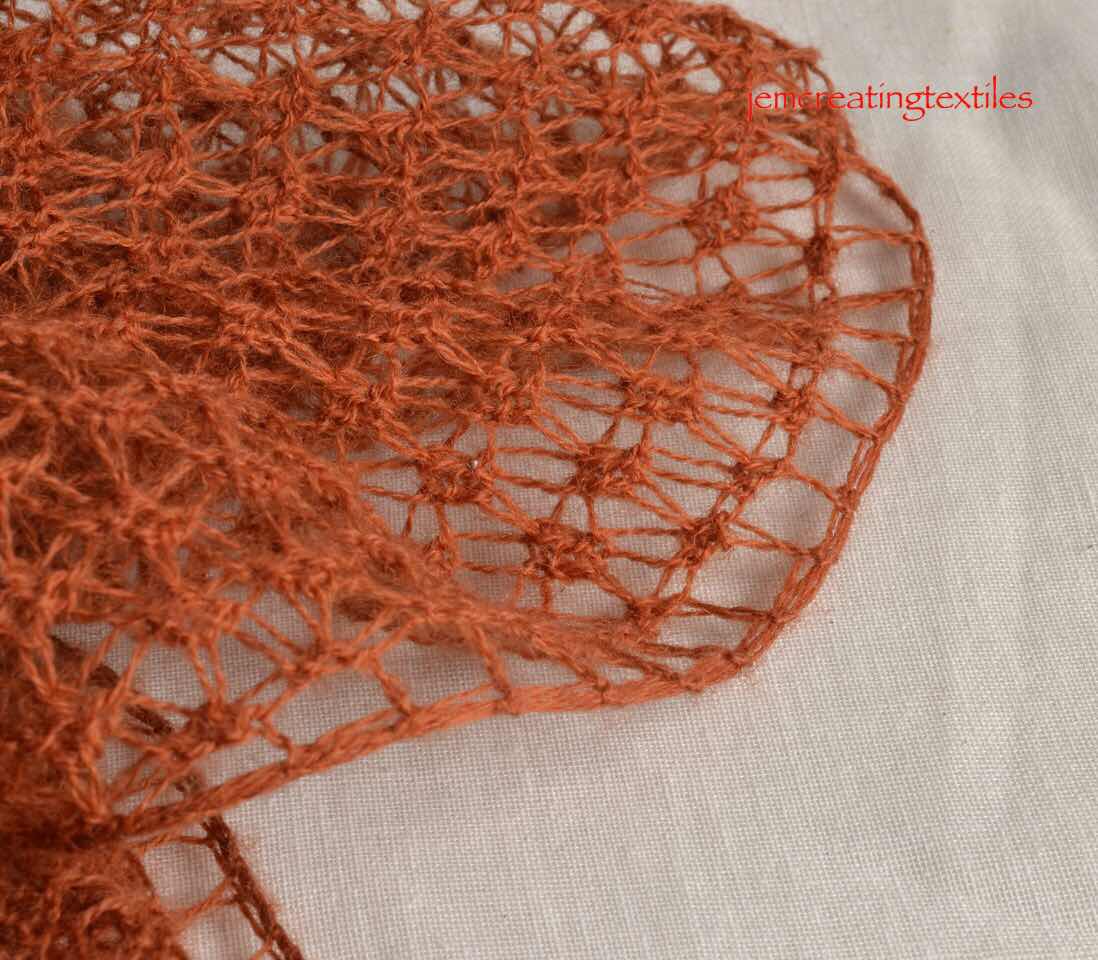
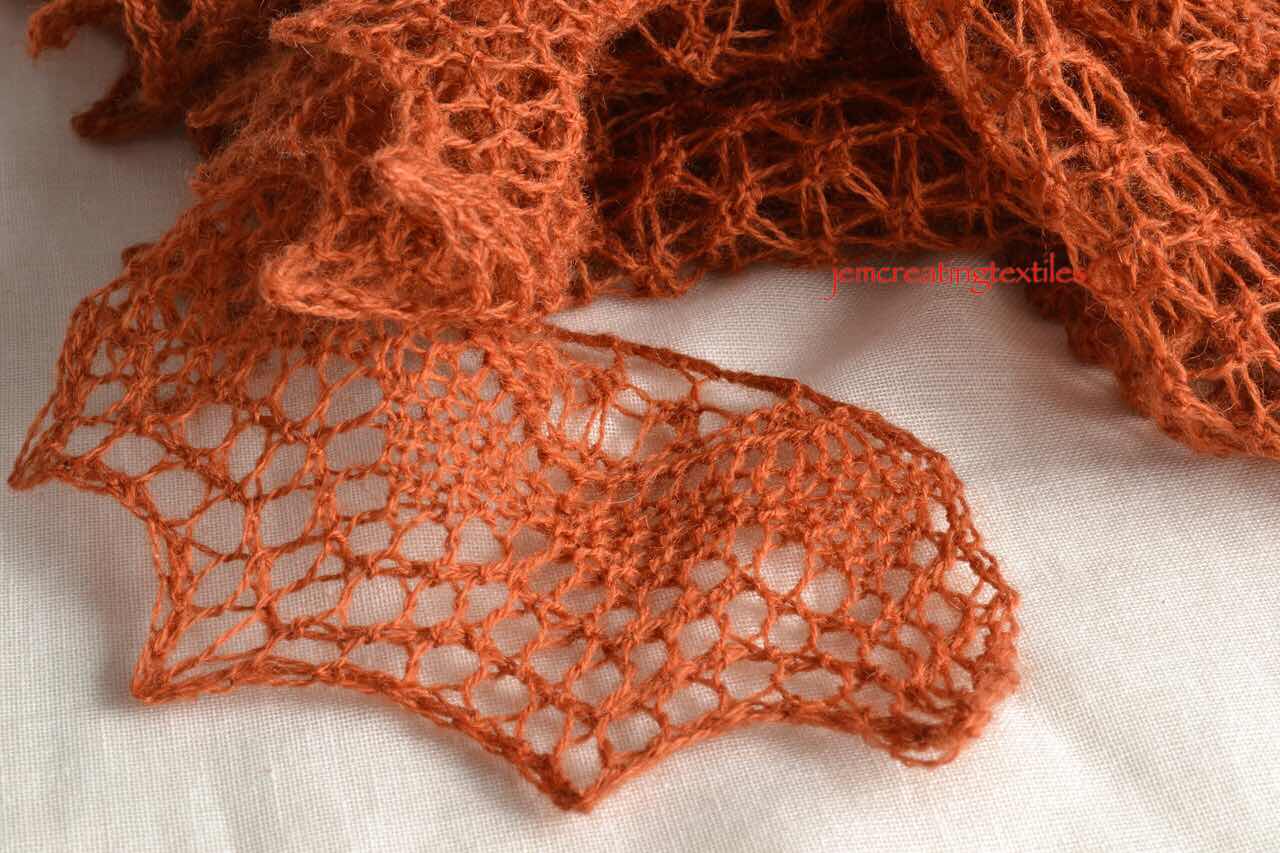
A corner of the crescent


The long edge


Some facts: 

Finished mass : 49g

Knitting Time : 38 hours - added to this should be the checking stage, finishing ends etc and dressing, which is probably another 4 hours. 

shawl being dressed 
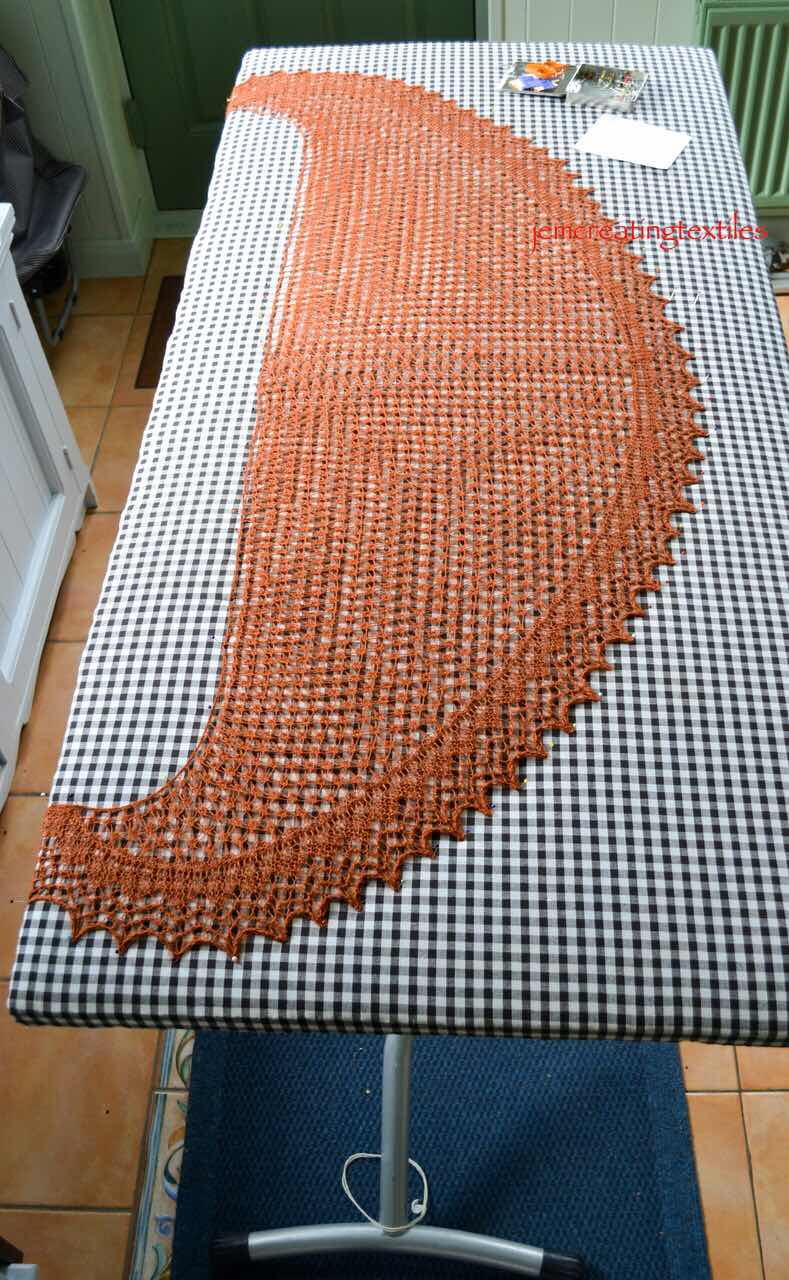


I knitted the shawl using 30 cm dpns, as I use a knitting belt. I have 40 cm needles but never needed to swap even when the number of stitches got large.  

Finished width - 133cm and depth - 44cm centre back


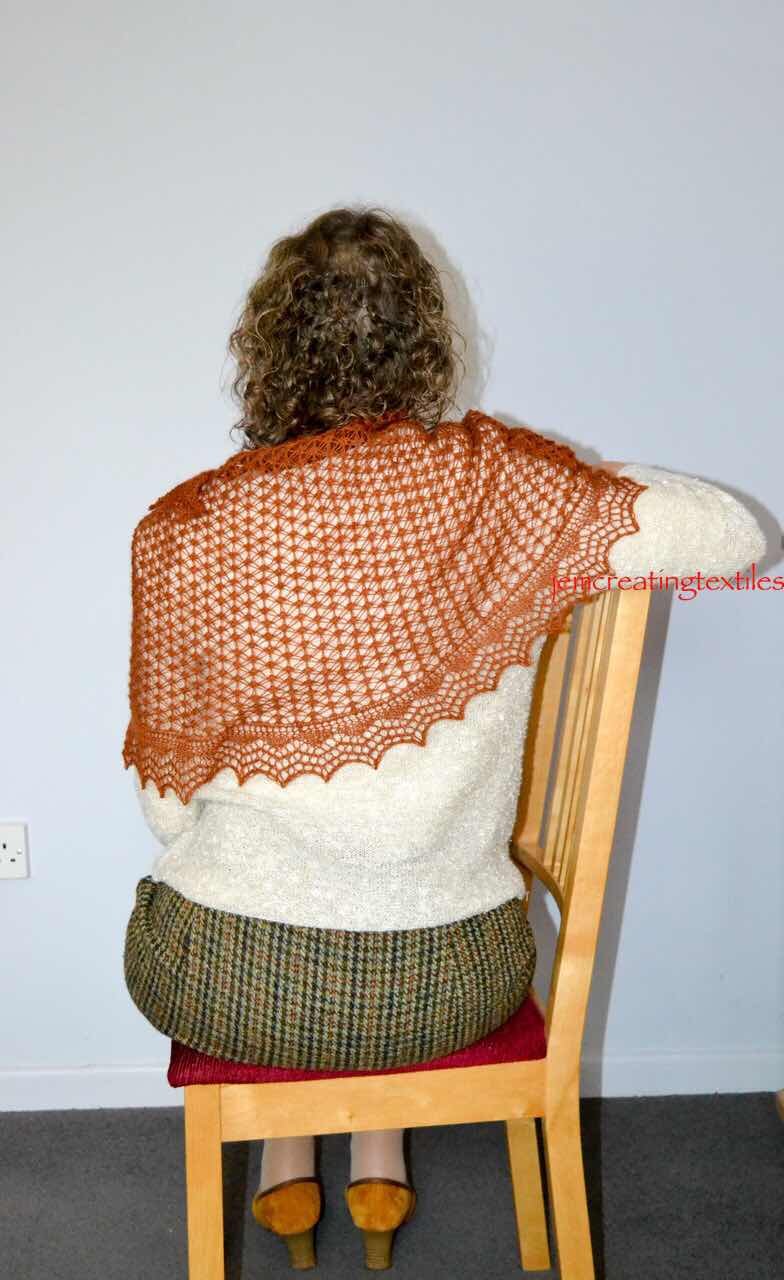
Me, wearing the shawl 


It has been a very wet day and the light was poor! 


You can find Elizabeth’s patterns on Ravelry, under Elizabeth Williamson. Elizabeth was born and brought up in Shetland surrounded by Shetland Knitters. 

Tuesday, 9 March 2021

Lockdown 3: Roadmap (1) Day 2: Dyeing Red


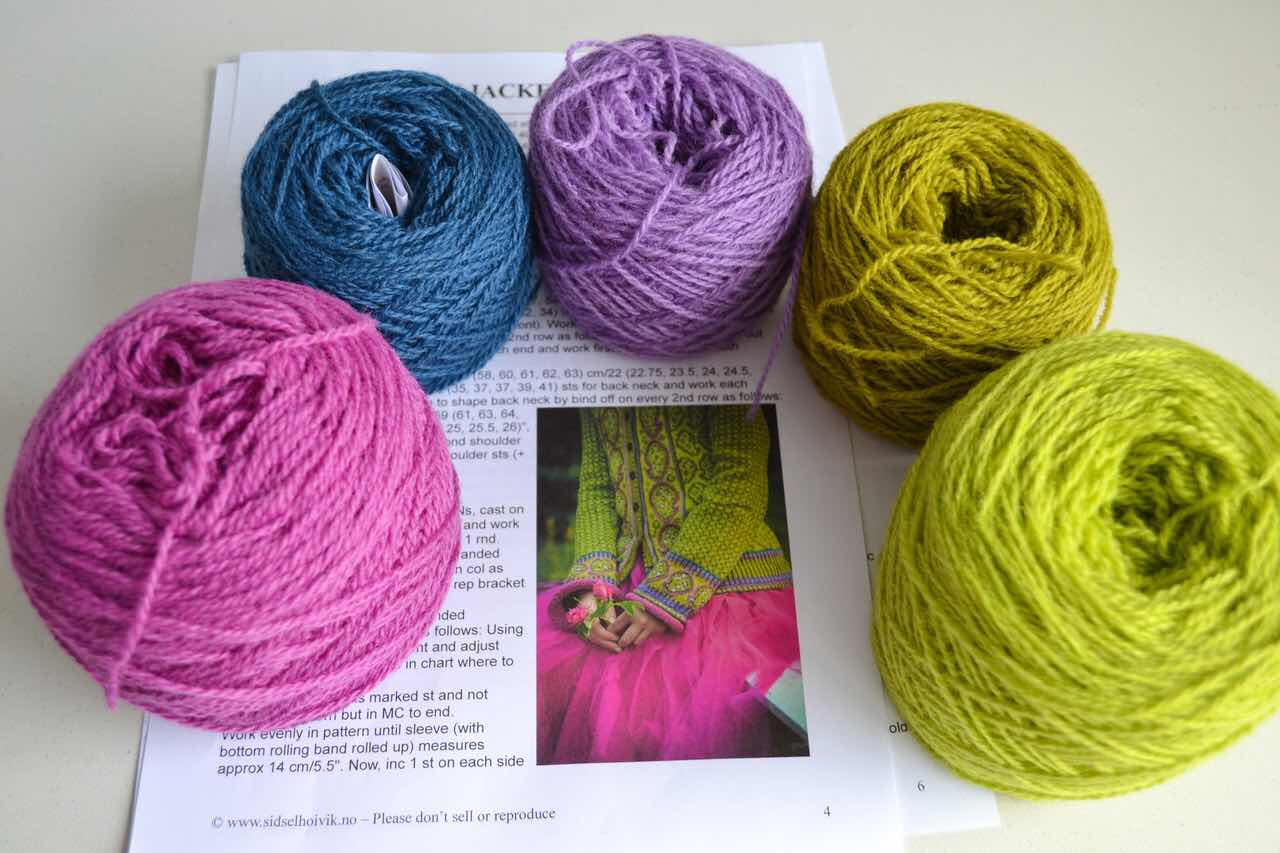
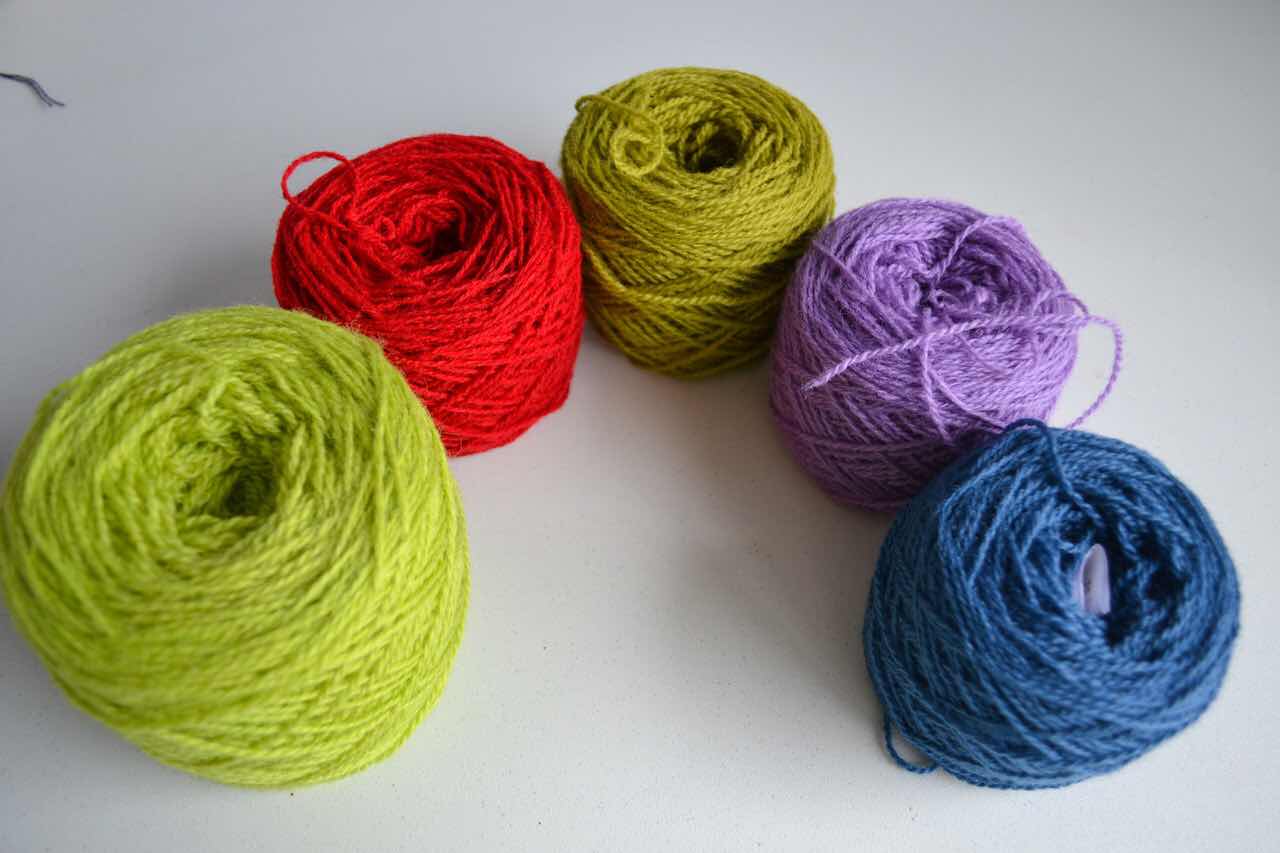
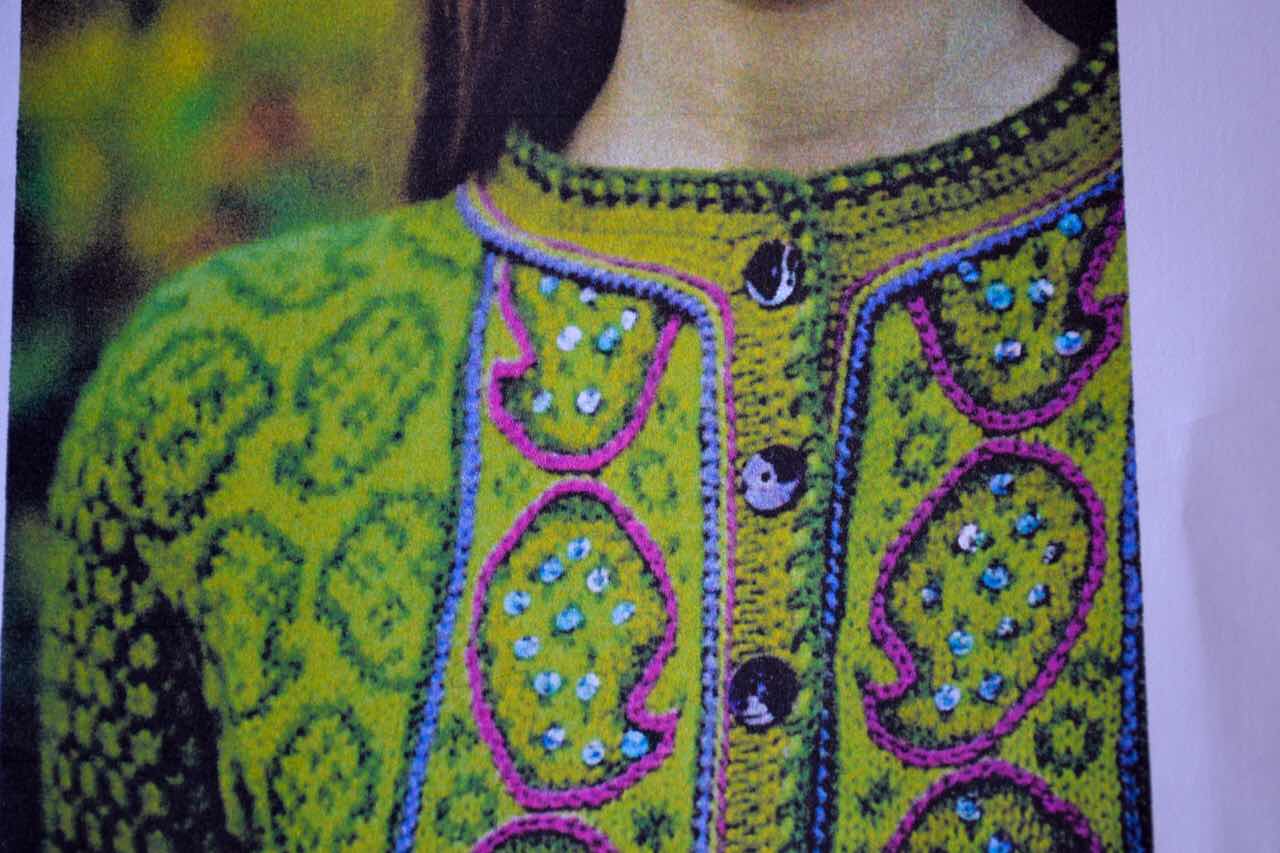
Before Christmas I treated myself to a Knitting Kit, an unusual event for me as I like to design my own garments. However I was attracted by a Norwegian Kit, called Paisley Jacket in Green by Sidsel Høivik, with the Boteh Design. It arrived quickly but I wished to change one of the colours. The pink (called red purple) was not a good match to my colouring or to the clothes I wanted to wear the cardigan with. (2) I am going to swap the one on the left. 


I decided a warm red would go well and from my extensive collection of naturally dyed red skeins (50 or so just in red ) I found a possibility. 


The next challenge was to find some naturally coloured wool that was as near as identical in diameter to the wool in the kit. The wool in the kit is thicker than I would normally use, akin to ‘double knitting’, but I found some Norfolk Horn from Blackbat from a local Norfolk Flock, (Wretton)  that fitted the bill. I had bought 200g so had plenty to do some trials with. I made a couple of sample skeins and dyed these - based on cochineal but with modifications from my historical research. I managed to replicate very closely the colours I had in my stash skein of 4 ply yarn. I was very pleased with this and glad I keep detailed notes.

The sample skeins


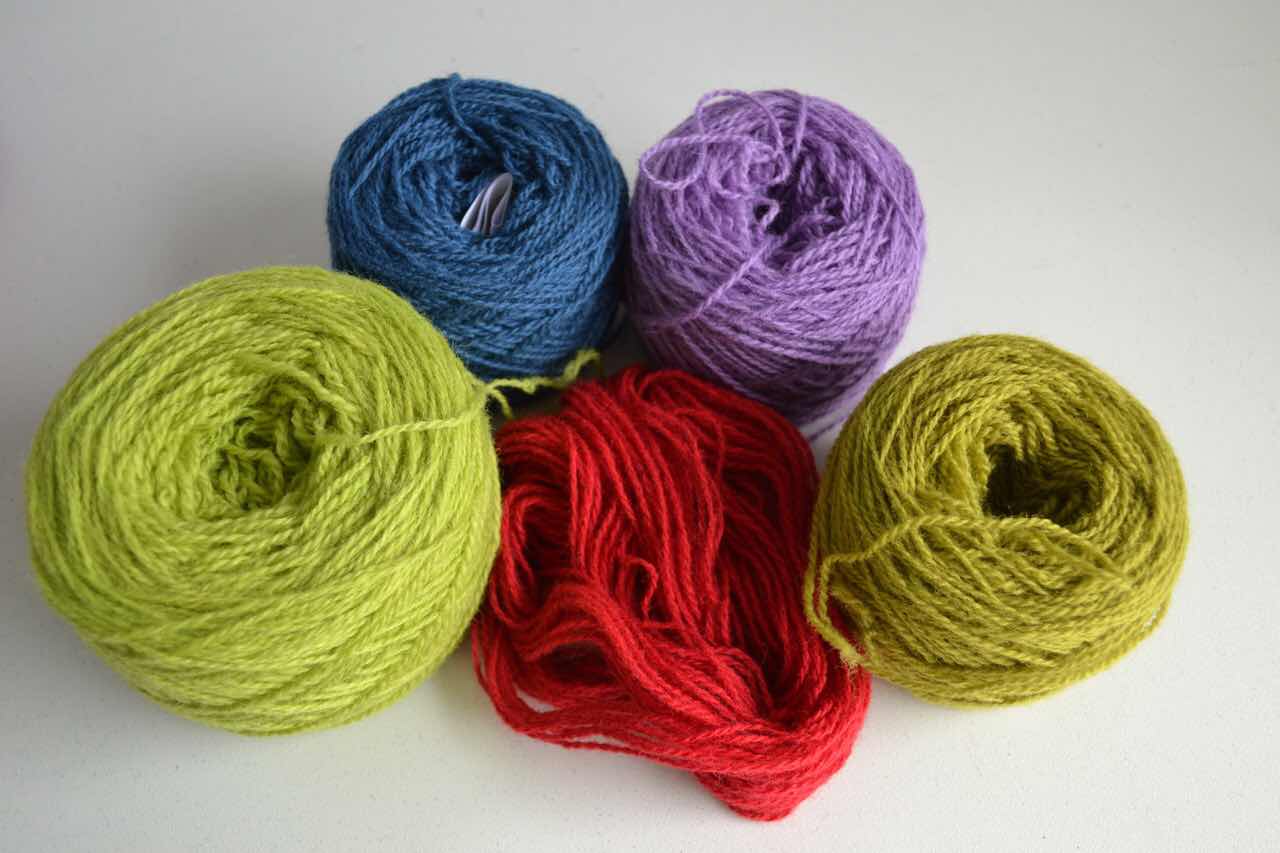
I chose the ‘warmer one’ (on the left) as this to me was the one that fitted my criteria.  

The next challenge was scaling up from dyeing 10g to dyeing 100g. I wanted a consistent colour and, if you are a dyer you will know it is far easier to dye a variegated skein than one that is a solid colour! I thought back to  my many years of learning and teaching science and realised how useful this is to me when dyeing. I split the wool into  two 50 g skeins so the yarn had plenty of room to move at each stage in the dye pans. Very little colour came out in the rinsing stages, another good sign. 

The red I decided on with the rest of the kit


In the meantime I checked through the knitting instructions, making swatches with both the Norwegian wool and the Norfolk Horn wool. I also altered part of the design of the front slightly, involving lots of calculations and drawing on graph paper, (3) and reduced the width of the bottom of the sleeves considerably. 


Finally, now I can start the knitting. 


Notes: 

(1) For those not in England we started Lockdown 3 on 5th January.  On Monday (March 8) we began the path out of lockdown (called Roadmap). So Yesterday children went back to school, you can sit on a park bench and have a coffee with a friend and each care home resident can have a named visitor wearing full PPE. There are gaps between each ‘release’ so later re-openings will be driven by the data. If all is well Step 2 will begin no earlier than 12 April. If you would like to see the full Roadmap this is the link: covid-19-response-spring-2021

(2) I trained as a colour consultant some time ago and the knowledge of this has been invaluable. More information about this on my website at advanced-colour 

(3) The Boteh at the front of the cardigan was being cut off at the neck and this feature attracted  my eye....not in a good way. 

The original


So I have re-charted  this section so the Boteh design should end just below the neckline in my version. 

Fingers crossed!