Showing posts with label fleece. Show all posts

Monday, 1 June 2020

Fine spinning and communicating the details


Last summer I started a natural dyeing project, which I am going to write up when it is finished. My current  Fine Spinning project is an unexpected offshoot of this. During the dyeing, for one aspect I needed to dye some silk and wool in the same dye bath and found a blend of the two fibres advertised. The dyeing is being completed under strictly controlled conditions and each different dye bath takes several hours to complete. The silk and merino I had dyed looked marled and when I viewed it under the microscope I was stunned, the ‘silk’ had not taken up the dye at all. In fact the threads looked too smooth to me to be silk. I contacted the supplier who was reluctant to accept my explanation, until the microscopic results were seen. Costs of the fibre were reimbursed but of course not my time. 

So, after this I repeated the dye bath I had been investigating with some hastily spun silk and some separate merino.  As expected both dyed but given the silk was not spun very evenly (1) the colour varied depending on the diameter of the yarn spun. Hence I decided to take upon myself spinning my own fine yarn, both wool and silk as I could be sure of the provenance of both. 


I love fine spinning, in fact that is why I learnt to spin, and I have been a member of the cobweb and gossamer spinning fb group since it started. It was from this group that I came across the  man who runs ‘Fleece Loved Products’ (2) who was developing a custom bobbin for a spinning wheel particularly for cobweb and gossamer spinning. It was great when I realised that he and his wife (a very fine spinner herself ) were to be at Shetland Wool Week. We had some correspondence before we left and decided to meet up at Ollaberry during the week where I could try one of these custom bobbins on my Joy wheel. 


What a real treat that was, sitting amongst the glitterati of the Shetland Fine Spinning ladies and trying out first of all the special bobbin and its support system on my Ashford Joy wheel and then an Ashford e spinner, with custom modifications too. I made some purchases to aid my fine spinning. 


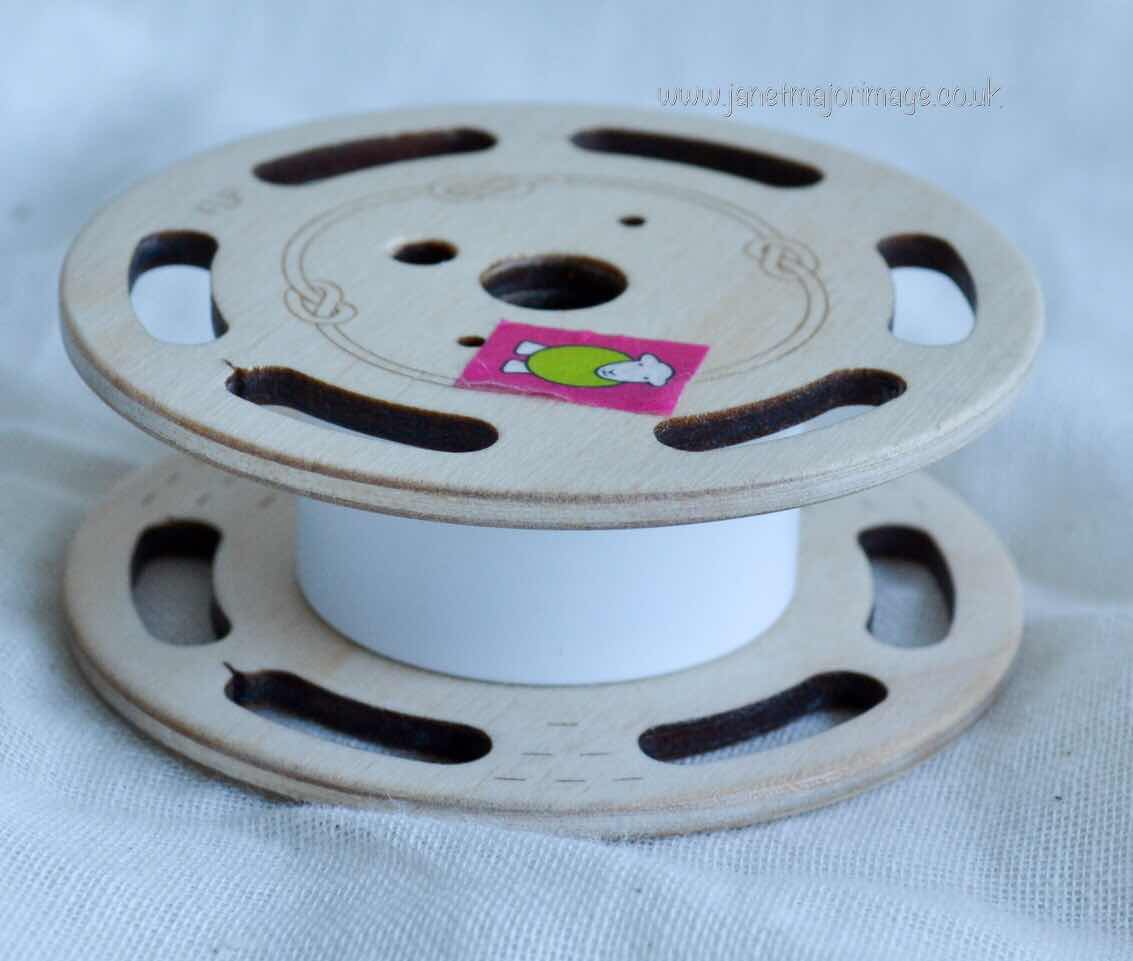
Custom Ollaberry Lace Weight Bobbin, the sheep addition is mine. 


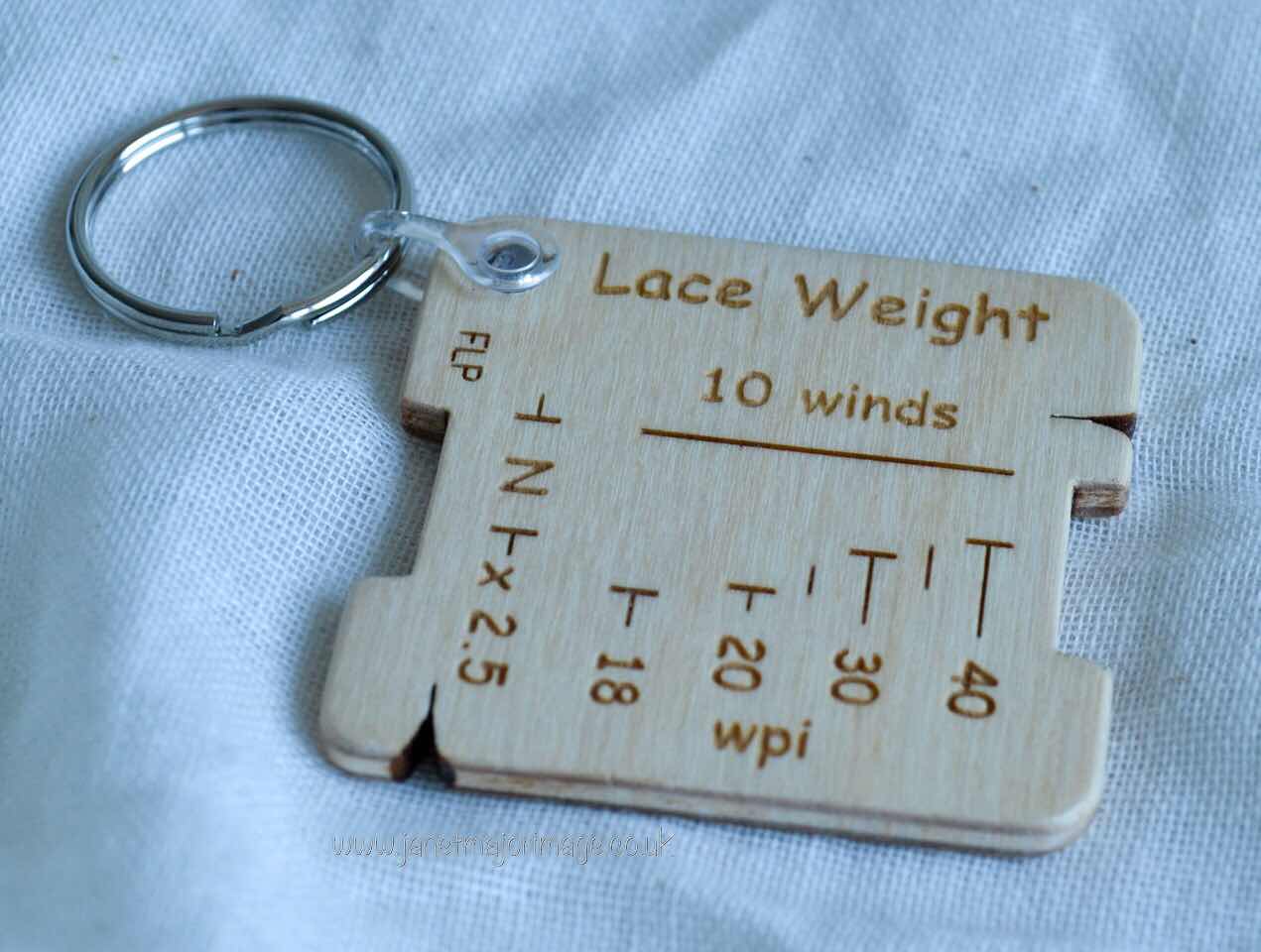
Ollaberry Lace Weight Gauge for Lace and Cobweb Yarns, both sides


So since Shetland Wool  Week I have spun small skeins of fine yarn ready to continue my natural dyeing project. 

So far I have spun: 


Silk

Lincoln Longwool 

Norfolk Horn (3)


I was going to stop there, but sorting out my spinning store I found some cashmere and Cormo so think these will now be added....


During this time I have followed postings in the above mentioned fb page and keep in touch with ‘Fleece Loved Products’ and would dearly love it if we (spinners of fine yarns) could report our spinning results in a standardised format that we all understand. Seeing a fine yarn draped across a coin of another country is not useful to me or I guess most people across the world either. 


Fleece Loved Products have more than risen to this challenge (2) and are developing aids that would really help fine spinners to measure their yarn accurately and also report it in a standard way. 


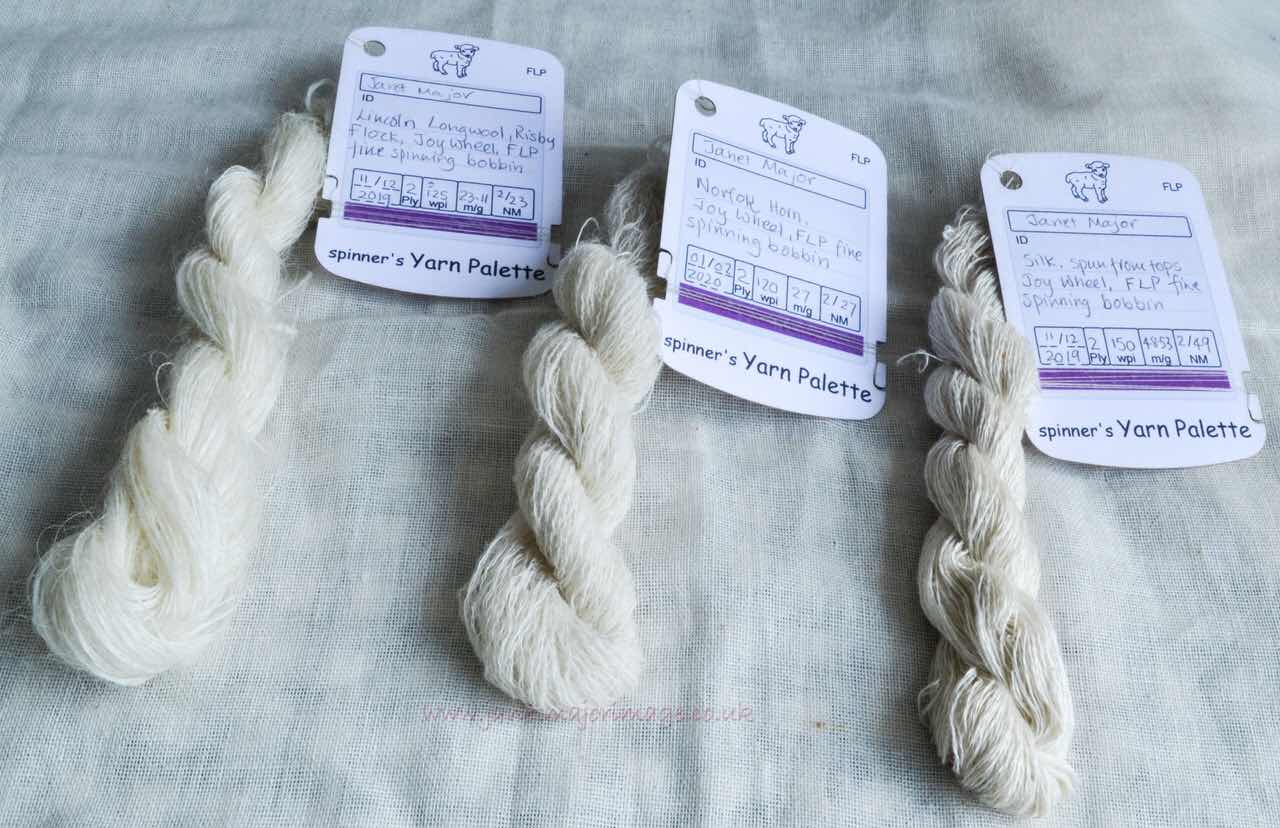
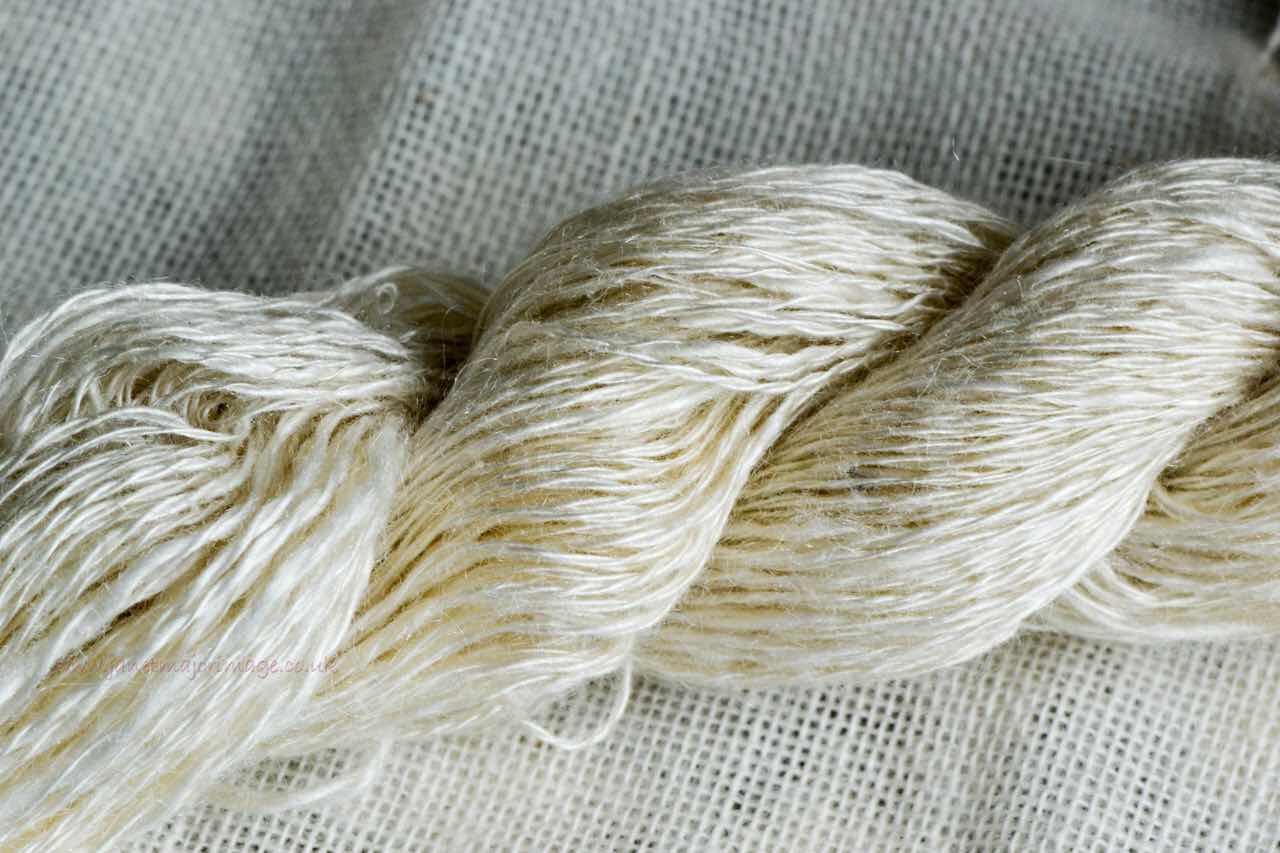
Hence the yarns I have completed follow and I hope provide the information that other fine spinners would want to know. I also have used a microscope and micrometer scale (on a glass slide) to measure the diameter of my yarns and can confirm that the wpi gauge, which is so useful when I spin a fine yarn as I use it, is accurate for diameter when compared with my micrometer measuring. 


You will see I am using a record card called a spinner’s  Yarn Palette. I find it very useful to have all the information attached to the yarn. To me the most useful measure of the gauge of a yarn are m/g and hence the NM number (5). If anyone is interested in trying a sample of this record card in return for some useful feedback I can make a limited number of sets available, just let me know. 


All 3 yarns and their details 


Lincoln Longwool macro
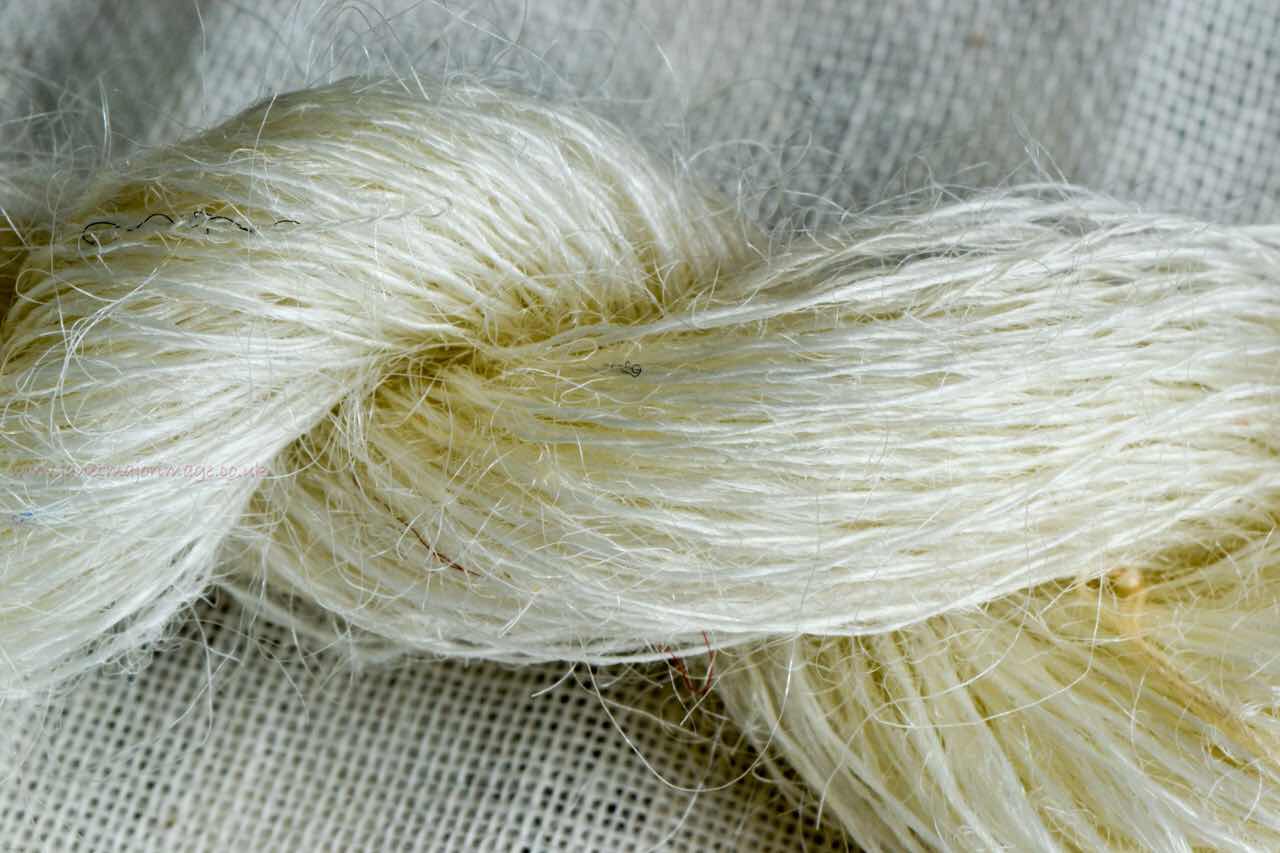


Norfolk Horn macro
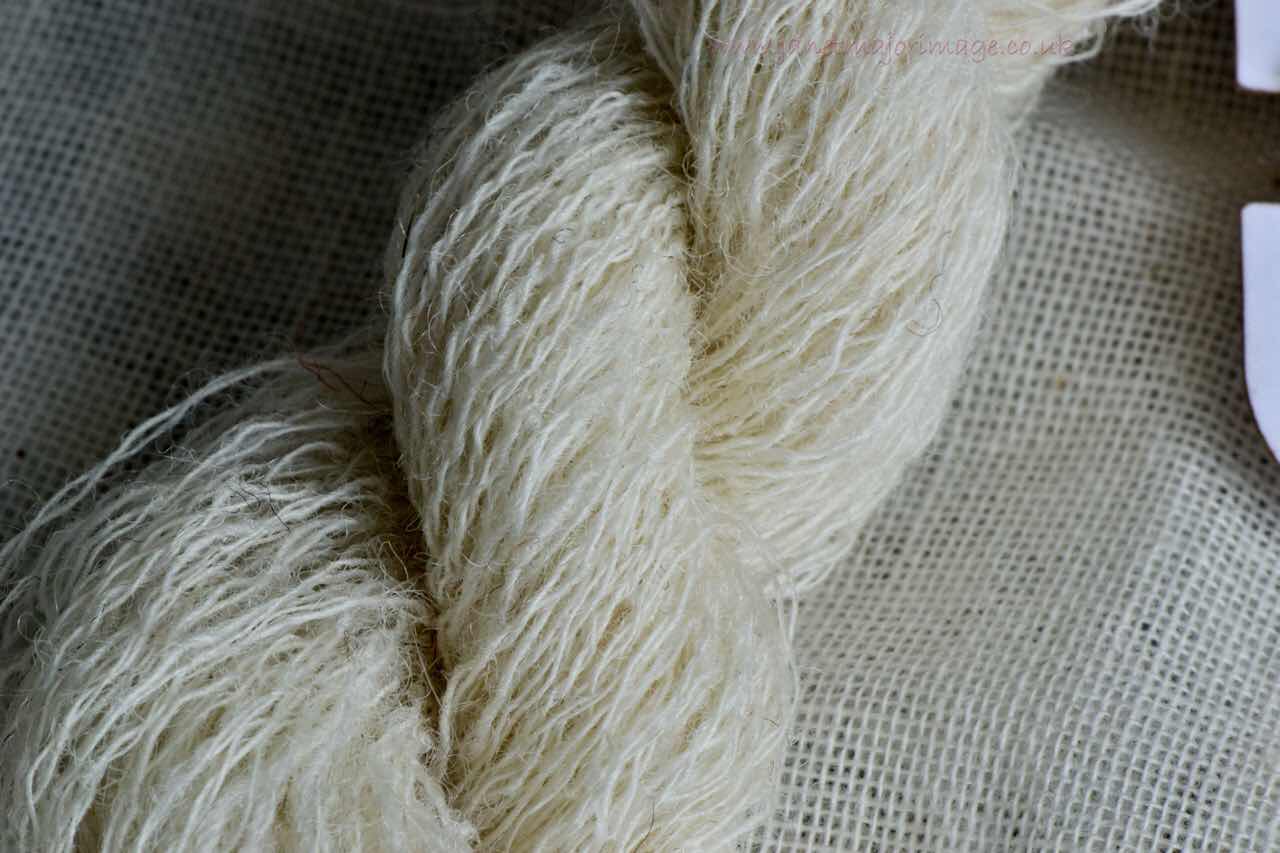


Silk macro 


I am not interested  in entering the Bothwell  Spinin ‘The Longest  Thread Competition’   but others might be and I give a link below (5)


I have just got joyfully sidetracked trying to obtain some fine silk and wool yarns that I can use in my natural dyeing project! However, spinning these  different yarns and comparing them has given more questions for me to investigate later!


Notes:

  1. The thicker yarn gave a lighter colour. 
  2. Fleece Loved Products can be contacted at fleecelovedproducts@gmail.com and their spinning products are stocked and normally available from Jellybeans Yarns on Etsy or via the Beaker Button website
  3. Norfolk Horn yarn is local to me and an historically interesting rare breed fleece. Another post, at least, is needed to discuss the historical importance of the East Anglian Textile industry. This resulted in Norwich being the second city of the land and to the wealth of the region. The breed virtually became extinct and rose from the ashes so to speak by a breeding programme that led to the set up of the  Rare Breed Survival Trust. There are theories and myths about when the breed arrived in this country and much work has been done by specialists in archeological textiles detailing what is actually known.  One excellent more general book about East Anglian Sheep Breeds is Black Faces by Peter Wade-Martins. 
  4. The NM number might look something like this NM 1/49 meaning there are 49 metres per g in the singles, if it is 2/49 it means the yarn has been plyed. Jamieson’s and Smith use this method with their cobweb yarn. I feel it is a good system, one instantly knows the fineness of the singles and hence if it is singles in the photo or plyed. There is an additional Card in with the spinner’s  Yarn Palette which explains and takes you through this calculation. 
  5. The Bothwell  Spinin ‘The Longest Thread Competition  https://bothwellspinin.com.au/the-longest-thread-competition


Thursday, 17 November 2016

Shetland 2016: Day seventeen Flock sale, Photography class and Anne Cleeves


Sat 1 Oct : Wool Week Day Eight

A glorious morning, very very still with wonderful colours from the sunrise.
 

Today there was some sadness as I had my last class but one I was really looking forward to - Photography  ( The Perfect Picture) with well known Shetland photographer Austin Taylor.(1)  But before that we were off to to the flock sale. Last time I went to the Maker's Market on Saturday but this year I wanted to experience the flock sale. This is held at the auction market to the North of Lerwick and Michael had already been to see where it was. On the way to the ring where the judging was taking place we passed  some fleece with their rosettes. Walking in the ring area brought back memories of going to Norwich  market with my father. Lots of wool week hats were visible. We sat and watched some judging, very little was said but lots of observation and movement of sheep took place to get the final order. 
 
The fleece had been judged the previous evening and these  were the ones in the adjacent room. How could I not buy one? What would I feel like if I went home having had the chance to buy a first class fleece as judged at the flock sale? The one I really liked even came from Aithsvoe where we had stayed all week. So after a discussion with Margaret who was managing the selling of  the fleece and I had chatted to earlier in the week,  I decided on a white one with superb crimp. This would be great for spinning fine lace yarn and / or dyeing.  So lovely to get a copy of the judging criteria for the fleece and a photo of the Trophy  accompanying it too. This felt very special. 
 

Then on to Hay's Dock for a leisurely coffee and to give in my square for the blanket. Mona and her helper were still stitching  them together and I had a lovely chat to them. Mona  liked the 'crofthooses'  that I had incorporated into the square and I loved seeing the blankets that were already made up.... such a variety of squares. (Post of 16 Oct 16 shows my square. ) 

So back down to Hoswick and the last class of the week. I was surprised there were only 4 of us, but Austin had  run the  same class in the morning! It was also interesting that I was the only visitor to Shetland attending. I am keen on photography and when we lived in Alsager I had attended a U3A group on Photoshop that had taken my photography to a new level. I still had lots of questions, realising that photography involving textiles is specialist - trying to show the texture and colours accurately in particular. Once again  this was a well prepared course and Austin was very generous in sharing his extensive expertise. Even though I have had my camera several years I am still learning how to get more from it! We looked at and tried out a simple studio setup and it was interesting how minor adjustments could make a lot of difference. Again more to work on when I got home! Another great course. 
Image
Sara, also on the course, contributed her hand knit shawl for us to photograph
 

But the day had not ended. We had noticed that Anne Cleeves was launching  her latest book, Cold Earth, at Mareel in the evening, so we set off to Hay's Dock Restaurant and for our last meal there. Fortunately we had booked  as they were completely booked! 

Lots of wool weekers were in the audience at Mareel and many going home tomorrow so fond farewells were said. The evening was brilliant, hearing not only from Anne, but also from the Emeritus Professor of Forensic Pathology , Dr James Grieve and Davie Gardner - commonly called Shetland's Mr Fixit for the TV series Shetland based on the books. Another special event. 
Lerwick Harbour  as we left Mareel
 

So I went to bed exhausted  and hoping for a bit of a rest in the morning before the Shetland Guild of Weavers, Spinners, Dyers and Knitters Sunday Tea which I was really looking forward to, there would be stunning work on display. 

1 See more of Austin's work at http://www.austintaylorphotography.com
 

Saturday, 29 August 2015

Day 20 Creativity – Fleece: 19 types and counting.......


Thursday was the monthly meeting of Diss Guild of Weavers, Spinners and Dyers. We had a very interesting talk about fleece- ranging from the different groups of fleece, differences between fleece of the same breed, differences between areas of one  fleece - in fact anything connected with fleece. Our Speaker (Maggie Hunt) brought her Fleece files with her where she has recorded details of the breed , with examples of the fleece and sample skeins and knitting.

This got me thinking - I keep an accurate Dyeing record in files , but not of the fleece I spin. So I think I will start doing this !
My two favourite books about fleece. Other useful sources of information are the Wool Marketing Board and the individual breed societies.

I have listed below the fleece I have spun or that are in my store to spin. (Brackets mean I have the skein, or knitted item but no example of the fleece.)


Types of Fleece
Pure Bred:
Bleu du Maine
Cormo
(Hebridean)
(Icelandic)
Jacob
Manx Loughtan
Merino
Norfolk Horn
North Ronaldsay
Shetland
Soay
Suffolk
(Swaledale)
Wensleydale

Crosses:
Cheviot x Shetland
Corriedale x Shetland
Shetland x Bluefaced Leicester
Swaledale x Bluefaced Leicester
Teeswater x Bluefaced Leicester
(19)

Other animal Fibres - only spun skeins of these
Alpaca
Angora
Camel
Cashmere
Goat
Mohair
Possum
Yak
(8)

I was surprised the list came to 19 different fleece, including the cross bred ones. But there is a problem I understand there are 60 pure bred or so types in this country - more than any other in the world. How can I find time to spin the ones I have got let alone the ones I don't have yet?

My favourite of course is Shetland and I have this fleece type in different colours and different grades! However, Jacob is a close second and Norfolk Horn which I have just discovered is right up there with these.

Thursday, 20 August 2015

Day 16 Creativity - Storing Fleece.

- apologies for the break, my body decided I 'needed' a migraine....

What do you think is the best way to store fleece?
I like to store mine in pillowcases - or cotton bags that I have made to simulate pillowcases.
I then do a cedarwood join in the neck of the bag.
By this I mean I saturate a cedarwood disc in cedarwood oil and then make a foil container for it.

I wrap foil around the disc leaving a little finger sized tube above and below to allow the aroma to escape. I then tie this in the neck of the pillowcase, tieing below and above the cedar wood bridge. I believe this helps deter any moth thinking of getting in through the neck of the pillowcase!

Ideally I renew the cedar oil every 6 months!!! I have used this method for some time and not had a moth problem yet, even though I have kept fleece for a long time, 14 years or so.  (Many fingers and toes crossed at this point!)

Storing fleece washed or unwashed, I do both and will explain why in another post.

I'd be interested in other peoples ways of storing fleece.....


Monday, 10 August 2015

Day 9 Creativity - Inside my Fleece Store


Since moving we have replaced an old shed near the house with a new 'workshop', the main aim of this to make a fleece store. Any other textile related things that fit in will be a bonus.

Outside with dyeing paraphernalia ready for more dyeing  
 
Difficult to get a good inside view but this is it.


My aim is that my entire fleece collection fits on these two shelves, lovingly (?!) made by DH.
An impressive number of fleeces, many which are rare breed. Ideally I like to store the fleece in old pillowcases, and have a method for treating the opening so that it is as moth unfriendly as possible. I store fleece washed and 'as they come' and my thoughts on which is best have changed over the years but more on that later possibly. However, I never have enough bags for my fleece. You will have guessed why!

But I feel as if I have just got a free gift to help. We inherited 2 pairs of very heavy navy curtains in the room which is to be the sewing room. I had thought to give them to the Heart Foundation (my chosen charity) but they are very badly faded at the front edges. This is because one window in the room gets glorious morning sun and the other one gets glorious afternoon and evening sun. It is a super light room. I hate to seem to waste things. On looking at the curtains the linings looked very good, nice cream cotton and yes you've guessed it - just right for more fleece bags! Repurposing in Action.

Saturday, 8 February 2014

Shetland fleece washed and unwashed


This is a comparison of Shetland fleece washed by my version of the fermented suint method. I am delighted with how it has turned out.


the unwashed version, as  shown ( and discussed) on Sept 1st 2013!
Quite a striking difference!

I used a separate bath for the Shetland and the Jacob fleece and washed sections of each fleece at a time to make the process manageable.

Washing Fleece My Fermented Suint Method

For those that have been following this you will know that I first started writing about this in September when I had got round to washing some fleece. I then got distracted and never actually described what I had done. So here goes – but remember I did do this in September, it was warmer and as it must involve a chemical reaction it will be a lot slower now. However, come late February /early March I am looking forward to setting this up again ( as I have been really lucky to have been given a super Jacob fleece!)

Basically the suint (sweat from the sheep) and the lanolin in the fleece along with rainwater makes ‘soap’ so you will not need to add any soap or detergent. It appears that the fleece gets clean on its own. Having tried this on a fairly fresh Shetland fleece and an older Jacob fleece I can say that the method has worked well for me and I will continue to use it in future.

I liked the fact that the rinsed and dried fleece still had some lanolin in it – it did not feel completely dry and lacklustre!

What you need to start:
An outdoor space
Large container with a lid  – I used a large translucent plastic storage box with lid and also a vintage galvanised round bath with lid
Rainwater
Fleece
Container to rinse the fleece in

Desirable:
Watering can for adding the rinse water to the garden
Rubber gloves
Washing machine
Pillowcase
Large net – eg net curtain  eg to go over a triangular washing line / tree for drying the fleece

 How to set the ‘fleece washing bath up’
Add rainwater to the container until it is between half and three quarters full. Add fleece to this , you need to be able to swirl it about so it must not be crammed in too full. I would say to get a good result less rather than more if you are dithering about adding more! The fleece needs to be submerged, so add a bit more water as needed (don’t worry about odd bits that come to the surface). Now you are going to put the lid on and leave it for 7 days. If the sun can get to it so much the better, if it is not sunny but cooler it will take longer than 7 days. You can go and look at it, it will start to smell, the water will go brown and it will get a film on the surface. Look at some of the locks, give them a little rub. You will know when the bath has ‘worked’.


Rinsing
The trick is to keep as much of this wonderful ‘fermented suint bath’ as you can. So I would take out sections of fleece at a time and squeeze them and put them straight away into another container.  YOU ARE GOING TO KEEP THE VERY DIRTY LOOKING WATER TO WASH THE REST OF THE FLEECE. If you have unlimited rainwater use it, however I used tap water for the rinsing and it worked well. I did find that I did 5 /6 rinsings until the rinse water ran clear. I collected all the rinse water and added it to the garden. The plants loved it. So although it seemed arduous at the time it was being as sustainable as possible. At this point I put the fleece in a pillow case and put it in the washing machine for a slow spin ( no rinse just a slow spin). After that I opened up and pegged the net curtain on the washing line and spread the fleece on this – if the weather is not up to that then on a sheet on a spare bit of floor – garage / kitchen ???? will work. It won’t take long to dry but do make sure it is really dry before storing it and again a pillowcase is the ideal storage method- with an accurate label tied on, and the top tied up so no moth can get in.


Back to your ‘Fleece Washing Bath’


You now take the next section of your unwashed fleece and add it to the very dirty and smelly water that you have just taken the fleece out of! Again make sure you have not added so much it is crammed in too tight. Add a bit more rainwater if the level has dropped. I have found that you will only need to leave the fleece in this potent mixture for 48 hours. Then take it out and rinse it as before.  Add more fleece to the even smellier bath and leave that for another 48 hours and so on….

Even though when you take the fleece out of the fermented suint bath it has an odour that you think you won’t be able to get rid of, don’t worry – it will come out in the rinse and the air as it dries and the texture of the washed fleece is, in my opinion, the best I have had from any sort of fleece washing I have done.

When you have finished washing all of the fleece you can put the contents of this washing bath on the garden too – it might be a bit potent – so I would make sure it didn’t go on any plant directly.


Sunday, 1 September 2013

Washing Fleece


It’s been a glorious summer when I ought to have been washing my fleeces for the winter but somehow there have been other things to do.

I have a Shetland fleece that is rather special. I chose it myself from the fleece store at Jamieson and Smith in Lerwick. I have spun some of it ‘in the grease’ to obtain a very fine yarn – in both respects ( more later perhaps)

The Shetland fleece – it does have a lot of lanolin etc in it and looks quite yellow!


However, I have decided that the fleece now needs washing for the winter. My aim is to maintain the crimp and some of the lanolin if possible. On doing some research I found the FSM (fermented suint method). I have not tried this before and decided, after much thinking, to try it with my Shetland fleece – well some of it. So I set up the bath just over a week ago and it seemed to be working well. I have now done lots of rinsing and spun it in the washing machine on a slow spin (in a pillow case to protect it). I am SO pleased with the result so far. The fleece is so white and there is some lanolin still present which should help the fine spinning considerably. I am amazed as I was very sceptical as to whether this would work.

The added advantages of this method are that only rainwater is used (at normal temperature) & it washes itself so to speak. The big disadvantage is the smell – not something to do inside the house!

‘So far, so good’ as the saying goes. So the next batch has gone in today and that should be done in 2 to 3 days, as I have set up the bath. You use the same water and apparently it gets better.

I’m so impressed that I have set up another bath with some of my lovely Jacob fleece from my friend Rebecca W in Norfolk. The fleece is not so oily so it might take longer to get the bath established.


Wednesday, 6 March 2013

Handspun Collar


Continuing to work towards a thicker cowl, this is the ultimate. It is another collar really, but hand knitted as a short scarf.  I saw the pattern on Ravelry and thought it a great idea. It is a sampler of 6 cable patterns and such fun to do. It’s called a cable sampler neck wrap if you look for it. You work seven squares of different patterns with a nice rib border all round. There are instructions to get the buttonhole in the right place too. I decided it was just right for some of white yarn from ‘Elf’ one of my lovely Jacob fleece from m friend Becky in Norfolk.

The finished collar is lovely, and I am going to fix the button is such a way that I can change it easily.

What is amazing is it just looks the wrong shade of cream with me new cream jumper – this (latter) is very bleached and rather than match the two ‘clash’ to my critical eye. I so like the effect with the blue ‘shell’ button that I am thinking about dyeing the entire collar a lighter shade of blue! This looks like a chance to experiment with my acid dyes to get the exact shade I want. What fun.

Friday, 16 November 2012

Shetland Museum once more


Only 2 more days in Shetland so we made the most of it. We left the chalet( reluctantly) and drove into Lerwick. It was a chance to call at the Tourist Office and treat myself to a Sheep poster showing Markings in Shetland Sheep – 63 different pictures of sheep with close ups of their heads.
Then it was on to the museum with the first stop at Hay's Dock coffee shop for what Michael announced was the best warm scone jam & butter he had had in ages. I went on the very informative museum tour after which we met Barbara in the restaurant for a superb lunch. It was great to catch up with Barbara and we hope to meet again next year.
I could write a whole posting (or blog even) about the museum but just look at this for an example of the attention to detail in the restaurant.

Inset into each table in the restaurant is a sample of textile work by a local artist, designer or Shetland College student. This is the work of Elizabeth Johnson who first taught me to spin – apologies for the glare of the sun!

Time was passing so it was a quick trip to Jamieson and Smith for superfine tops - 500g should see me thorough for a few years AND a lovely fleece which I chose myself from the fleece store - so exciting. What a great shop this is.
Then a scenic drive to Eshaness and our last might on Shetland at Braewick campsite with superb views. I am stopping myself getting sad by planning what I can do throughout the year that is Shetland inspired before we return again.

Thursday, 30 August 2012

Extreme Spinning


Tuesday was to be a rest day as we had walked a long way, including a lot of uphill on Monday. We made a quick stop at the extremely well stocked Skibhoul Stores- lots there including a place to get a drink with internet, nice textile items for sale, home baked bread – and for future reference Doves Farm gluten free flour. We tried to boost the local economy by buying some provisions and also souvenirs -  2 beautiful I love Unst porcelain mugs & a very tasteful I love Unst sticker – the latter for the van.

Then it was onto the Keen of Hamer where I spent a very long time photographing flowers with my macro lens – lots of tricky positions due to the usual ‘breeze’. It is such an amazing place – I just love it. After lunch – we went up to Skaw beach, the most northern beach in the country. I decided to spin here so here is a picture! It entertained the other visitors who arrived during our time there – all 4 of them. I was spinning Shetland fleece from Jamieson and Smith into fine yarn for knitting Shetland lace. I am wearing the headband that I treated myself to, yesterday.
 

Friday, 3 June 2011

Preparing the fleece

The fleece is from a local farmer who overwinters the sheep by arrangement with a farmer in the High Peak. The fleece is a Swaledale x Blue faced Leicester cross and it is beautiful. This was washed.
Obtaining the colours
Some of the fleece was mordanted with alum & then dyed to produce the colours for the yarn:
Charcoal grey – this was first dyed with elder and iron as additive which produced a medium olive colour. This was then overdyed with logwood which has produced the colour I am using. (Experimenting went on before this decision!)
Orange – this was obtained by solar dyeing (for a month in my greenhouse) using meadowsweet which I gathered in Cumbria.
Yellow – again this was solar dyed using sorrel seeds from my garden.

Carding
The natural, charcoal grey, orange and yellow fleece was combined on a drum carder by forming a sandwich with the colours as the filling. I estimated the ratio of the colours from my source photo, keeping some of the charcoal grey separate.

The carded batt which I will spin looks like this.