Showing posts with label wool. Show all posts

Tuesday, 22 November 2022

The journey to Shetland Sept 2022


During the early summer we decided that we would go to Shetland in the Autumn. We had missed not going there for Wool Week in either 2020 or 2021. Previous to that we always went before wool week and had time to ourselves and actually wanted more of this again. So I decided I would attend some of wool week but with some provisos because of covid. We were fortunate as neither of us had succumbed to Covid, we were still wearing masks when mixing inside and in general just meeting people outside. I was very uncertain about meeting large numbers in an indoor setting and decided I would not go to any evening lectures, much as I really enjoyed them. We did want to meet friends we had made in Shetland and also friends from around the world. Michael  had an additional booster in 2022 but I did not qualify for this due to my younger (?) age. 


(Those that know me well, are aware that this worked until nearly the end of our time away, when I went down with covid and this is partially why I am so late starting to post this journal. I like many others feel fortunate in that I have only suffered from exhaustion, I am much better but still look forward to the day when I can say I am fully recovered. In my book, life is too short to feel tired from even slight ‘overdoing it’! ) 

As always we would take the motorhome and live in that. So we planned to be away for virtually all of September, a longer trip then we had taken before but we were very much looking forward to it and we made arrangements to meet several friends there  before we left. 


We had put in place watering arrangements for the parched garden and crossed our fingers for rain here when  we were away as everything was parched and we didn’t want watering to be too big a task for our team of 3 who were to keep an eye on things. We had bought labels to put in the ground for plants to be watered but the ground was too hard for them to be used. 


So we left home on September 3rd. This was a Saturday and we had especially chosen to do the main travelling at the weekend when we hoped we would miss most of the lorry traffic! We packed up for a month, the first time we were going to be away for that long. It was our first trip to Shetland since 2019 too, so this had meant many lists! The day of leaving East Anglia was about checking the final list and we were pleased to be off for 10.00. It was very hot and even when we got to our stop for the night just off the A1 by Tuxford it was still 26 outside. 


This was a new campsite to us, convenient for the A1 but tired and a bit dated.  It did have some wonderful large colourful flower pots that I thought I had taken a photo of, but it seems I didn’t. We were going to have some hard landscaping done in the garden when we were back with some more shingle and pots but perhaps these are a little too big. They came up to my armpits! (1)


So on Sunday we got up and hoped our hunch that the A1 and A66 going across the top of the Pennines would be quiet. We knew the trick was to get off early and we managed that. The drive was enjoyable but we noted that everywhere, even up north was brown and dry just as at home. It wasn’t until we got beyond Penrith that fields looked green. Then as we drove into Scotland we saw our first rain for what seemed like an age. We drove on to Hoddam Castle by Ecclesfechan where we like to stay. A very spacious and quiet site. We planned to have a complete rest the next day. We were pacing ourselves and wanted to enjoy the journey as much as we could. 


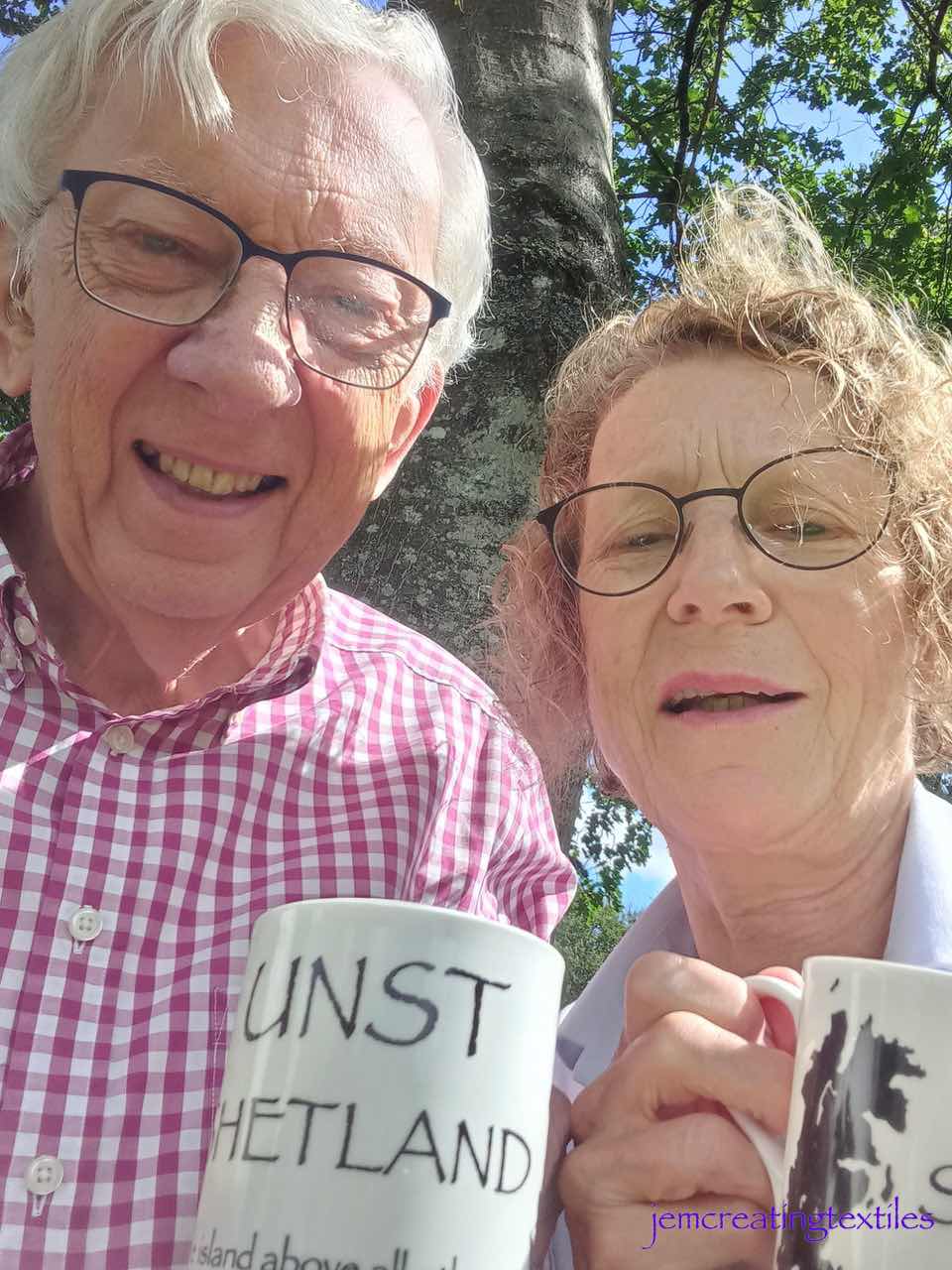
On our day off we had decided to not drive anywhere, the point was to rest. Getting ready for such a big trip always has some stress! I still needed to finish Michael’s modified Wool Week hat so I hoped for time to do that. What we hadn’t envisaged was that we would have extremely heavy rain in the night. This was the first we had seen. We had remarked on how lush everywhere looked and that the summer here north of the border must have been very different from East Anglia, However, the rain cleared up first thing and we had a lovely pottery day and I learnt a new skill, taking a selfie and flipping it so that you can read any writing in the photo! 

So, a quick shot of us, we don’t usually take selfies! 


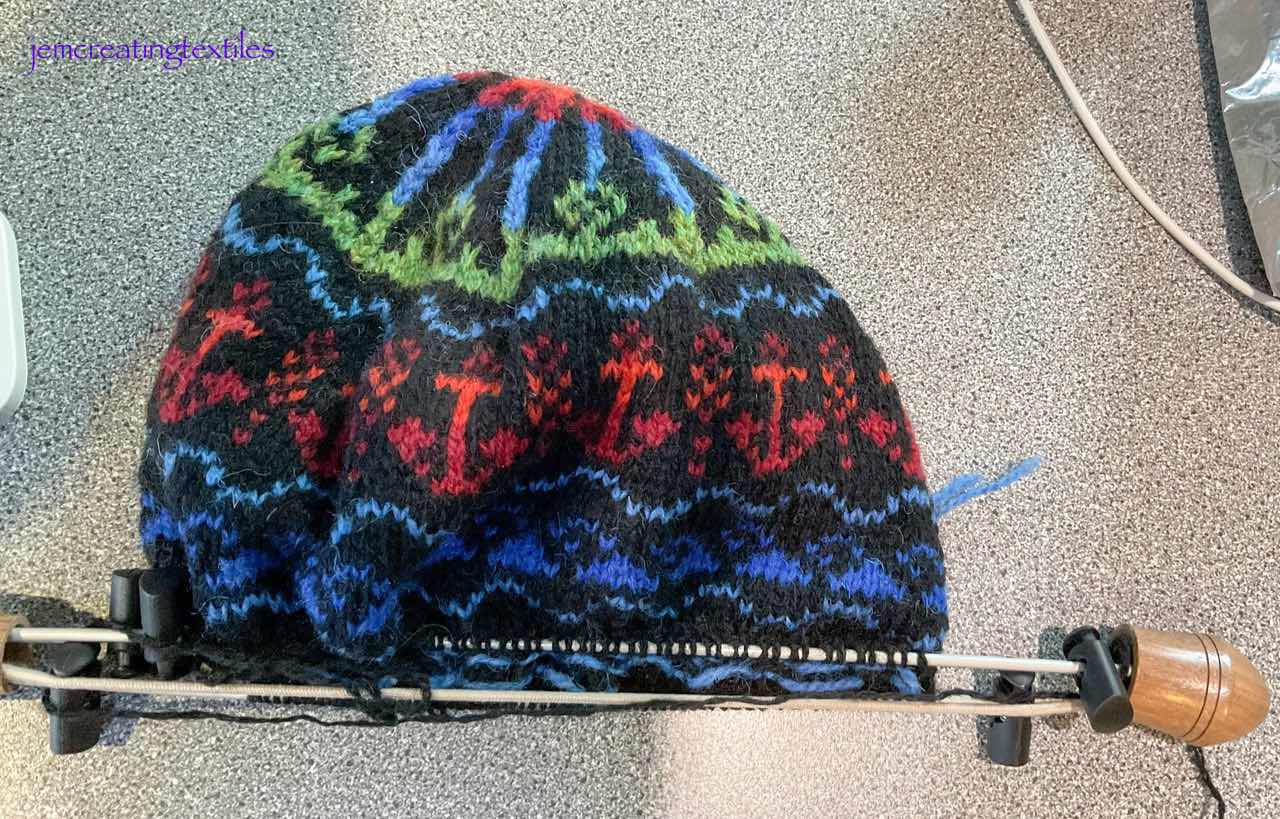
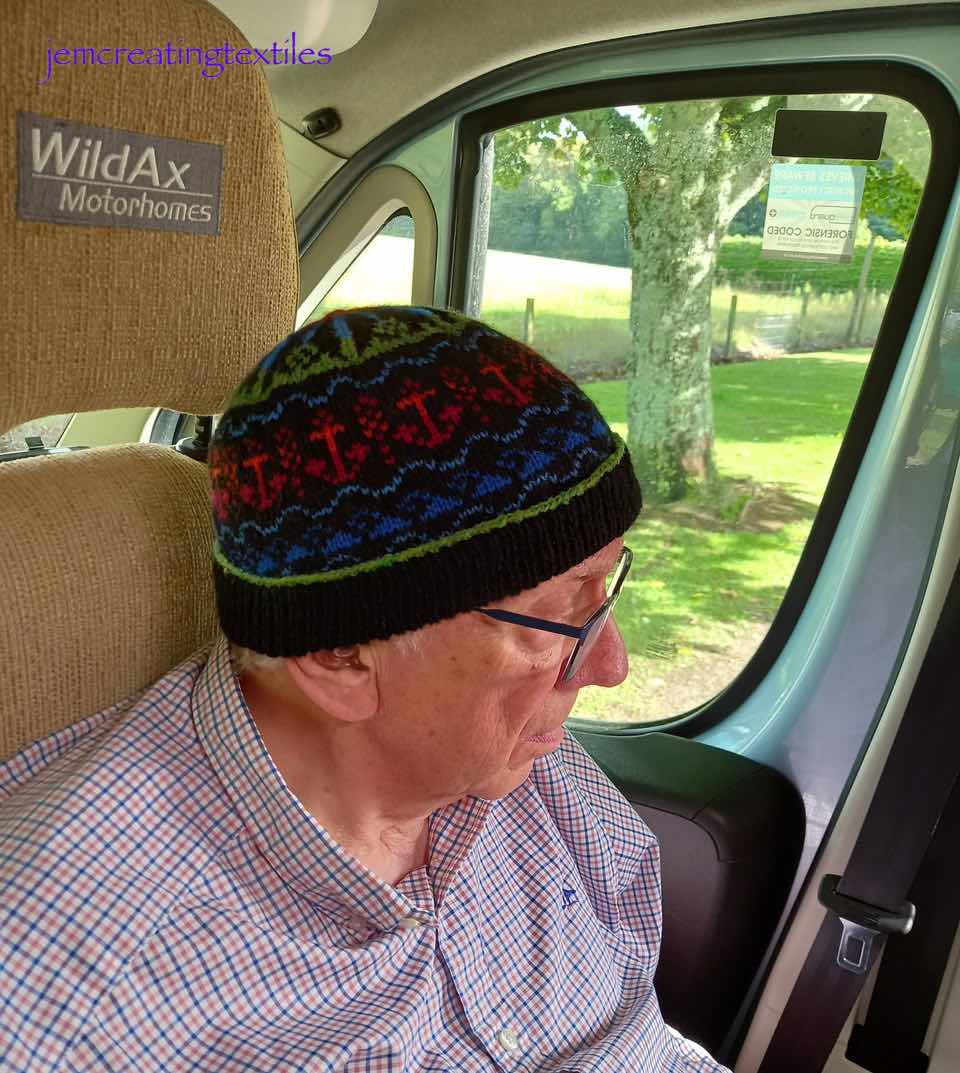
Michael’s hat is basically a shortened 2022 Wool Week hat designed by this year’s patron Linda Shearer from Whalsay. Michael likes  a hat to be close fitting, I also altered the anchor so I could knit the ‘around the head bit’ on the knitting machine. (2) He likes a plain brim….the actual hat had a very attractive chain in the rib. The colours are to match Michael’s padded gilet which is lime green and royal blue and is usually worn daily in Shetland. In the planning I thought there would be too much black so imported some wave type motifs  from a hat designed by Wilma Malcolmson when she was Wool Week patron for the ‘not in person’ Wool Weeks of  2020 and 2021. I have spared you the many photos of the wool wrapping and the sampling before we got to this stage! 


So after Hoddam Castle  there was one more stop and we had chosen to stay at Scone Palace which is actually at Perth Racecourse. We have found it one of  the best kept campsites we know and it did not disappoint this year. Eg there is no grass in the gravel of the hard standing and  everywhere is immaculate, flowers adorn public areas and the staff are very helpful  and friendly. Scotland is always much quieter on the roads and it was a joy to drive the route again. 

The next  day would be a much shorter drive to Aberdeen. As usual we stopped at Glenfiddick garden centre for coffee in the morning. Covid had changed the system for the better and it is now Waitress service. We then drive on to Crathes Castle to get the van ready for the ferry and check we have everything we need in an overnight bag. This we did and I managed to finish Michael’s modified hat. 

However, now being into Sept Crathes Castle was only open at weekends so no tea in the tea shop as usual (3). The  grounds however are beautiful. 

I took this photo a few years ago but it looked just the same this year, such a wonderful reflection. I struggle to find the water level! 
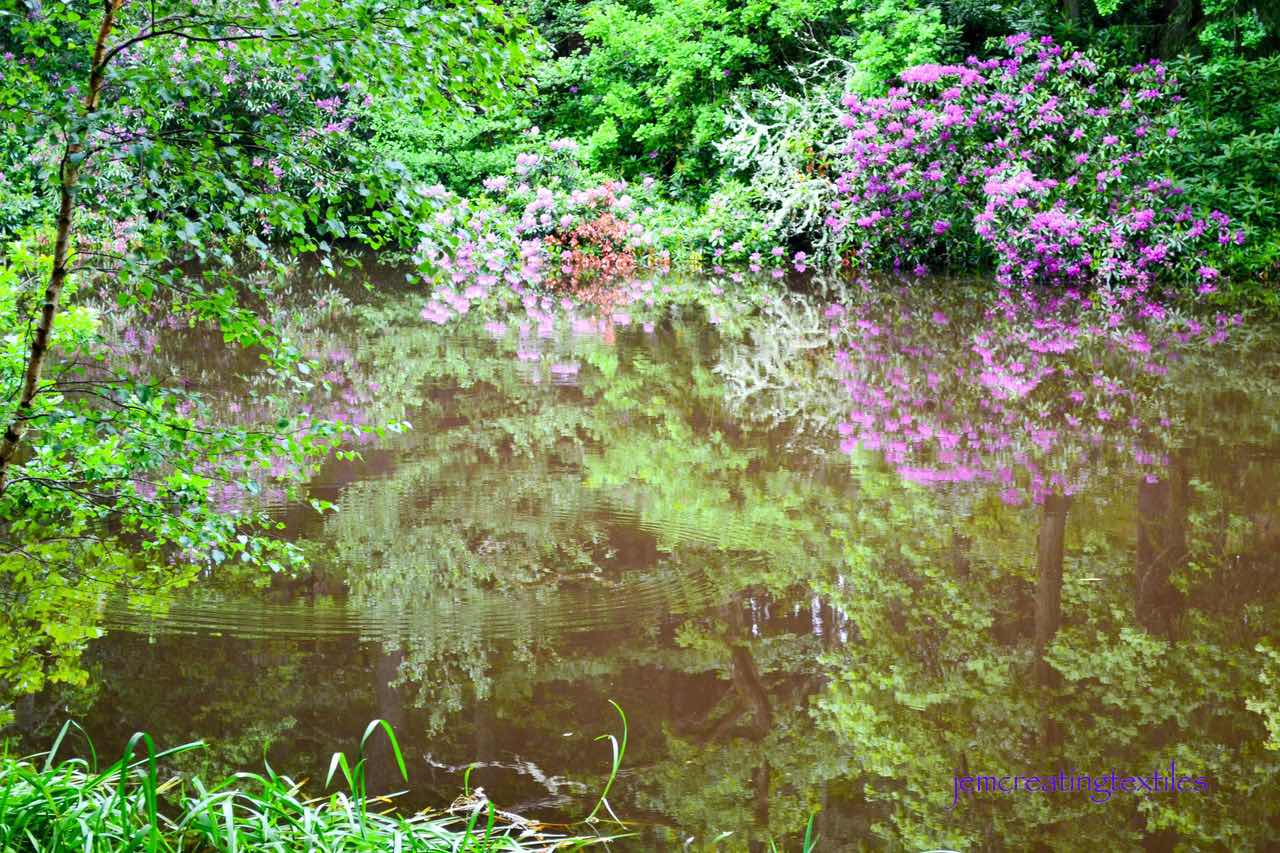


I managed to finish Michael’s hat there (and thus before we got to Shetland) and had to be inventive taking some photos of this. The main reason being the sun was so bright! I have to look hard to remind myself where the water level is. I just love the colours! 

The finished hat


The crown 


…and wearing it 

I suspect the expression is saying, ‘do I have to try this on again’ and a little advert for our much loved motorhome brand! 


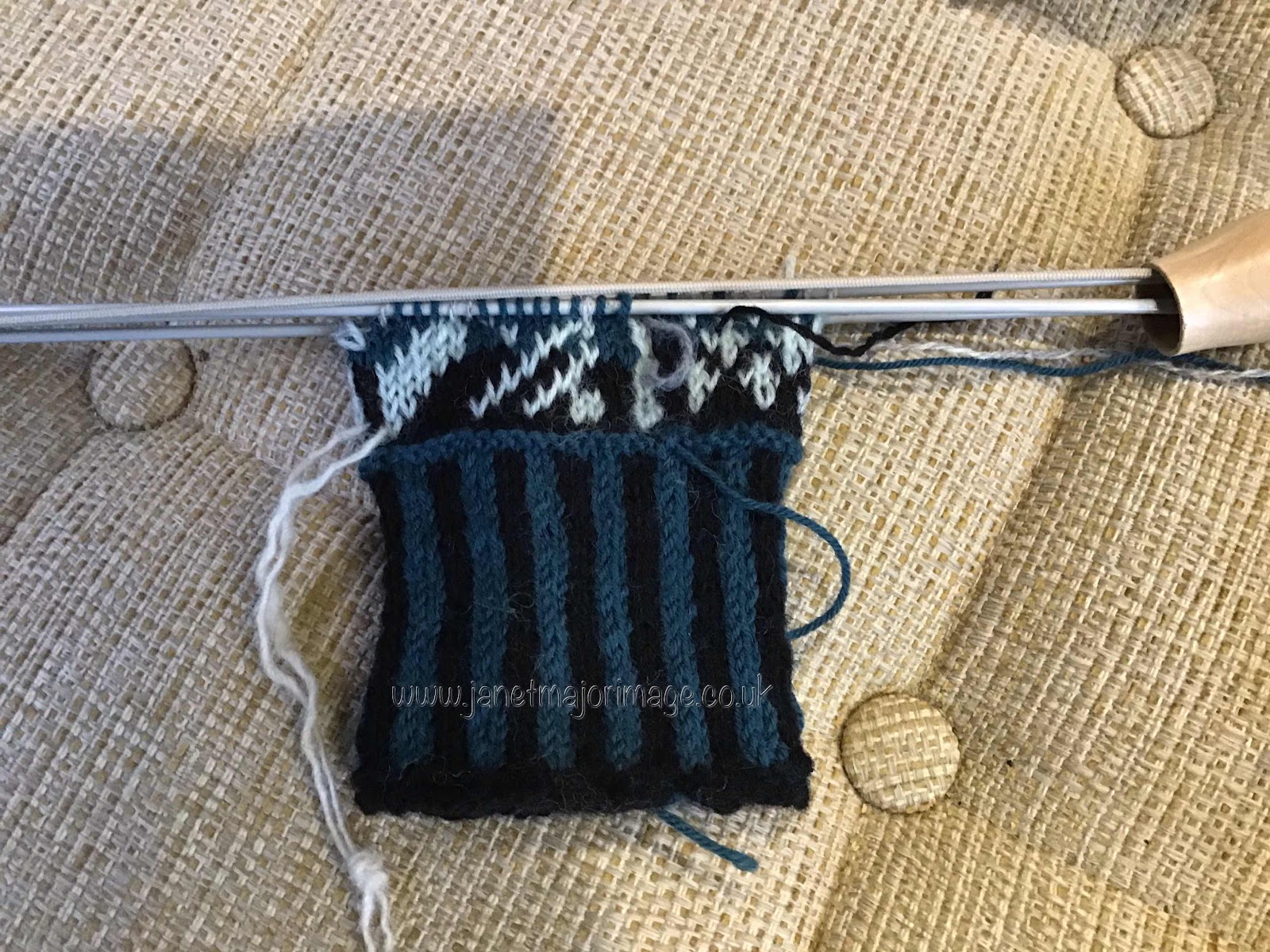
Now I could work on the design that is in my head for another fine lace cowl in cobweb yarn or knit more socks. With me, I had enough yarn to knit a pair from Kate Davies’ book ‘Bluestockings’ for myself and Michael. We both liked the first pattern so these will be pair 3 and 4 from this book and I am using the yarn she recommended (4) 


I usually find someone from Wool Week to talk to in the lounge on the ferry but I was pretty sure I would not know anyone on the ferry this year as we were much earlier in Sept than usual. 

We waited literally hours to get on the boat as more and more freight was loaded, apparently no freight boat was running, not because of the bad weather fortunately. Hence as much freight as possible was being loaded, we were squeezed in and one of the last vehicles on. This would be good news as we would be one of  the first off the next day. 

Unusually I took some photos, I had to buy a new iPad just before we left as my previous one would not hold any charge. I was trying out the improved camera and pleased with the results. We had a nice meal in the lounge and I, for the first time, took some photos of Aberdeen beach from the ferry. Views from the lounge as we had dinner.


All was very calm crossing as we boarded but we were warned it would get fresh and more fresh during the night! 

I was completely wrong about not meeting anyone on the boat, as I sat enjoying my dinner I heard a familiar voice and it was a Wool Week friend, Suzanne from California with her friend! So for us the Shetland Wool Week experience had truly began. 

We slept through any ‘freshness’ ! 


Notes

1.I have now found a firm selling these. Rather out of my price range I think as we would like a few. 

https://bigplantpots.co.uk/products/biggie

2. I mainly use a punchcard machine (I had this from new in about 1976) and it works with a width repeat of 24 sts)

3. We usually cross on the ferry on a Friday night not on Wednesday as this year and see it is only open Thursday to Sunday in winter.

4. Kate Davies website.  https://kddandco.com/  Her books are delightful and far more than just books of patterns. 


Friday, 30 April 2021

The Norwich Red Jacket (part two)


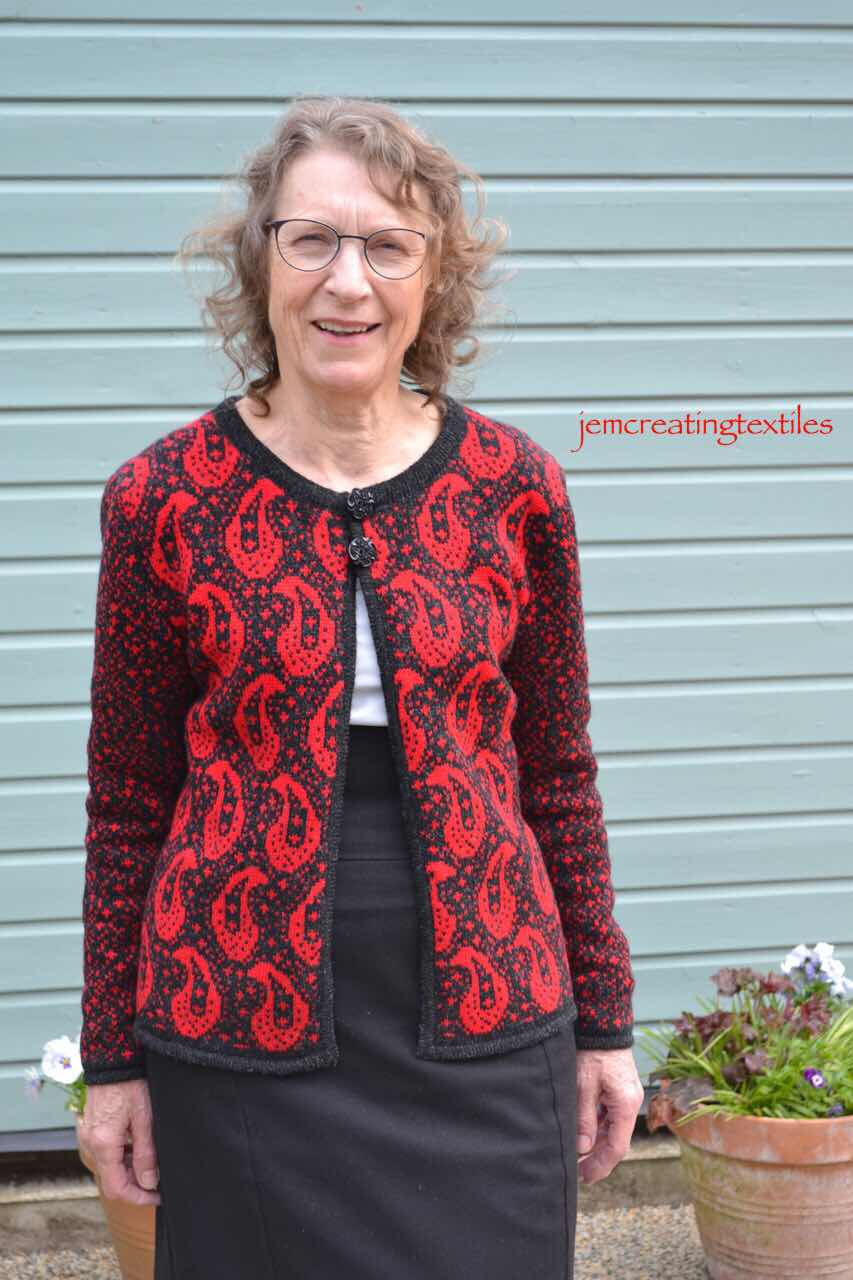
So it was finally time to start knitting the garment. The shape was drawn on my knitleader (shaping device) where I use my tension square to convert the stitch and row count for the actual shape of the piece. For this garment I will knit 2 fronts, the back and 2 sleeves with the different punchcard pattern. The front edgings and neck edging would be knitted later. In all the knitting with the finishing took 18.5 hours. This compared favourably with my 4 hour knitting of the ‘kit’ jacket start.

Once the fronts and back were knitted, I washed these and blocked them to the exact shape of the pattern (see blog 30 July 15 to see how I do this). Then I joined the fronts and back together using the knitting machine. At this stage I  tacked round the shape of the front and back neck where I needed to remove knitted fabric. I ‘cut’ out the shapes using the overlocker on a stretch stitch setting. 

Next up was the front edgings, I was using the technique taught by Tony Bennett an Australian designer who I have been fortunate to attend several workshops with. These are the hardest part to ‘get’ right in the whole of the garment.

This is the sample I did.


Each front edging took an hour, but this was well worth the time spent.

Now the front edgings were on I could do the next facing. I picked up stitches from the folded over cut edge. I did the equivalent to knitting the rows on smaller and smaller hand knitting needles and then increased the size again ending with waste yarn for about 6 rows, this gave a well fitting shape. The final stage of this is to backstitch the .live stitches down to over the cut edge on the public side to give a very neat edge to the front and back. Special care is needed at the outer edge of the edging  to get a smooth continuation with the front facings. 

The sleeves were set in and I stitched these in with my ‘normal’ sewing machine using a slight zigzag. Underarms seams were done in the same way. 

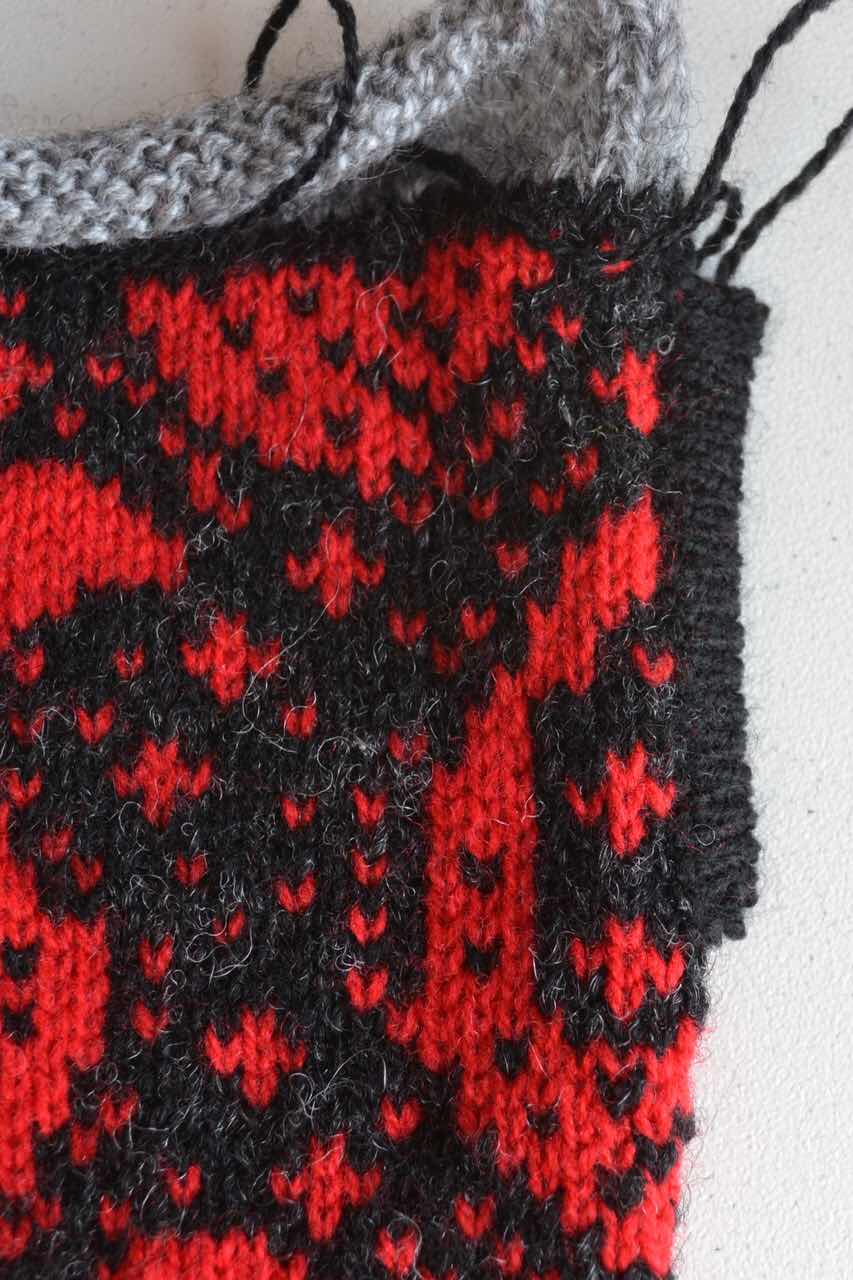
This just left me with joining the underarm seams and I had done a lot of planning to enable me to have an invisible  seam there, so now the stitching was crucial. I used both black and red and worked from the outside and was pleased with the overall effect. 

Final threads to weave in


The underarm seam


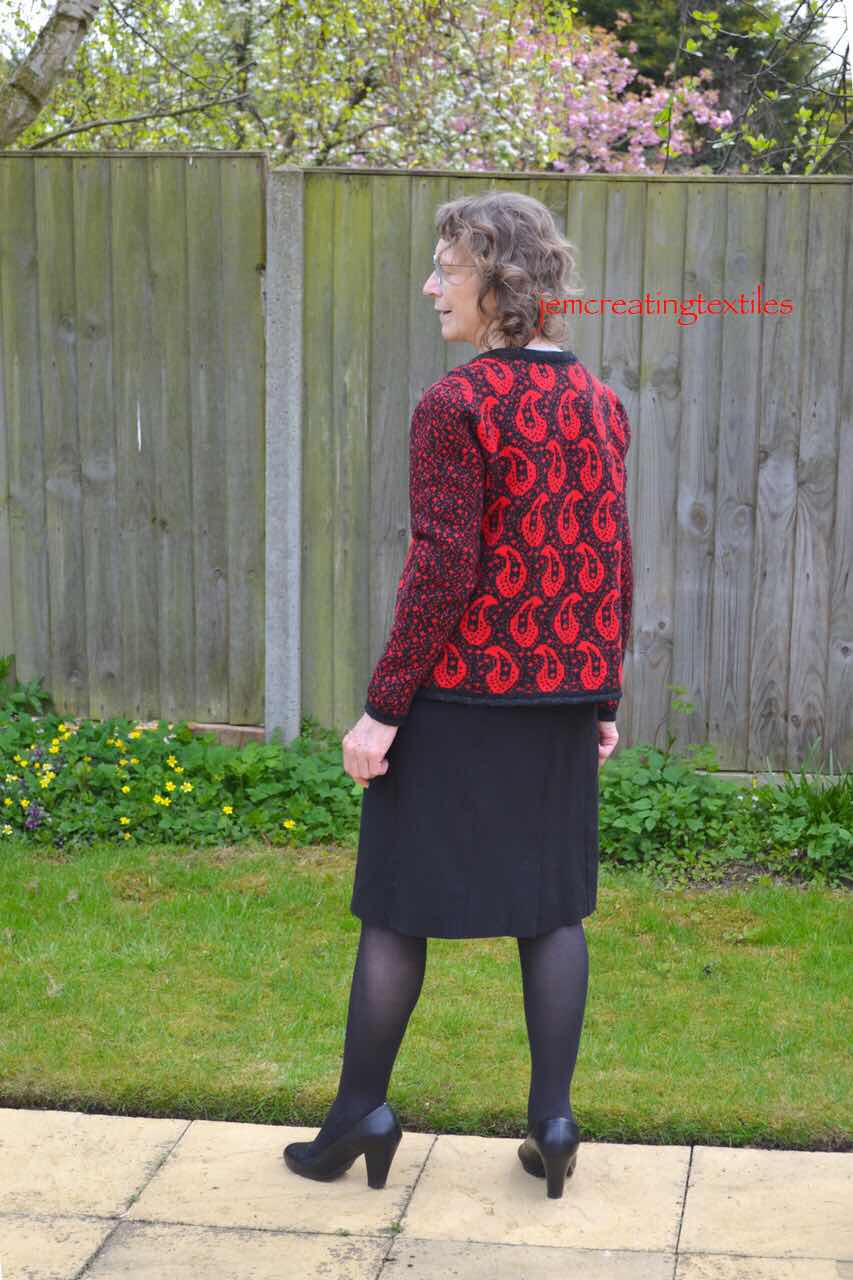
A final press was needed and then to get some photos with me wearing it that I was more or less happy with. Thanks to Michael for being so patient  taking these. 


Overall I am very pleased with this. Now hopefully as we come out of lockdown and get used to a new normal I will get a chance to wear it out. 


The Norwich Red Jacket (part one)

The Norwich Red  Jacket (part one) 


Those of you who read my blog posts  will know I am very interested in Norwich (1) shawls and in particular the Boteh design. (Boteh is Hindi for ‘flower’ it is also called pine cone and today is often known as paisley. ) 


In 2018 I knitted my Art School Jacket using mainly the technique of slip stitch. For yarn I used mercerised cotton and Jamieson jumper weight wool in charcoal. I liked the shape and thought something similar would be good and would suit  the proposed boteh patten. (Post about this cardigan is 15July19). 


I have been doing research into Norwich shawls, particularly their construction.  (This has still to be written up.) Part of the research involved natural dyeing and from this in 2019 I used  madder to dye some 3ply/thin 4ply yarn to be used in Knitting the planned jacket. However, I never got round to designing the motifs to be used as the pattern in the jacket. I was too interested in my controlled dyeing experiments! So the jacket idea got shelved. 

Fast forward to 2020 and Covid-19 and for some reason although I had all the time in the world I did virtually no dyeing. Somehow fine lace spinning and knitting were all absorbing and much better at occupying my mind and keeping it off too much worry about things covid 19 related that were happening in this country and the world. 

I saw and very much liked a knitting kit I saw by Sidsel Høivik. I had never bought a kit previously but I loved the greens. The kit came quickly from Norway and was beautifully packed. After much preparation, described in a previous blog post (9March21) I started the hand knitting.


The start of the hand knitting. I used the cool pink as the waste yarn and when completed I would pick up stitches from the red garter st row and knit an inner facing. The jacket felt very thick to me, but something was needed to pull in the garter stitches. I wondered about knitting a facing inn dinner yarn….but as it turned out I abandoned the project before needing to take that decision. 


This start took me two nights worth of knitting ( about 2 hours per night). I was not happy with it and also I found I could not knit this wool with these needles as it hurt my hands and the following morning my hands had seized up and needed forcing open. (This had happened to me once many years ago and surprisingly I have recently read about other examples of people having similar problems with their knitting (note NOT this kit) too. That was it, I was not going to knit the kit, I had spent a long time organising it to work for me in terms of colour, size and pattern placement and I did beat myself up a bit! However, I resolved to do what I should have done in 2019 and that was design my own jacket. I had the shape, I knew which yarns worked well and ‘all’ I had to do was work out motifs to knit! 


When I thought deeper about the problem with my hands I realised recently I had been using the knitting machine for knitting fair isle  and everything else except fine Shetland lace which I continue to knit by hand. This of course, is much lighter and a shawl can take only 25-50g in total. 


I now had some firmer ideas about what I wanted in terms of pattern and what I did not want. The motif placement vertically was important and because I would knit this on my vintage (or virtually so, date 1974ish) punchcard knitting machine I would be limited to a horizontal repeat of 24 stitches. For me the pattern would also need to match as invisibly as I could make it at the underarm sleeves.


Fortunately I had some charcoal wool left over from the Art School jacket, I decided I would use some finer red yarn that I had and that I could use this double. Unfortunatley the madder dyed yarn was too thin to use with the charcoal for this project.  This decision was based entirely on the hue of the red! 


So the actual design. I had 2 punch cards in my collection vaguely being ‘Boteh. I had knitted one  many years ago using black wool and Jade chenille as the contrast. Then I also had a much larger design in a group of cards that I bought as a job lot! I had some black acrylic and another red that I could use for playing with designs. 


These are how the punch card patterns  knitted up.

The one I had knitted previously hardly looked like a boteh design to me now. 


I liked the other design but it would be too overpowering for me. 


(I pinned these vertically on my samples block board and looked at them for a few days to come to this decision.) It was at this stage  that like I decided on the idea of trying a different pattern for the sleeves. The sleeves would be fitted and not drop sleeves, as this gives a better fit on me.


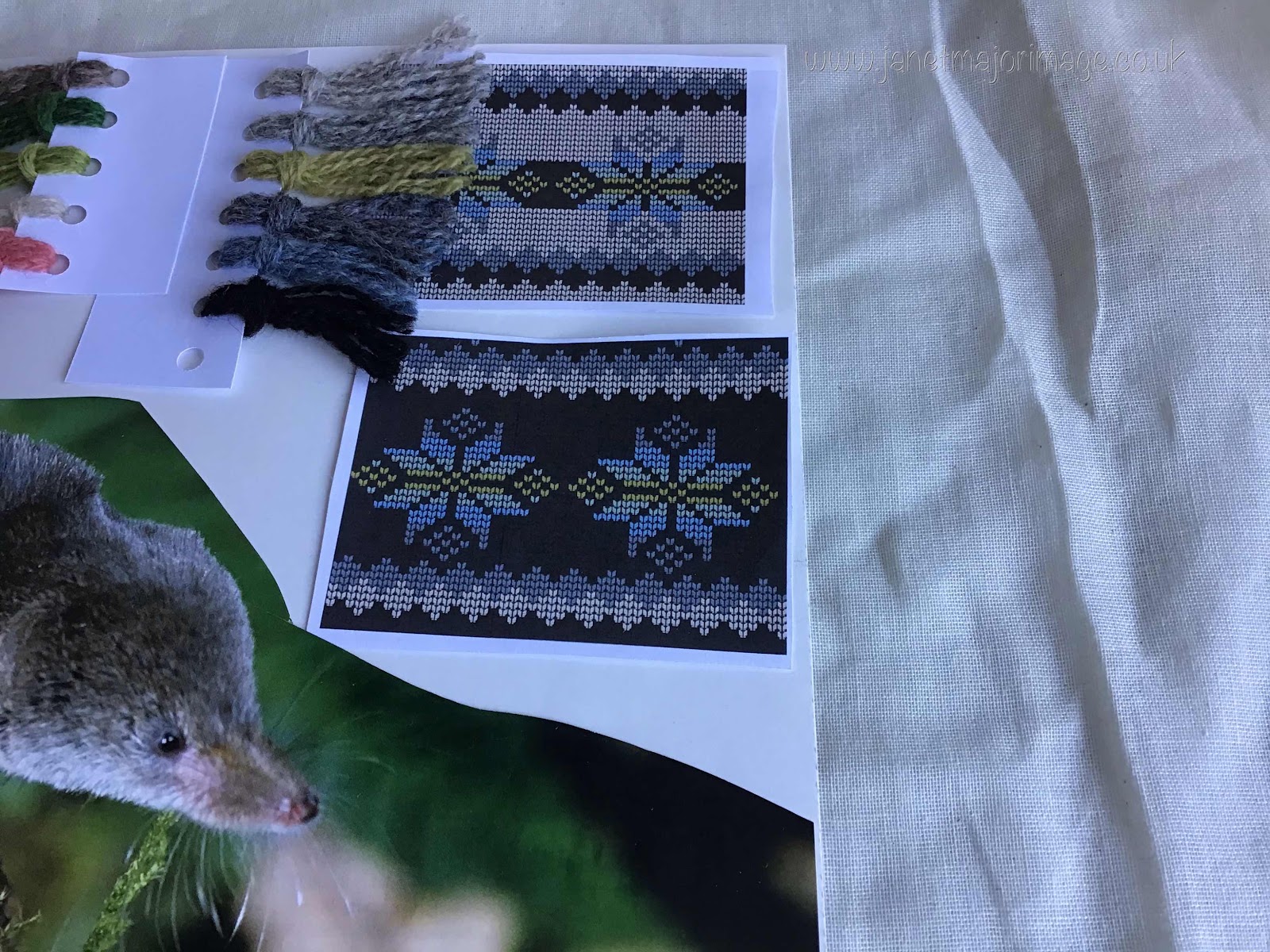
I was concerned about the length of the floats and at this stage tried out the slip stitch technique. In machine knitting 2 rows of the same colour are knitted, say the background and then the same two rows knitting the foreground (motif detail). I got the design working but decided not to pursue it as this design needs flowing curves which would not be smooth working on the 2 rows main colour, 2 rows background that worked so well in the geometrical design of the Art School jacket. 

Motif being trialled with slip stitch, I got a much better shape with fair isle due to the nature of how the slip stitch technique ‘works’.


So I then set about drawing my own motifs but being mindful of float length. I knew that Shetland wool would cling to itself and not be too much of a problem with floats if I did not make excessive demands  of it.

These photos show my modifications  in the design process: 

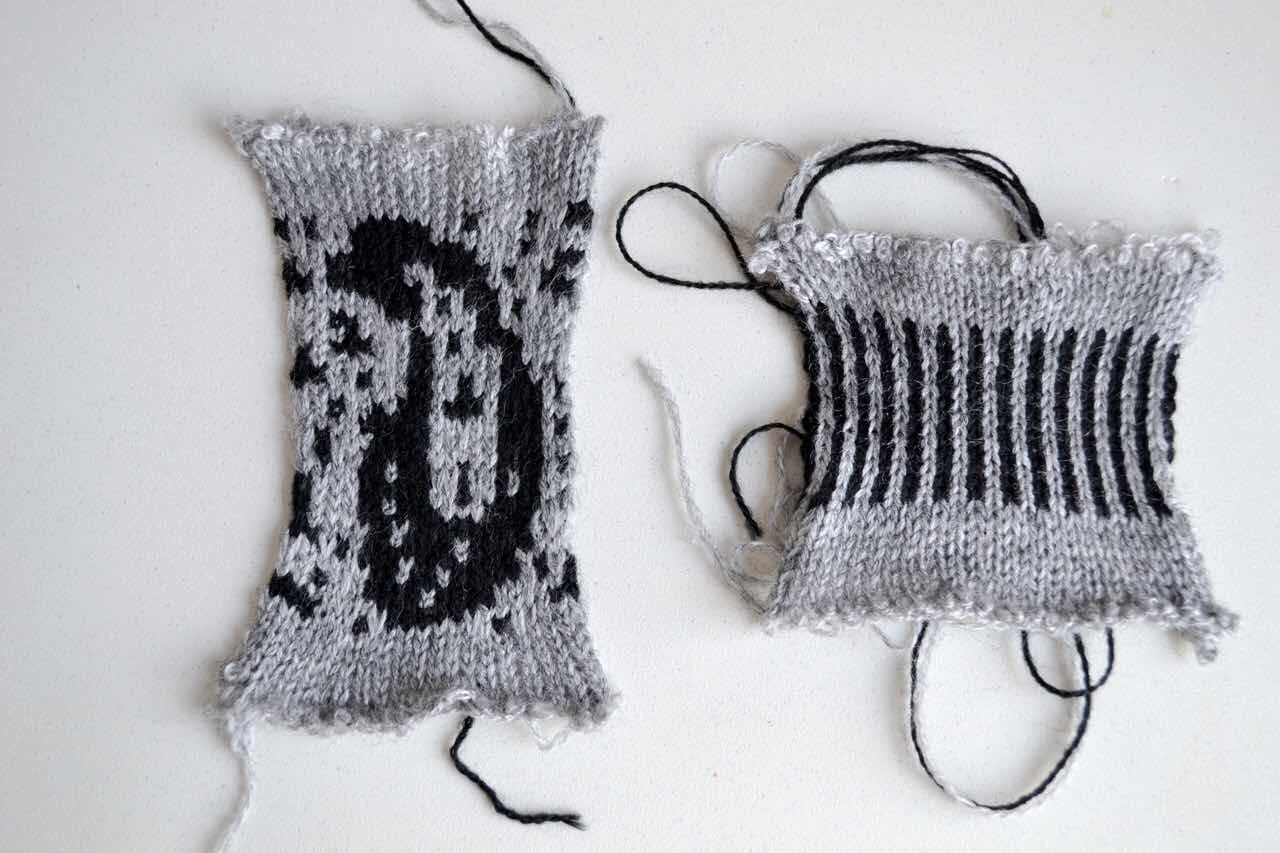
This picture shows changing the punchcard to improve the shape of the boteh on the left hand side and knitting a small section to check.


These show sleeve samples, the one above is the one I used as it had much shorter floats


This picture shows knitting samples to check the vertical placement and horizontal match ( side seams and front) of the motifs


Continued as part two.


  1. We are fortunate to live about half an hour by car from Norwich and more can be seen about the shawls on my website( link top right from blog)  by looking at Weaving  and then choosing the Heritage Weaving section. 


Wednesday, 8 July 2020

Natural Dyeing from the garden


Somehow with lockdown, there were other things to do and worry about and surprisingly I did not feel like doing any natural dyeing. As I got the garden more ordered I suddenly felt like I could do some natural dyeing. I decided to try some garden plants I had not explored at all, or only used in solar dyeing. 


I found twelve 10g skeins, six in each of two different 4 ply wools, but had no idea if they were mordanted. I usually label everything I can so decided they needed to be treated as ‘just skeins’. 


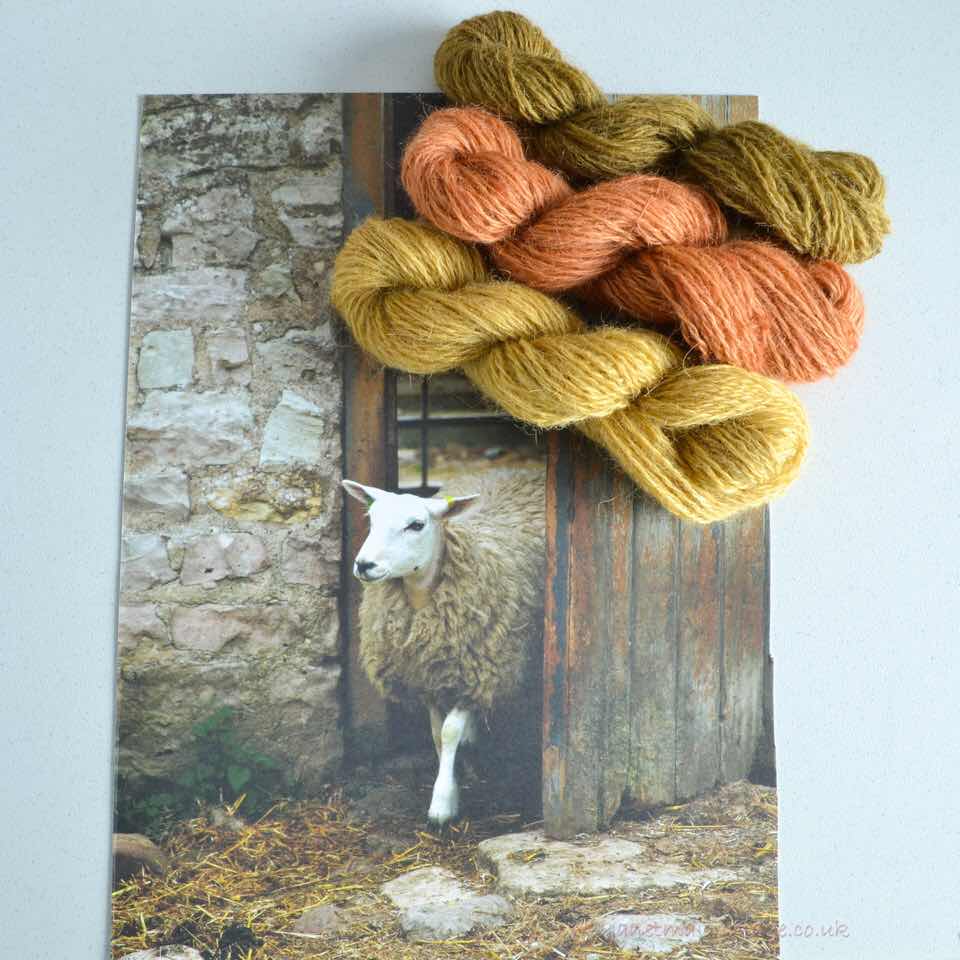
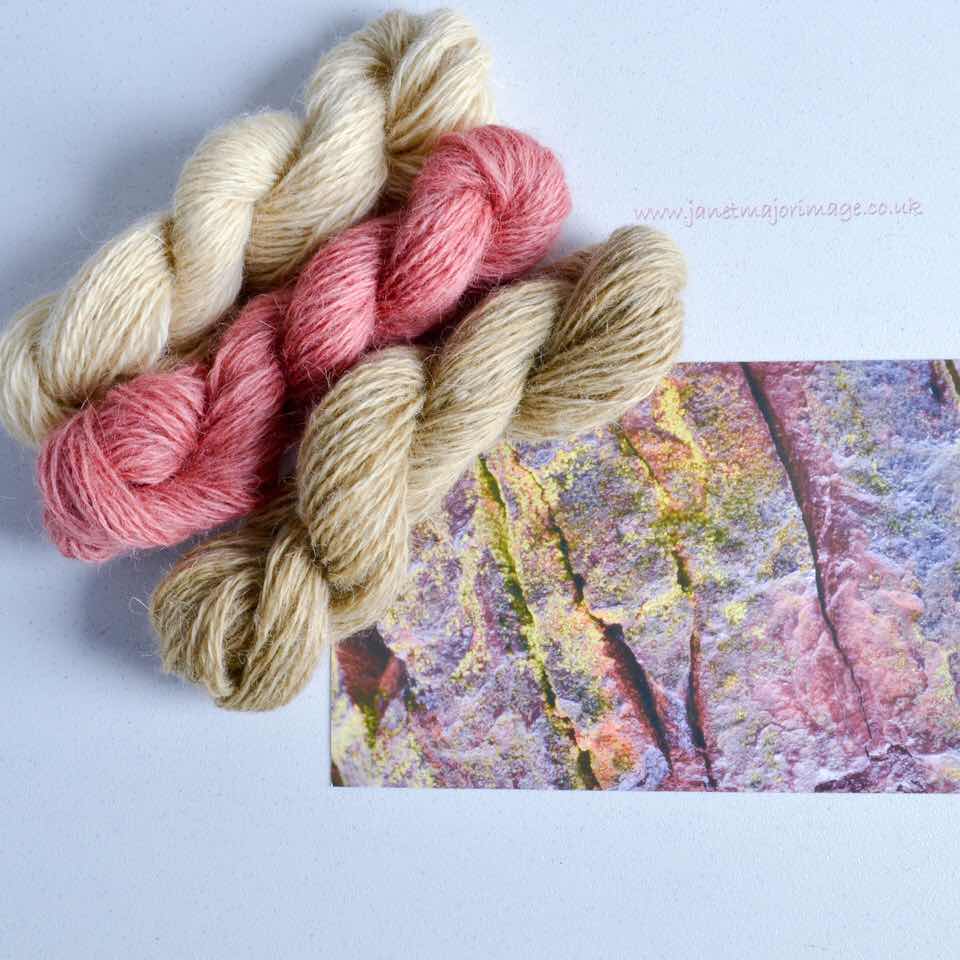
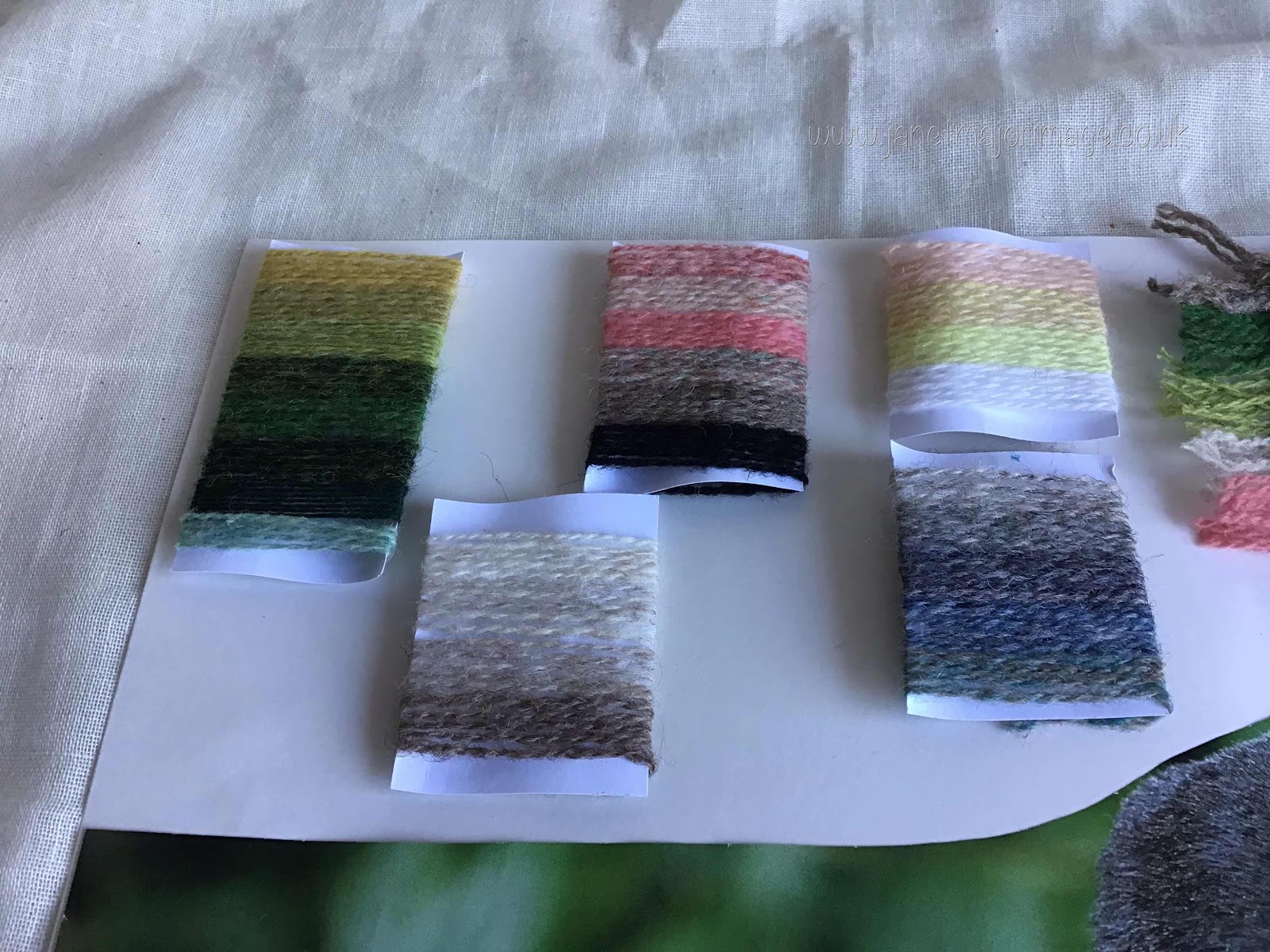
I decided I would put them into four groups of three and sample the dye material on it’s own and use over dyeing or modifiers for two further skeins. In this way I would get an idea how I might treat they dye material in the future or if I would use it at all. As you can see below I aimed to match the skeins to some stimulus material. 


So this is how they were treated and what has resulted. 

All were scoured and mordanted with alum first. 


‘The barn door ‘ - Dyed with Peony heads  

Peony on its own  : plus madder : plus  copper 


Ornamental Poppy

‘ Rust at Ravenglass Beach’ -dyed with seed heads, leaves and stems 

From the dyebath : plus madder and cochineal : plus iron 


Feverfew 

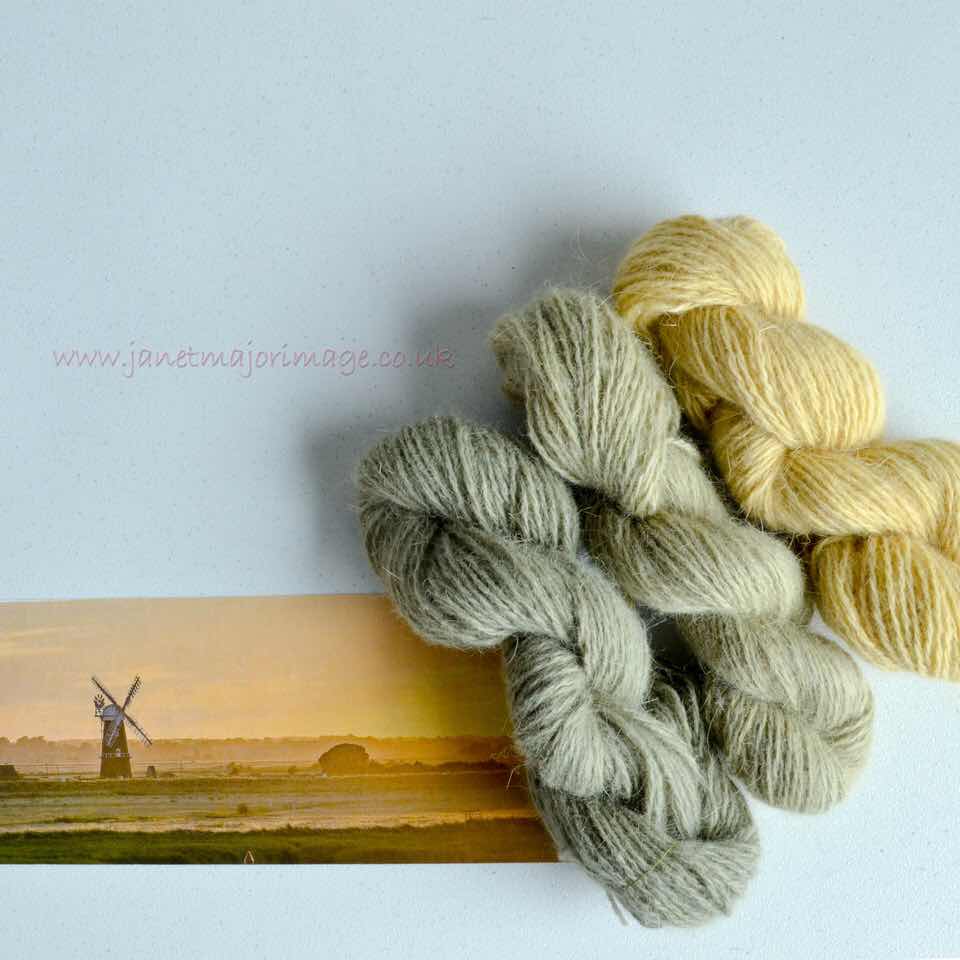
‘Sunset at a windmill in North Norfolk’ - dyed with whole plant except the roots 

From the dyebath: iron 1 : iron 2 


Yarrow 

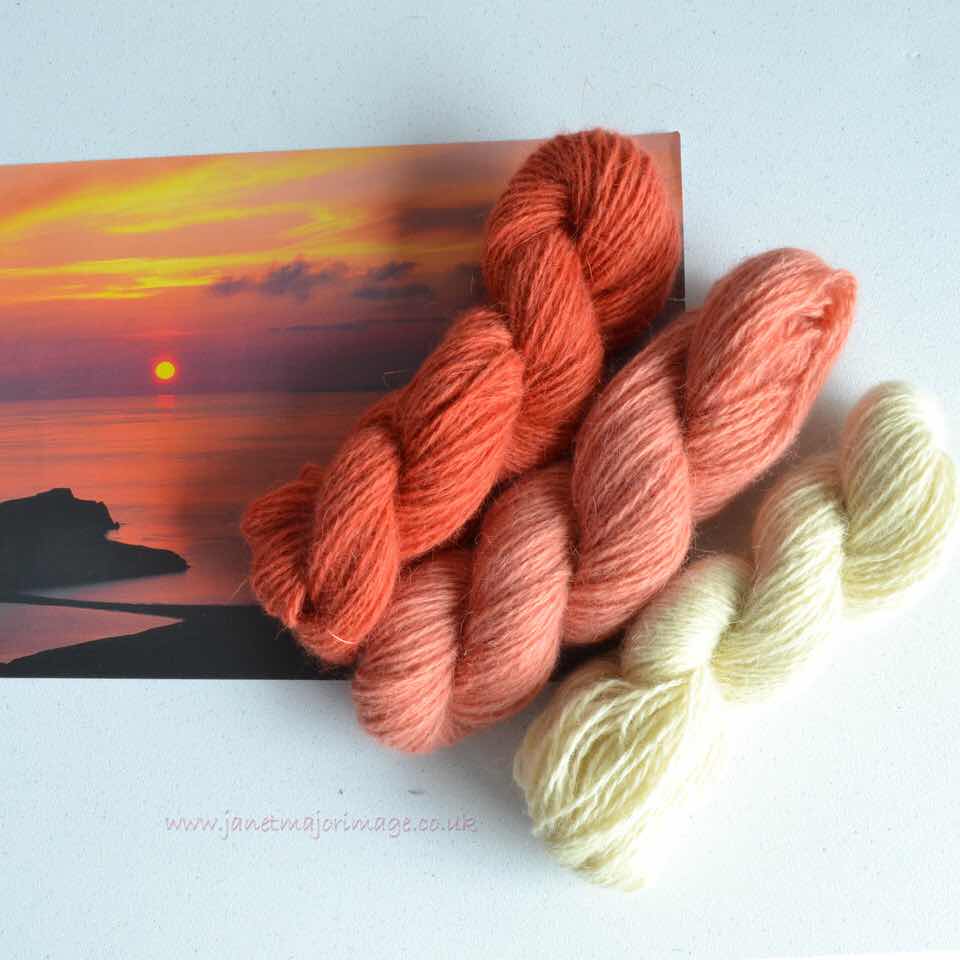
‘ A Shetland sunset’ - dyed with plant and buds but not roots

From the dyebath : madder 1 : madder 2 


The whole set of twelve ‘go together’ as they tend to do with natural dyeing.

Myself I prefer the Shetland Sunset batch.... now I wonder why that might be?My next favourite is the North Norfolk sunset with the toning greens. I am thinking I might try more of a range like this next time. It is ‘knowledge and experience’  judging the time to stop when a skein is in a dye bath and of course, just to add a further complication, when the skein is dry it is a lighter colour. 


Monday, 6 April 2020

A classic jumper

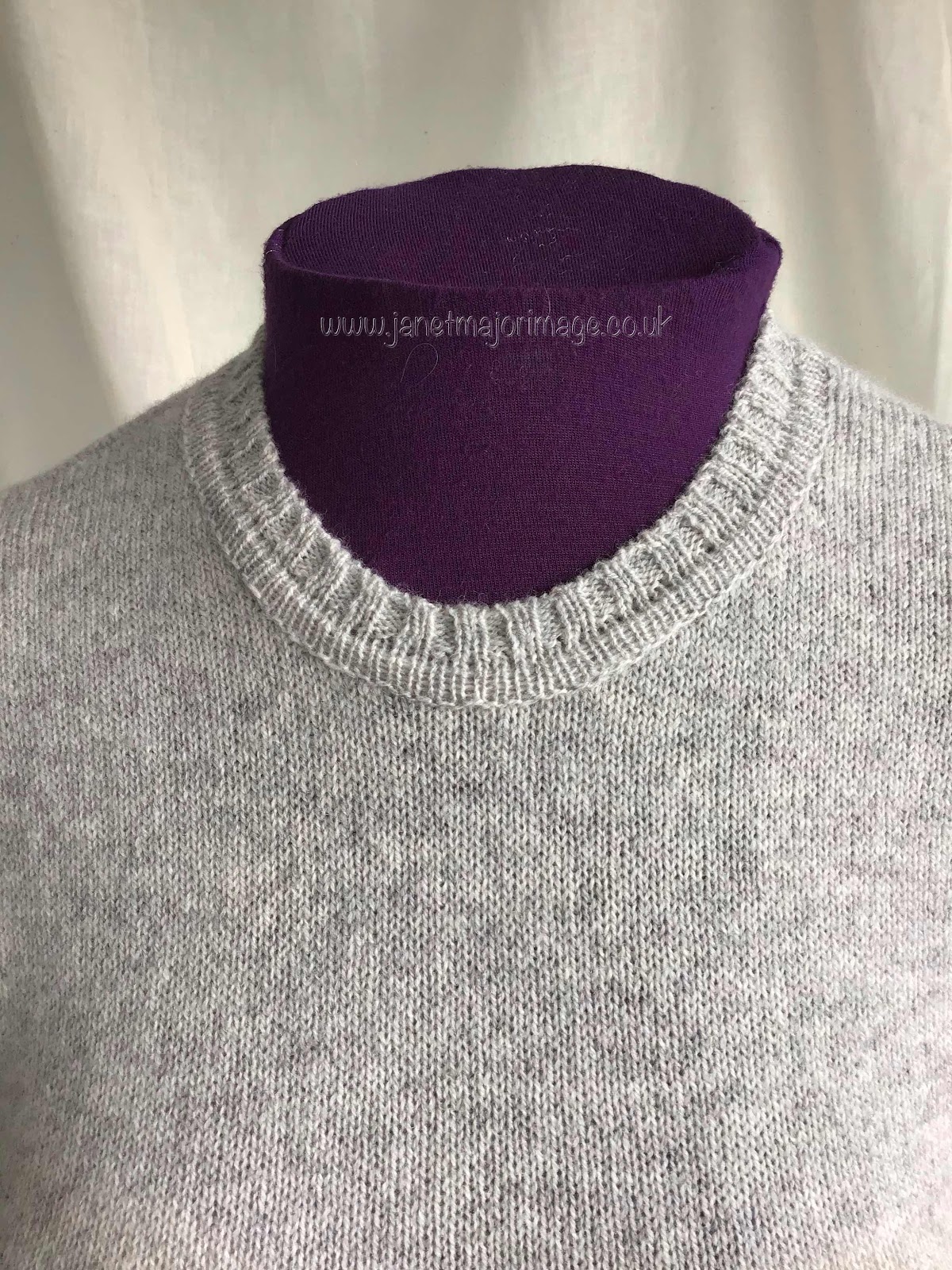
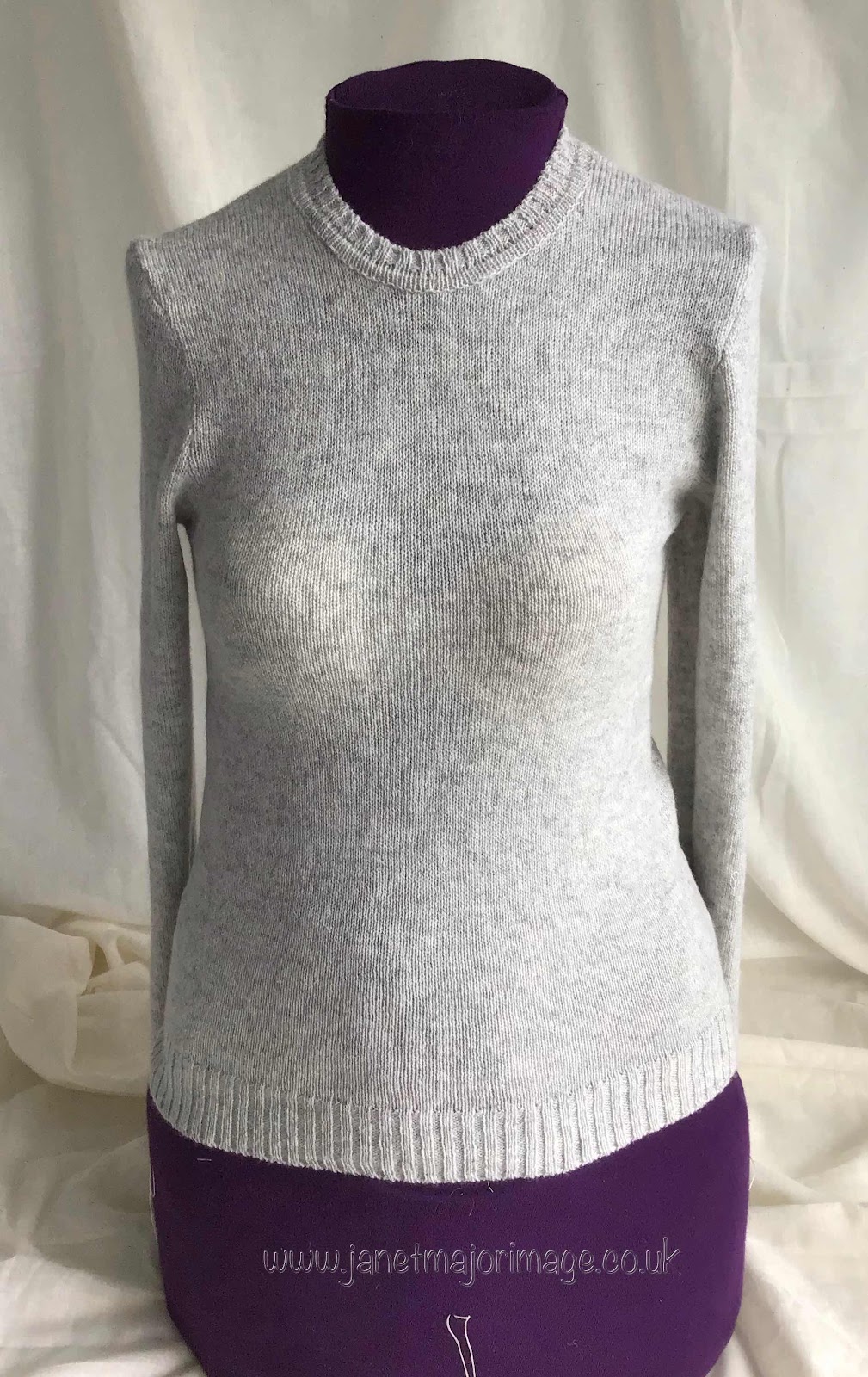
I like to have some basic, smart, fine wool, knitted jumpers that I can layer more interesting knitwear over. For several years I have had a couple of cream ones, that I machine knitted in Yeoman polo fine merino wool. These have been washed many times and just keep on looking great. 

I decided I needed some grey ones, finding just the right shade of grey was problematic but eventually I found a grey colour that I really liked - it is lambs wool  in 2/ 17 colour Pearl Grey. It comes from Uppingham Yarns as a cone of approx a kilo, mine was 0.970 g. 

I drafted this pattern some time ago. It is very simple and has fitted sleeves. 

However, being plain and very simple there is nowhere to hide. Any slight error sticks out a mile. 

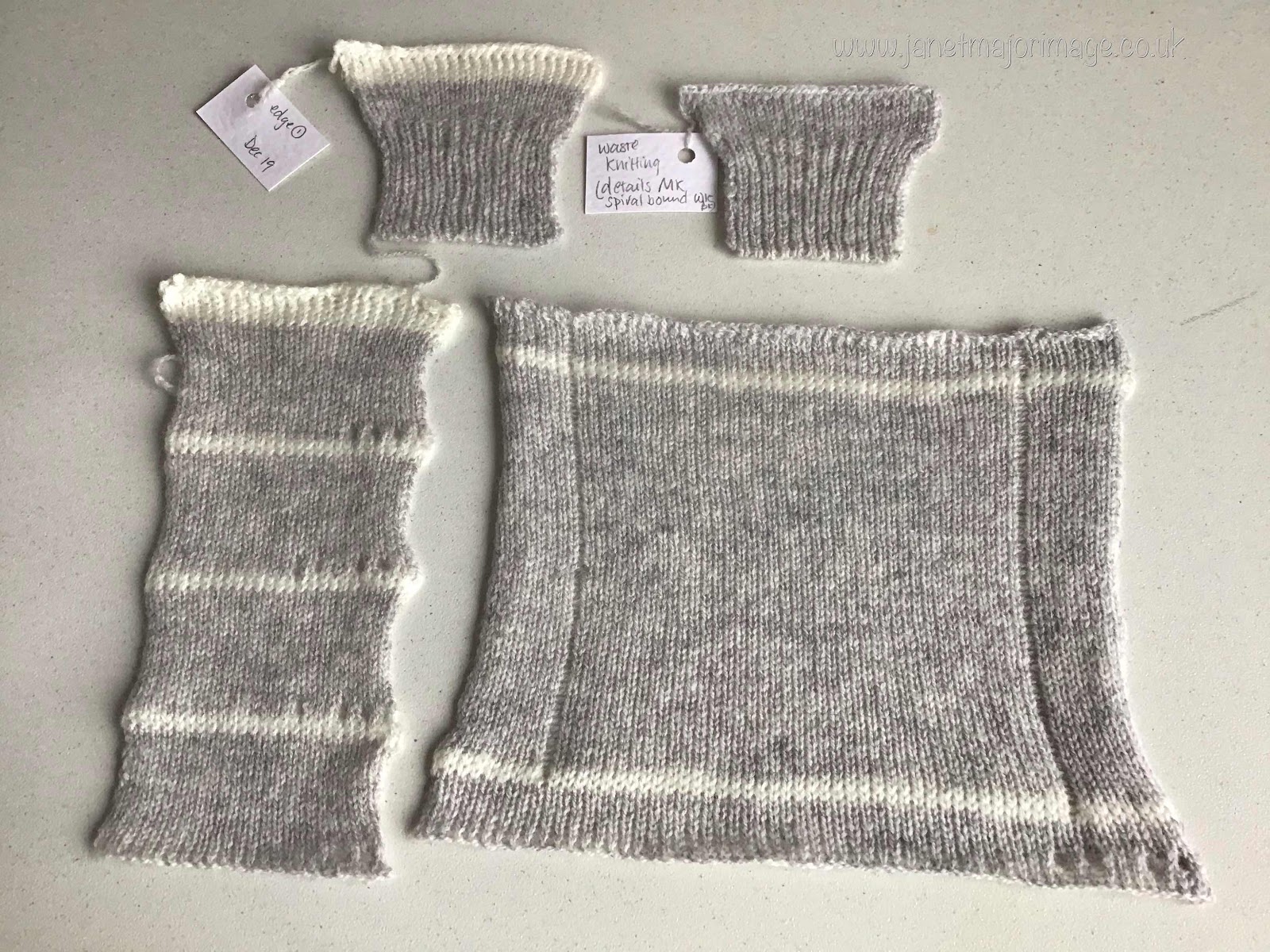
These are the samples I knit before I started. I was looking to get a good edge to the rib and a suitable tension. Hence the strip and then the square to get my measurements for stitches and rows per inch. 


Knitting went to plan. (I have described knitting using my knitting machine elsewhere on my blog)

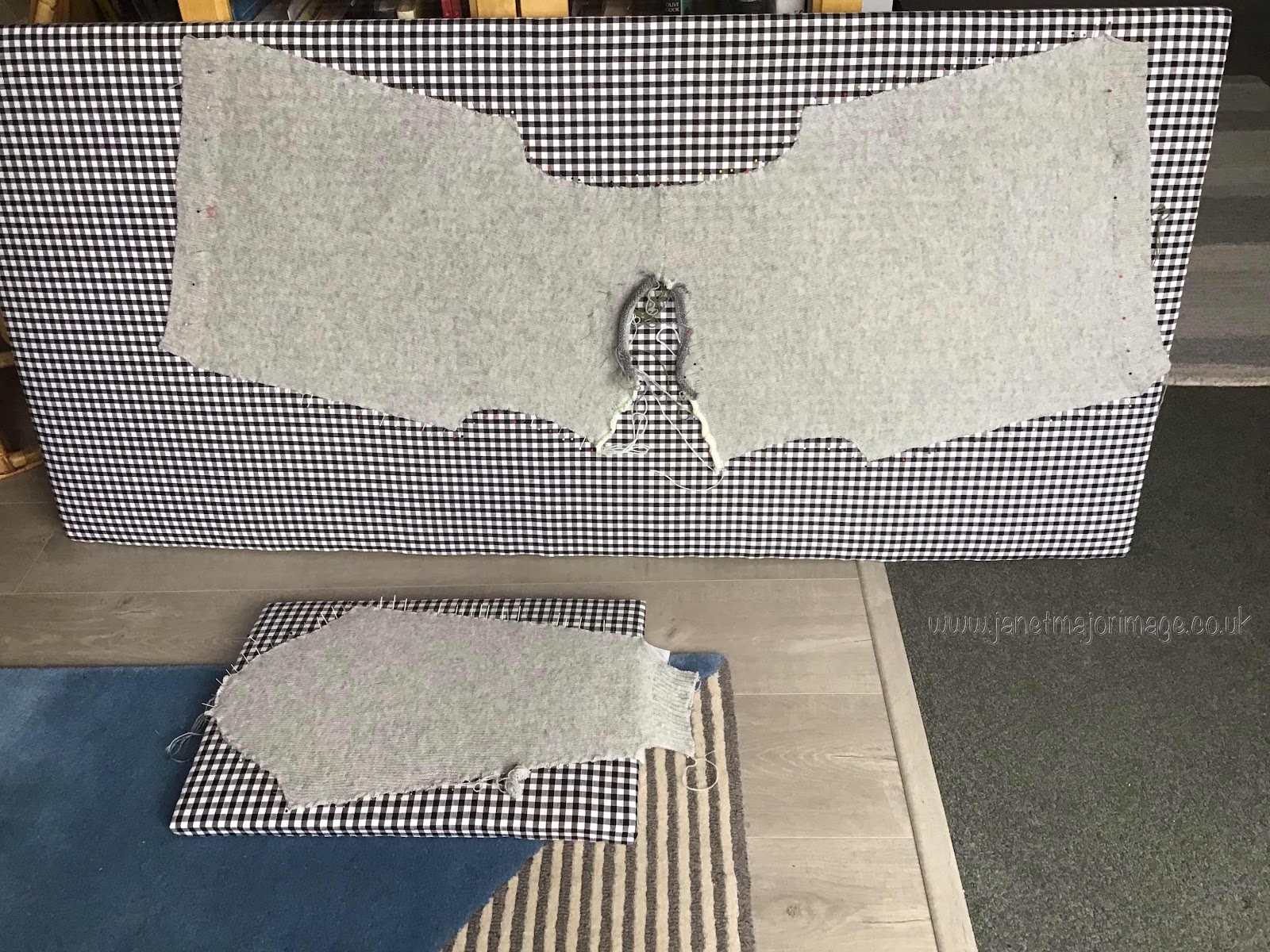
Blocking the pieces ensures that they must fit me, with no nasty surprises like the sleeves are too long or the jumper is too short. 


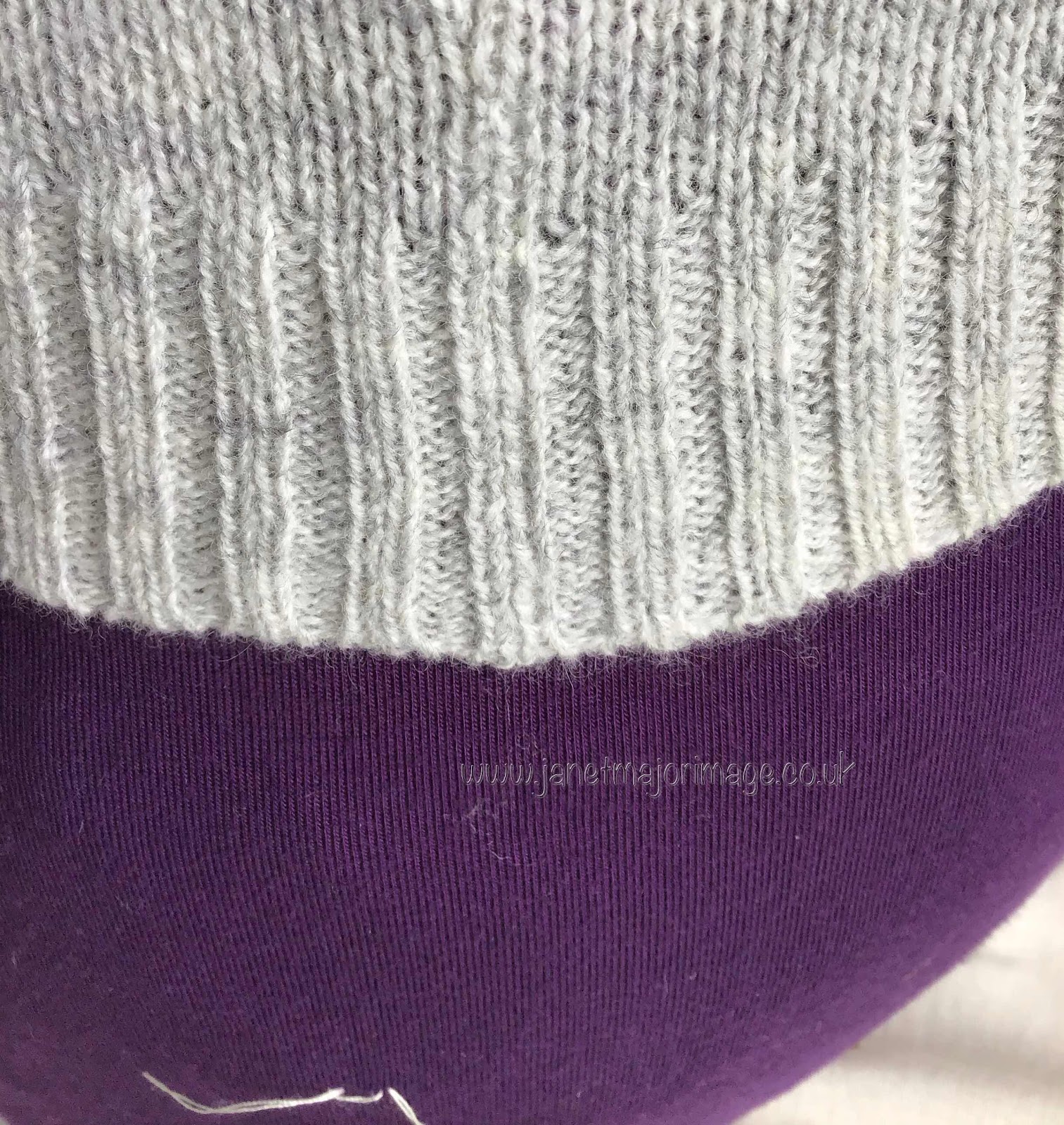
Initially I used a single 1x1 rib for the base of the back, front and sleeves. The neck is done by the ‘cut and sew’ method that I use. 

Cut and sew neck


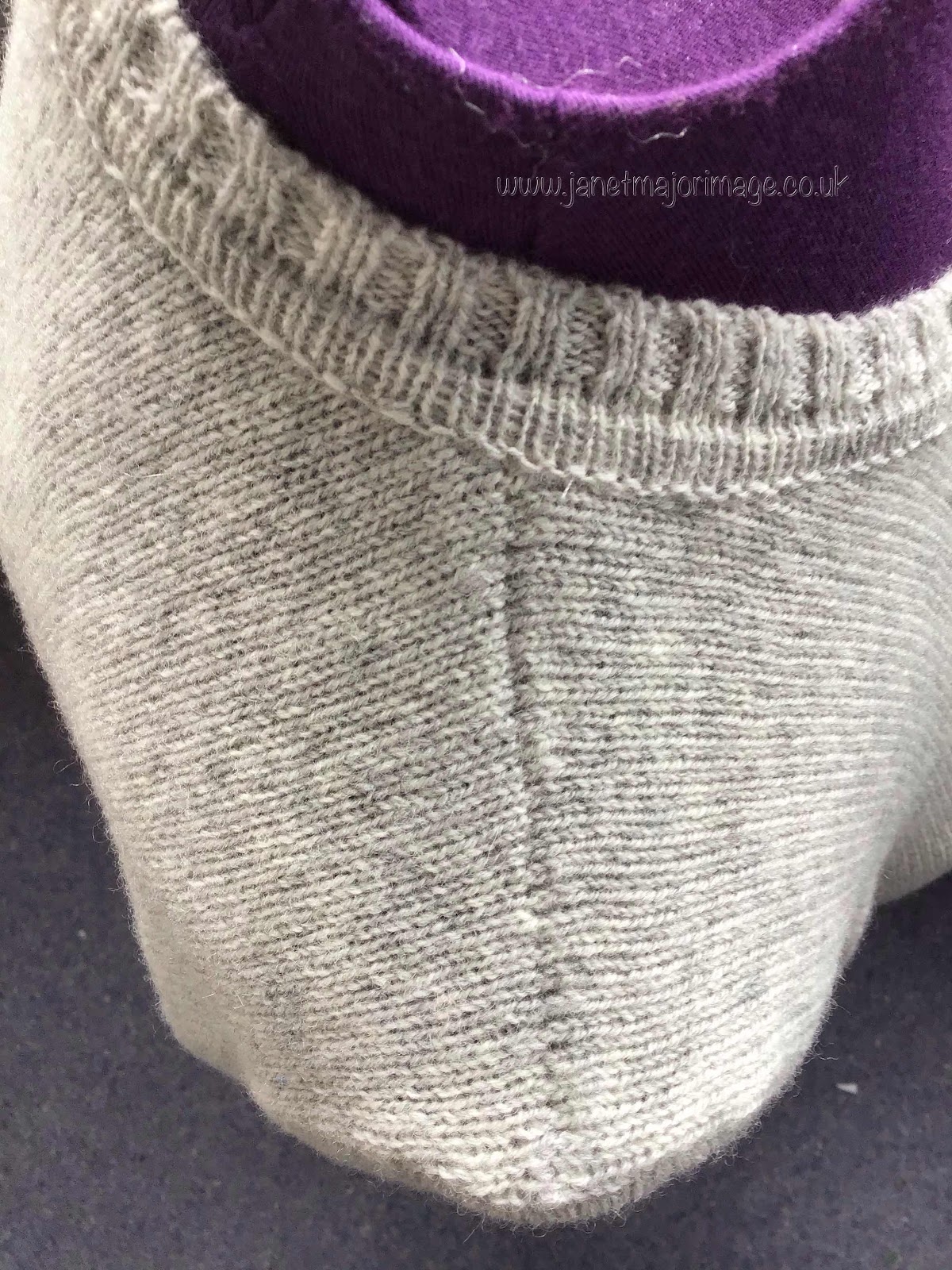
I join the shoulders on the knitting machine 

Shoulder join 


Other  seams  (but not ribs) I sew with my Janome sewing machine. The ribs I stitch together from the outside to get the best match I can with no visible  joins. 


The jumper weighs just 150 g and I finished this first one before Christmas. It has had good wear and is still looking ‘as new’. 


I decided that I couldn’t better this design or colour so I have just knitted another. Version 2 has 2x1 ribbing at the base of the body pieces and sleeve. 


Mattress stitch ribbing 


The completed jumper 

I love how the sleeves fit and I love this yarn. 


Jumper v2 complete 


Yet again the 30 year old plus  Brother 830 Knitting Machine delivers. 

So only 300 g of yarn used , 150 g per jumper and 670g left. 


Monday, 16 March 2020

Thinking about colour: Fair Isle Cardigans


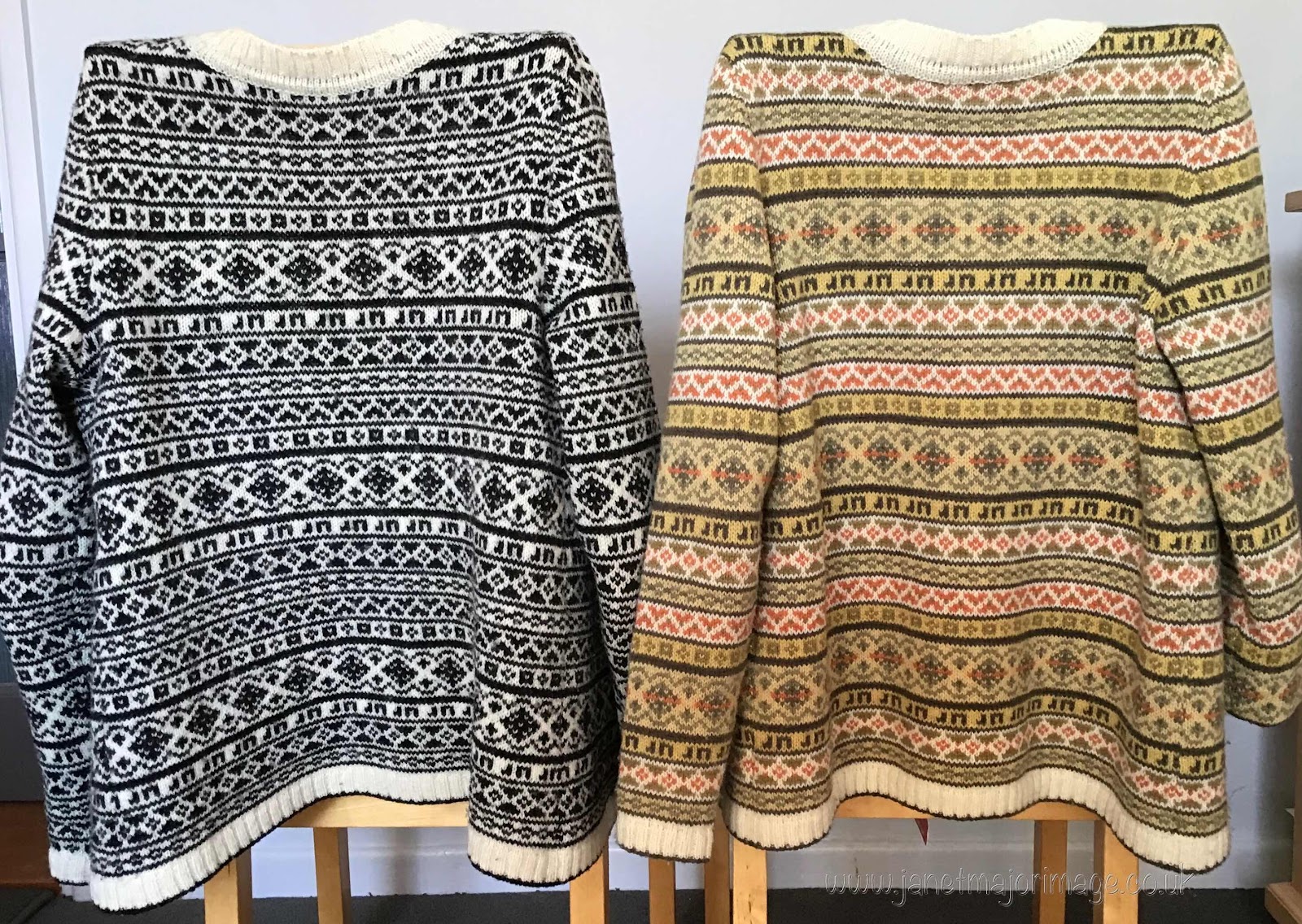
I had these two cardigans sitting like this the other day and thought it was worth sharing the photo. 


What was most noticeable was the difference the colours made to the overall patterns. I love them both and wear them frequently. I originally knitted the black and white one (2)  as a trial for the naturally dyed one. It was a trial in terms of getting the size correct and the pattern placement, however how the colours work with one another ensures the natural dyed one is very different from the black and white one. Initially I  decided on which colours to aim for in the dyeing  with Ground Elder. Then I spent many days knitting samples and playing with colour combinations, hanging them up and looking at them close too and at a distance  until I felt I had the combination that I loved! Somehow I know when the colours work for me. (By days I don’t mean whole days, I like to mull it over, do something else, come back to it, sleep on it etc. This is not something I can do in a hurry.) 

Recently, I saw mention of an iPad app ‘The interaction of colour’ by Josef Albers. The cardigans are a good example of the effect of ‘interaction of colour’ (3). I am enjoying this app greatly and his take on colour does not begin with a colour wheel or discussions on complementary colours, triads of colours  etc. He starts with working with colour and aims to help users develop an eye for colour. There is a lot in the app, I haven’t got to the end of it so I have yet to find out if he mentions the effect of a person’s colouring on the colours worn. But then that would make a good app on its’s own. I have seen several attempts at this but nothing I would want to recommend. 


  1. I have previously written about the design and knitting of the Ground Elder cardigan beginning on 4 April 2018 
  2. I call it my ‘black and white cardigan’ however the black is in fact ‘deep charcoal’ and the white is a ‘natural’  white, both from Jamieson and Smith . This combination gives a less harsh look for my light colouring. 
  3. As I write this, the app is for iPad (not sure if there is an Android version), there is a free lite version, but the paid version is £13.99. It includes, text, plates, videos and has interactive activities to get you involved with understanding and working with colour. 


Sunday, 8 March 2020

Scandinavian Slippers


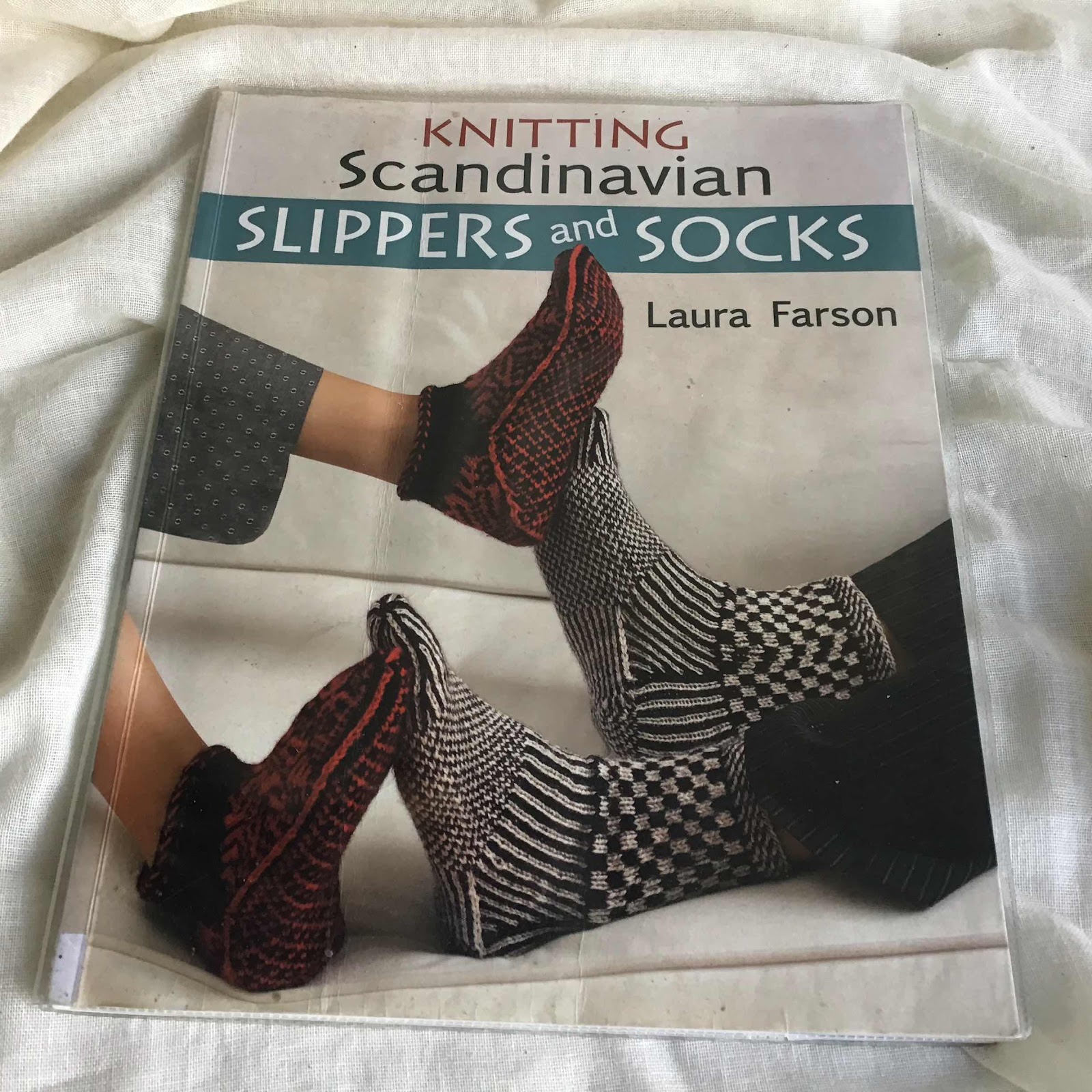
This book (1) caught my eye in the library and I thought I would have my first attempt at twined knitting. 


Rather than just jump in I thought I would knit the sample pair as suggested but do them in ‘my colours’ rather than the different ones recommended. (The different colours are so you can see the different stages, which was a great idea.) 

I used my own Norfolk Horn hand spun yarn from a local farm which measured 11 wpi. I teamed this with some Hebridean  Double Knit (14wpi) yarn which I bought from Denise Bridges (2) when we were last in South Uist. I used this Hebridean yarn double and the pair of slippers took the whole of a 50g ball.

I used my knitting belt and 3 dpns size 3.5mm. The cast on was a 2 strand circular cast on, something I had not done before. 

I found twined knitting slow, you need to keep stopping to untwist the yarns but the effect is great. The fabric this combination of yarns gave was super firm and just what is needed for slippers. 


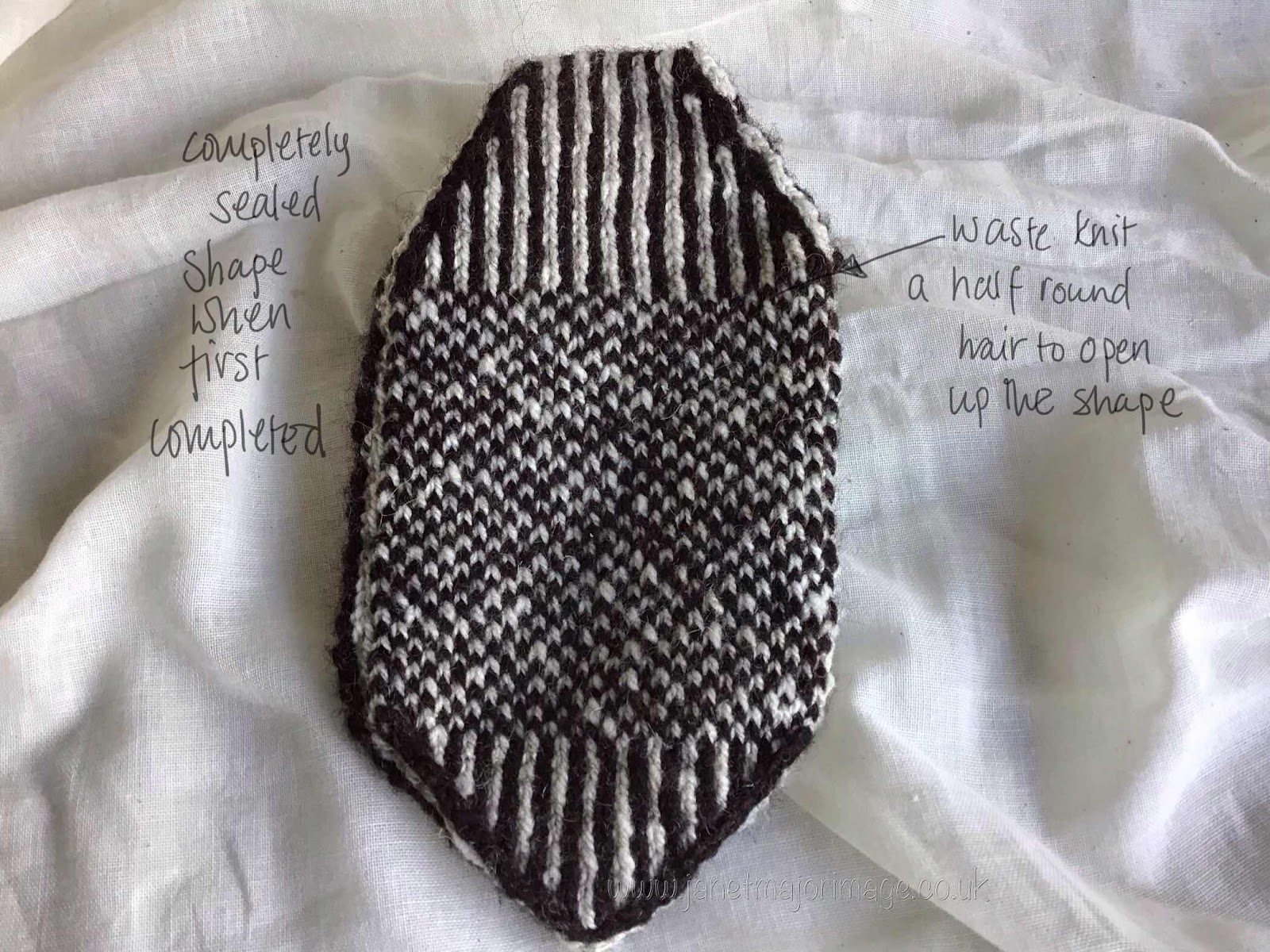
The construction was interesting, you knit a sealed envelope that looks like this.


Stitches are then picked up either side of a waste yarn, which is then removed. Short row knitting gives a triangular insert either side and then a cuff is knitted which could be as long as you wanted. I made mine following the instructions, as this is a trial knit and topped the cuff with Estonian Braid following instructions from my workshop with Hadewych van der Werf in Shetland Wool Week, last year (3)


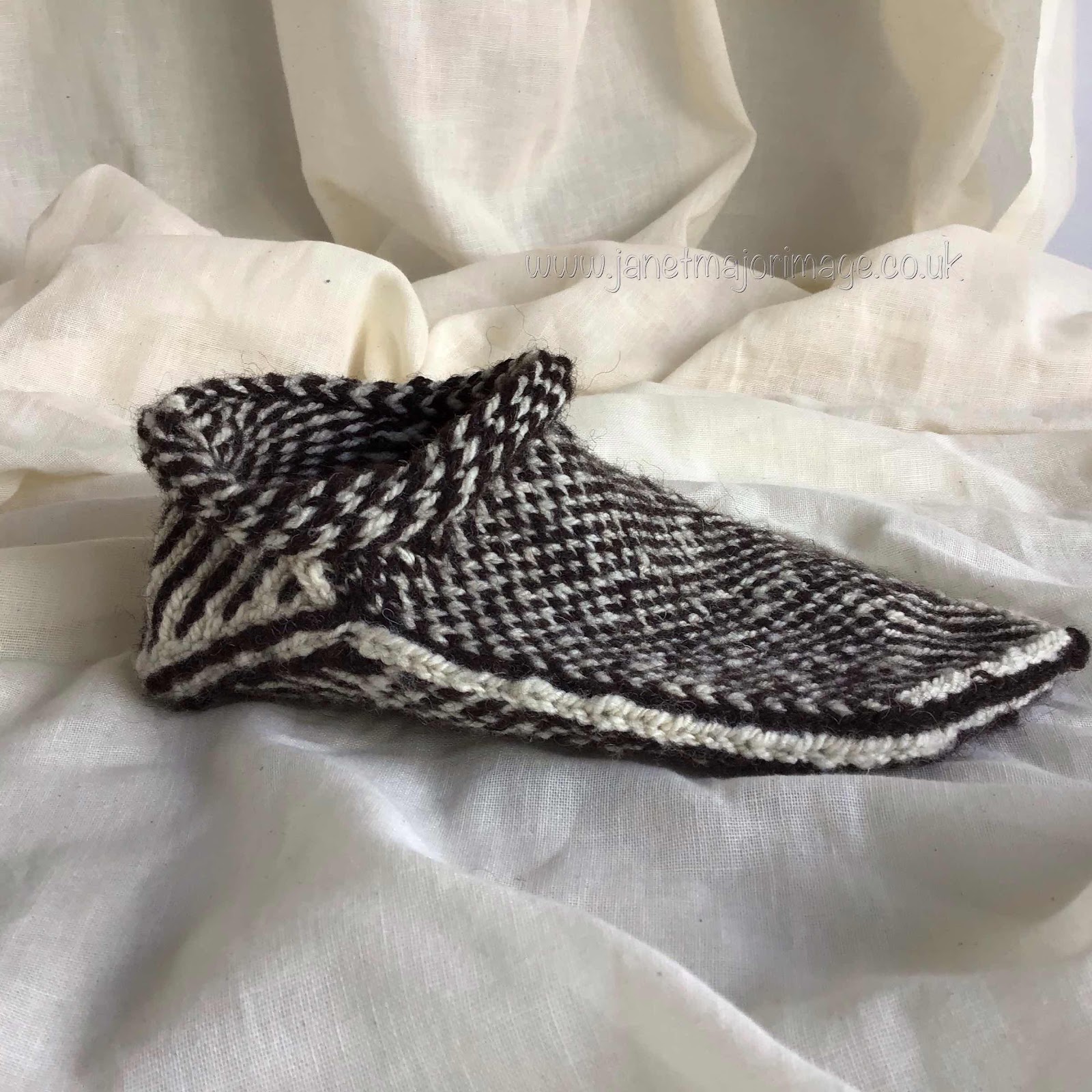
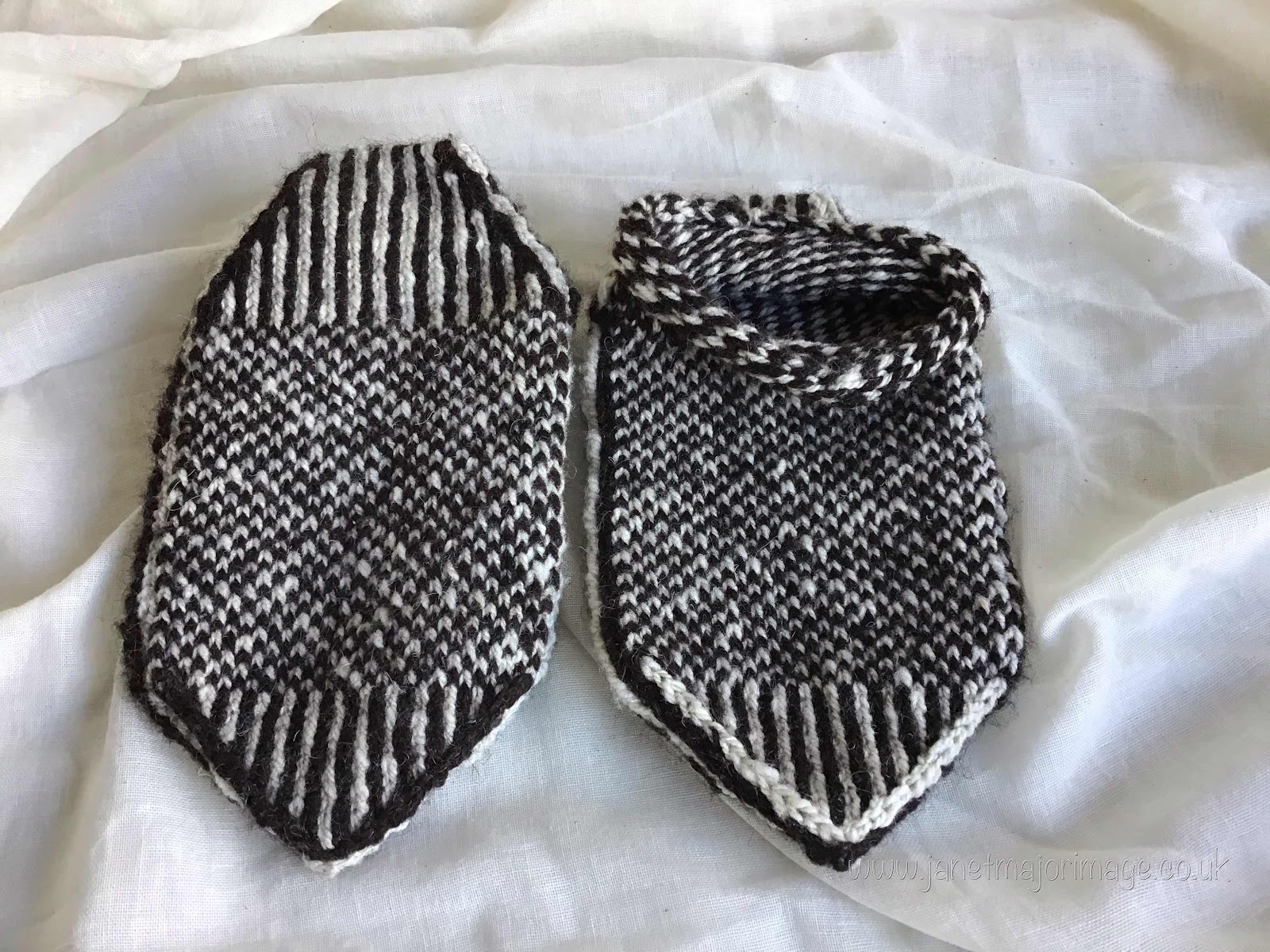
Completed slippers, showing sole and top side and you can see the twined knitting inside.(4)


I was very pleased with the result and the slippers fit well. I will use them as an alternative pair of ‘handbag’ slippers, ie the ones I take with me when visiting friends. 


I am looking forward to knitting another pair inspired by the book, which I have now bought for Kindle at a reasonable price. 


  1. The book is Knitting Scandinavian Slippers and Socks. The explanations are very thorough. I really like Laura Farson’s  style. 
  2. Denise runs the Hebridean Woolshed (www.hebrideanwoolshed.scot). There is a campsite next door which includes a great cafe. A wonderful  part of the world. 
  3. ‘Knitting across Borders’ workshop described on blog post of 23 Jan 2020
  4. The pattern gave a ribbed sole but I did it differently ! 

Tuesday, 4 February 2020

Shetland Wool Week 19: 20 The journey to home

Wed-Fri Oct 9-11: Day 24-26 

We had a good crossing and were into breakfast early so were able to get a table next to a window and so could watch the journey into the dock. It is a large boat (by my standards) and the skill of the crew in manoeuvring the boat into just the right place always amazes me. 

The good news was that we did not have to start off the morning by going to Aberdeen Hospital, the swelling and redness around the wound on M’s foot had subsided but care would still be needed! 

We knew we would be delayed in moving the van as we were tightly packed into the side surrounded by large trailers. In fact it only took 20 minutes to get us a safe path out onto land. 

Our first stop was going to be Glendoik Garden Centre, situated just east of Perth where we would take our second breakfast today. We always stop here and I have  recommended this place to several who I know will be travelling past. However, it was a disappointing stop food wise. It was 9.02 when we got there, they had just opened so we had made good time. We brushed off the frustration of M choosing a teacake and then having to take off the clingfilm/cellophane to have it toasted. To my mind unneeded waste but perhaps it was a health and safety issue. I choose a bacon bap but this had to be sent back twice as the bacon was cold. The staff reaction made me feel the issue was my fault! I felt that, possibly with success had come a downgrading of the importance of the customer experience. We will stop here again and hope it was ‘just one of those days’ ! 

We noticed how the plants had changed since we were here on the way to Shetland, it was looking very autumnal from our table. 


I thought this was a great Christmas decoration 


I drove onto Cairn Lodge, now part of the Westmorland group where the whole experience was great. The food was excellent, the ambience was good as it has been refurbished as part of the take over. The staff were friendly and looked as though they were enjoying the job and steps were being made to reduce waste. We had a good rest and had lunch here. (1) 

Unfortunately the weather turned poor with very heavy rain and driving became more difficult as more traffic built up as we got further south. We decided to stop at Annan Water where the motorhome specific parking had plenty of space. (This is not always the case during the summer). We both slept and made our own tea. On looking  at the map,  we were able to drive on non motorway roads to Hoddom Castle our stop for the night. We got there about 16.00 and we were looking forward to a good rest. The journey tomorrow would be 50 miles shorter.


On Tuesday or first stop was at Rheged, just off the junction of the M6 and A66, another great place for a good bacon bap and early coffee. Usually we would drive into Barnard Castle to the Bowes Museum for coffee. Parking is good and the cafe has great views, and a nice ‘arty’ shop. However, we were disappointed with this on the way up and when we noticed Thorpe Farm Shop on the East lane of the A66 we decided we would try that. This looked a relatively new venture and was very clean. After having a pot of tea we decided to stop for lunch. It was good and this is now duly added to the map.(3) 

It was a busy and uneventful run down the A1 to Clumber Park where we would stay the night. (4) We noticed how warm it seemed for October, the van thermometer was showing 20C in the living section. 


Time for some knitting of the fair isle gloves. 


Friday was our third and final day of travel down to East Anglia and we were hoping to be in by lunchtime. We stopped at North Grantham services which provided all we needed but which was not an uplifting experience. We drove on and were home for lunchtime, even though it was Friday. We had time to make a quick lunch, unpack the van and drive to the surgery where we would make the last of the scheduled flu jab clinics! 


It was the end of a wonderful trip. Already in my headmI was working out what my Shetland Wool  Week 2020 new knitted garment would be. Each year we say the experience can’t get any better, but it does. We were so lucky to be able to make this trip, we had wonderful scenery, good weather and  good birds. The wool week classes, lectures, exhibitions etc will be remembered for ever, and I have enough textile creative ideas to get me through another year. But what makes it so special are the people, the Shetland folk and the wool week friends we meet, and new friends that we make each year. You know who you are and thank for very much. 


This post has been rather heavy on Camping Sites and possible stops for refreshments. I make no apology for this. If I have helped one fellow traveller it will  have been worth it. 


A couple of photos that I could not fit in to other posts: 

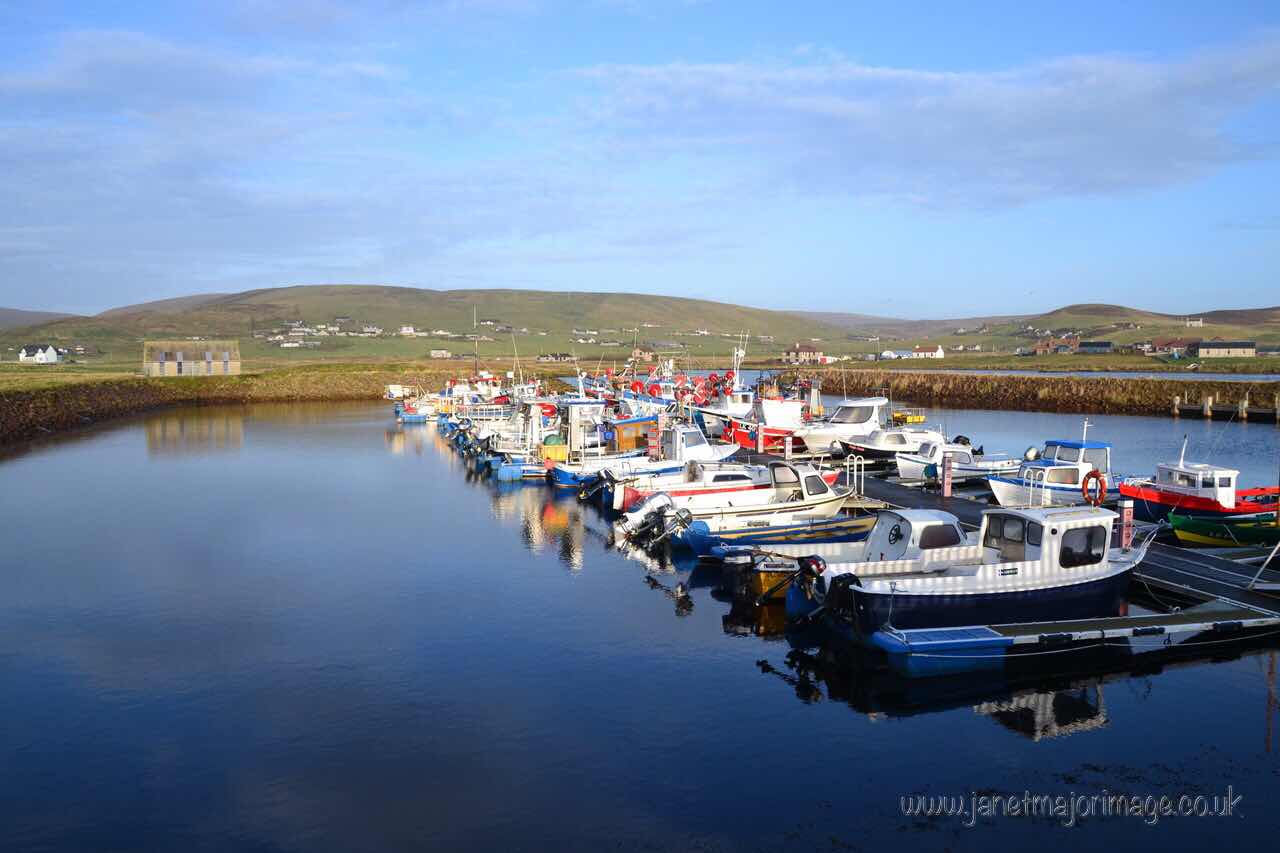
Aithsvoe : the view from the campsite when we were staying on Mainland


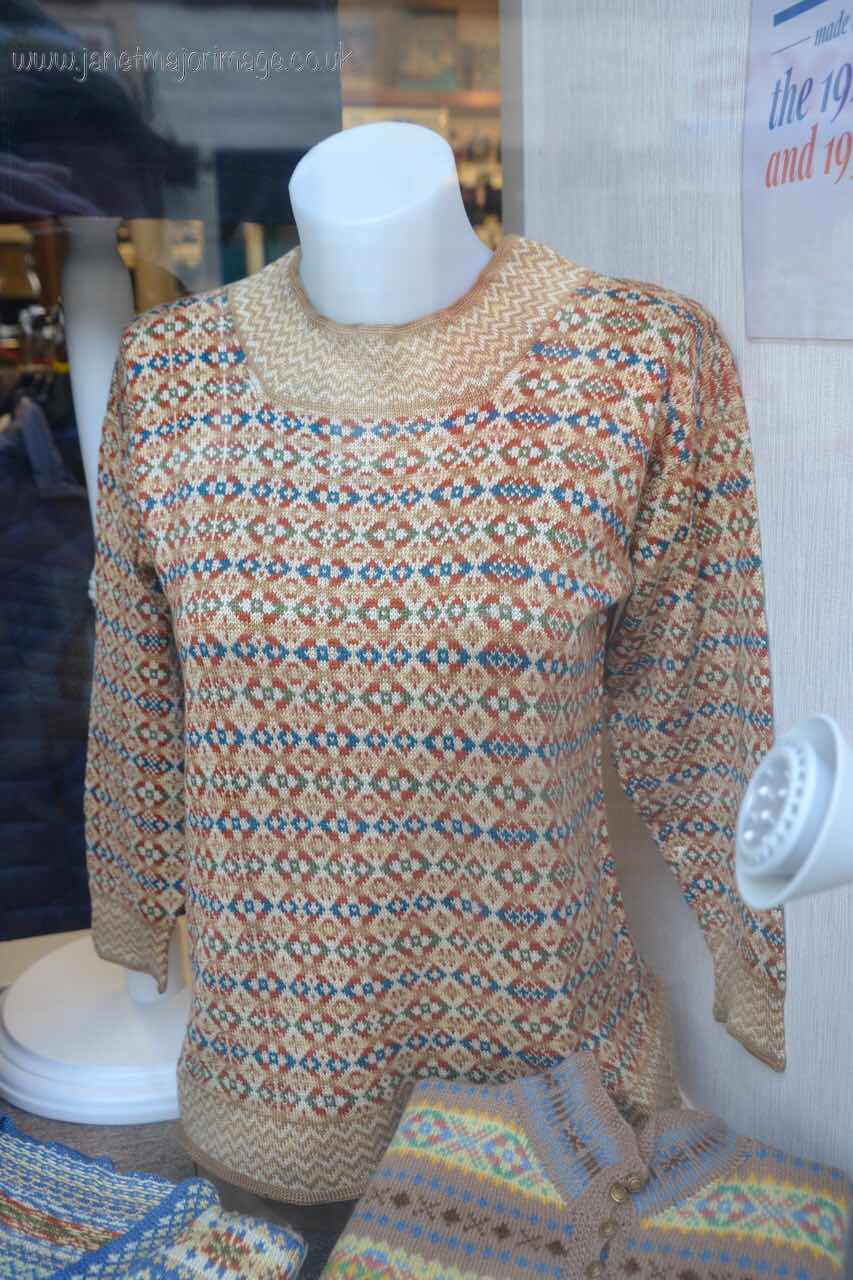
One of the beautiful jumpers in Tulloch’s window Lerwick


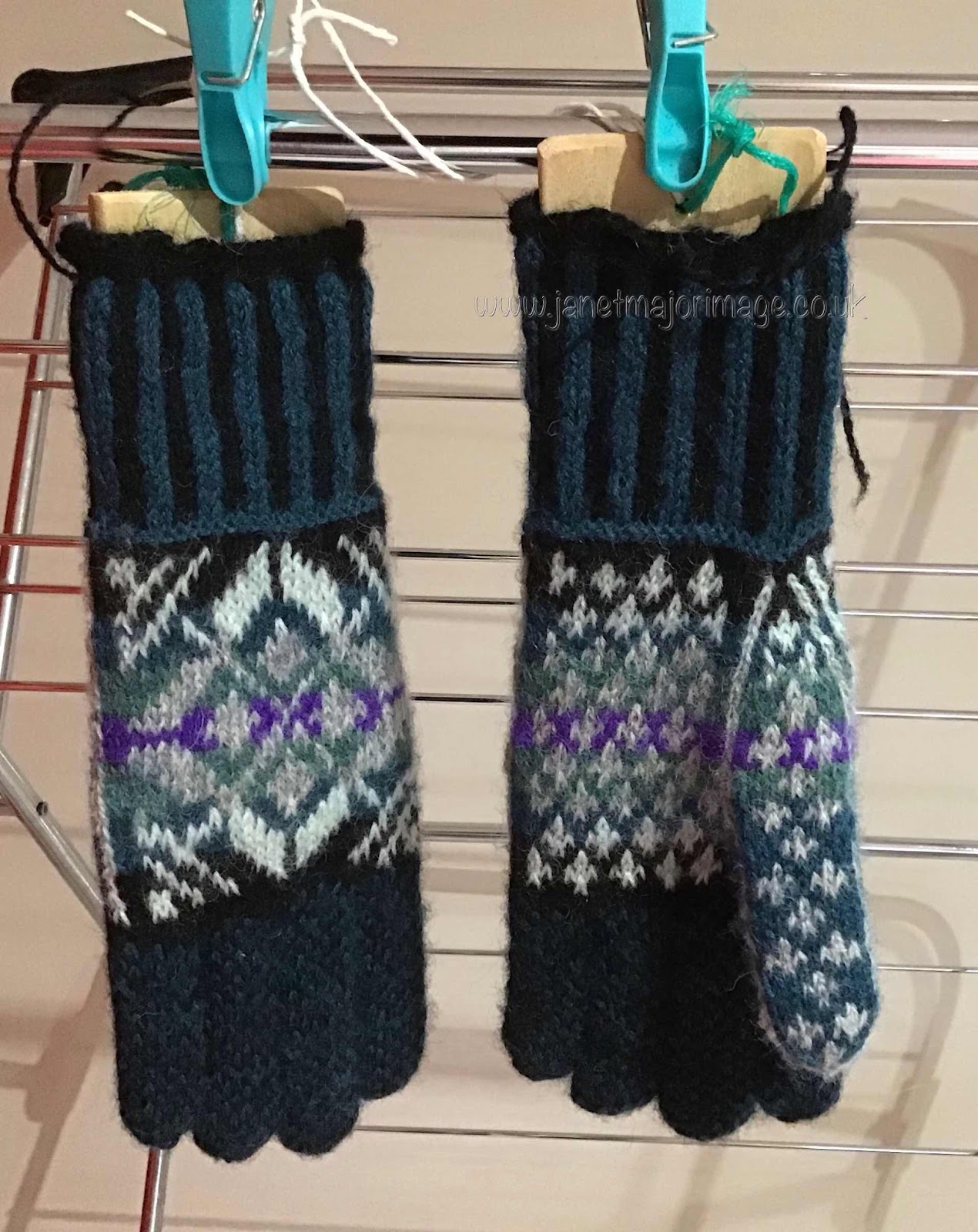
and the finished Hoosiefield gloves which I loved the design of, loved knitting, love wearing and love the compliments I get when  wearing them! 


  1. There is also a farm shop, although not as big as the original one at the M6 Westmorland Services. 
  2. This is a large and very spacious campsite surrounded by woods near Ecclefechan in Dumfries and Galloway. There are permanent ‘mobile homes’ as well as stops for those of us travelling. We have always found the team are extremely well organised with the facilities spotlessly clean. We do not mind travelling a few miles from the motorway to stay here. There is a bar/cafe which serves meals but do check if this is operating. It was open travelling up but closed on this journey. 
  3. Besides using the sat nav we travel with a Philips Navigator Britain 1 1/2 miles to 1 inch road atlas, finding the scale excellent if roads get closed on us, wherever we are. However, we need to update this as it does not have the new circular Norwich road on it! 
  4. Another site we like, spacious and preferably parking where the back door of the van opens  straight into Sherwood Forest. The downside (or upside) is the lack of both mobile phone and WiFi.


Saturday, 25 January 2020

Shetland Wool Week 19: 16 Mood Boards and Machine Knitting

Friday Oct 4:Day 19 

Today I was taking my last class of wool week and like yesterday’s class it was one I had been hoping to take for some years. The American lady I chatted to from the table next to ours last night in The string had taken the class Thursday afternoon. She was very complimentary about it and if anything, over breakfast, I was looking forward to it even more. 

We were up and about early as M was going to drop me in the middle of Lerwick at 9.00 and then drive back and park at Tesco. He could pick up bits and pieces we needed and walk back to the Health Centre to have another INR  test. 

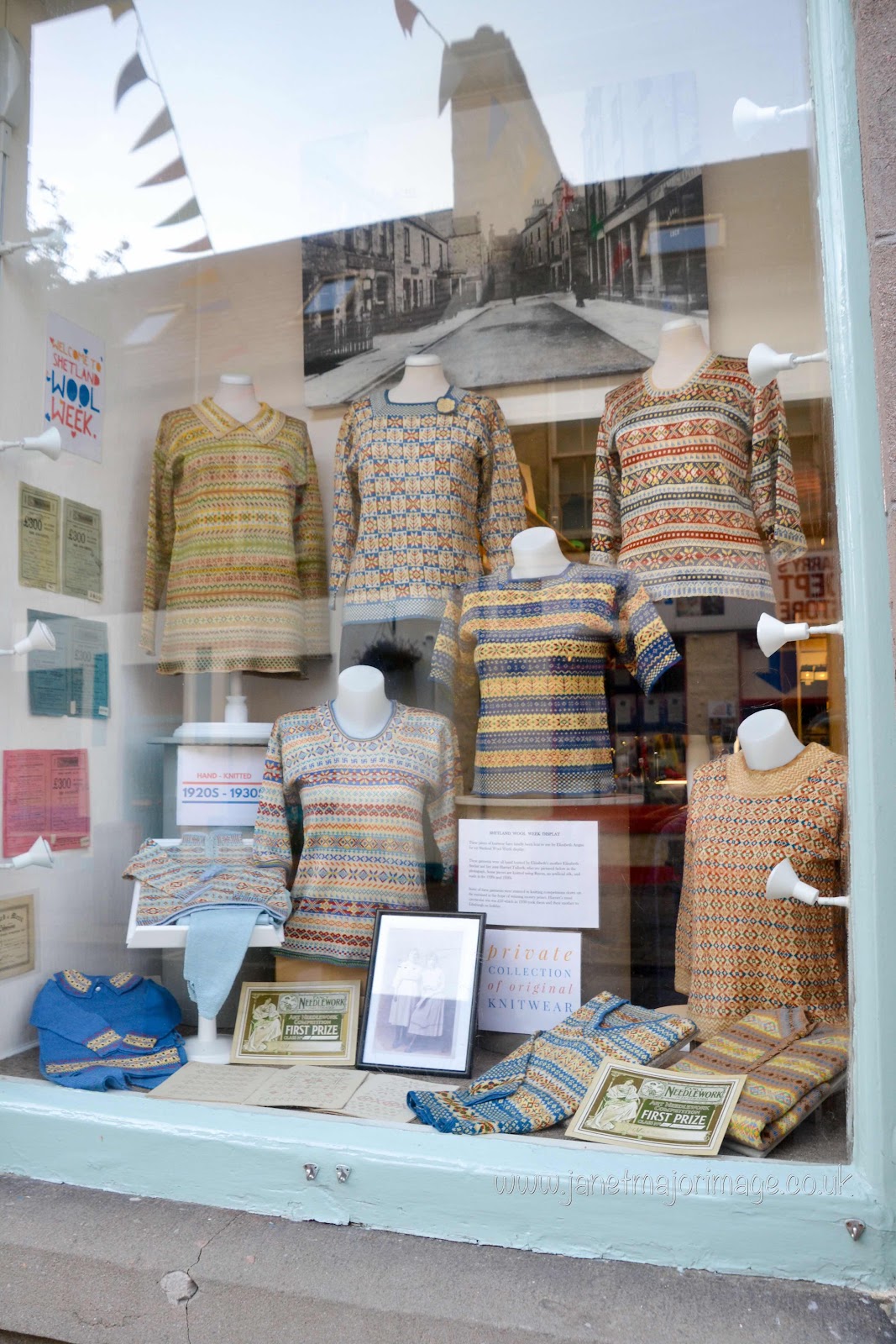
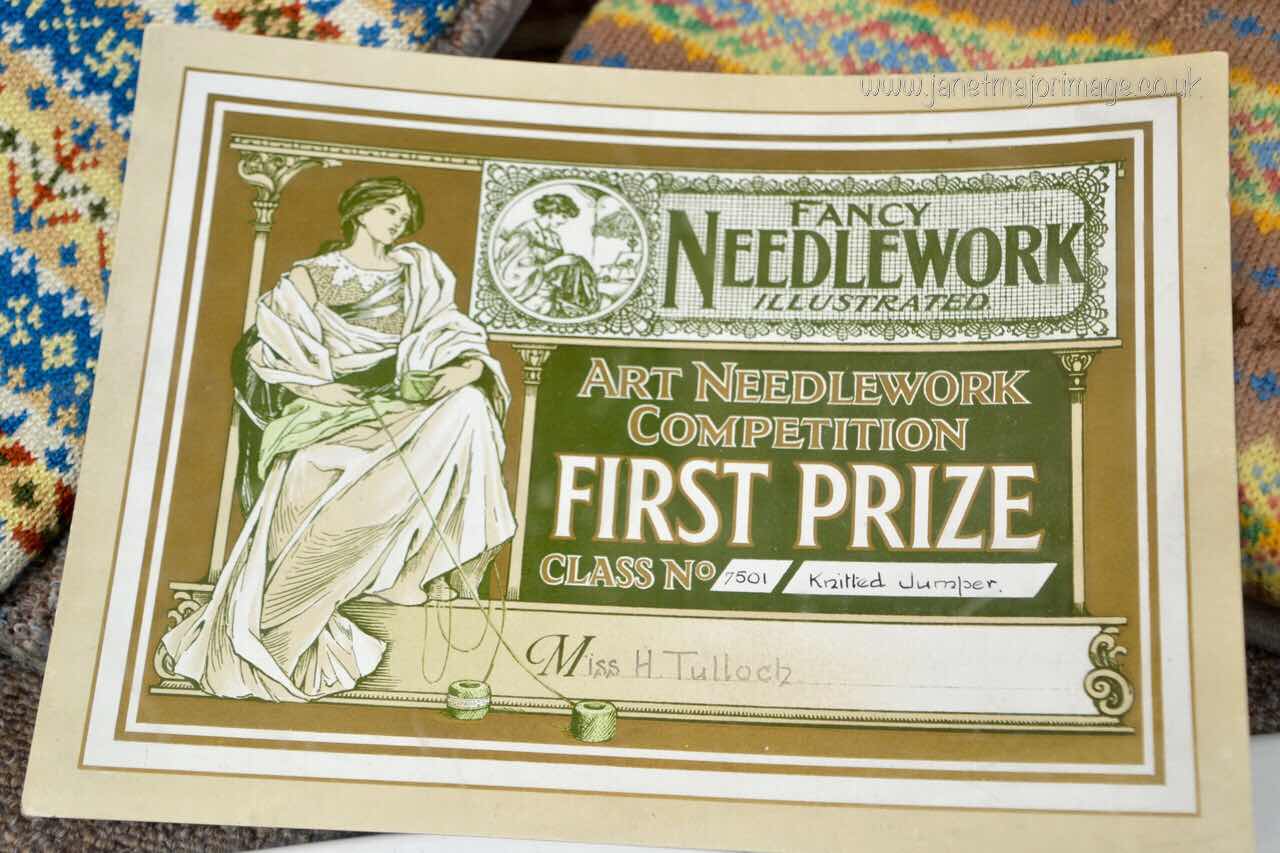
I took the opportunity to walk up the town (North) and spent some time looking in Tullock’s window. This was like looking in a Museum as on display were a selection of jumpers that had been knitted around the 1920s and 1930s and had been lent by Elizabeth Angus.They were very interesting as many were knitted in fine rayon, many had fantastic finishing details and many had won knitwear prizes and they were in great condition. (1)


The window, apologies for the reflection! 


One of the prize certificates. 


It is so lovely to see shop keepers getting into the spirit of wool week and pulling out all the stops. Again looking at these was free and something any visitor to wool week could do. 

My class was in Ninian in Joanna’s  upstairs workshop. This is quite small  and 4 of us sat round a table with Joanna standing. It was very much a workroom and it felt good being in there.(2) She is very enthusiastic about what she does and still had bags of energy left on Friday. 

What was great was that she had the whole set of Jamieson’s yarns for us to select from. These were in the Spindrift range- that is a lot of yarns and they weren’t just samples they had started as whole balls of yarn. (This is important, I have the shade card but having more of the sample colour makes such a difference.) Joanne wanted us to work outside our comfort range of colours- I found this the most difficult part of the class. 


She began by talking about her background in designing going right through to making the finished machine knitted product. She talked about  where this had taken her geographically and also gave real gems of tips. Then it was our turn! We started with a blank sheet of A3 paper and guidance as well as one to one encouragement and motivation to stretch our capabilities. Then there was the selection of a working palette. 


The final treat was to see these mocked up into a working design, using DesignaKnit which I had heard of, it is used by some machine knitters. I thought (wrongly) that it was just about designing shapes but was more interested in it when I saw how it could put colours together and then switch individual colours at the press of a button (or two). Seeing our colour choices  added into a charted pattern was great. The class ran over. The cake and drink were superb and the time went too quickly. It was a great class to end the week on for me. 


I met M who was anxious as I was so late. (I need to eat regularly and often to avoid migraine) so we drove down to Mackenzies, our usual second breakfast venue. Although  it was busy we managed to find a space to eat, along with other woolly minded people. The bonus was M got chatting to a birdwatcher and got details of  another place or two to add to his list to visit. My plan had been to go down to Bigton for lunch but we felt it would be too much of a rush. Another item for next year’s list....assuming they will continue to be part of Wool Week in the future. 

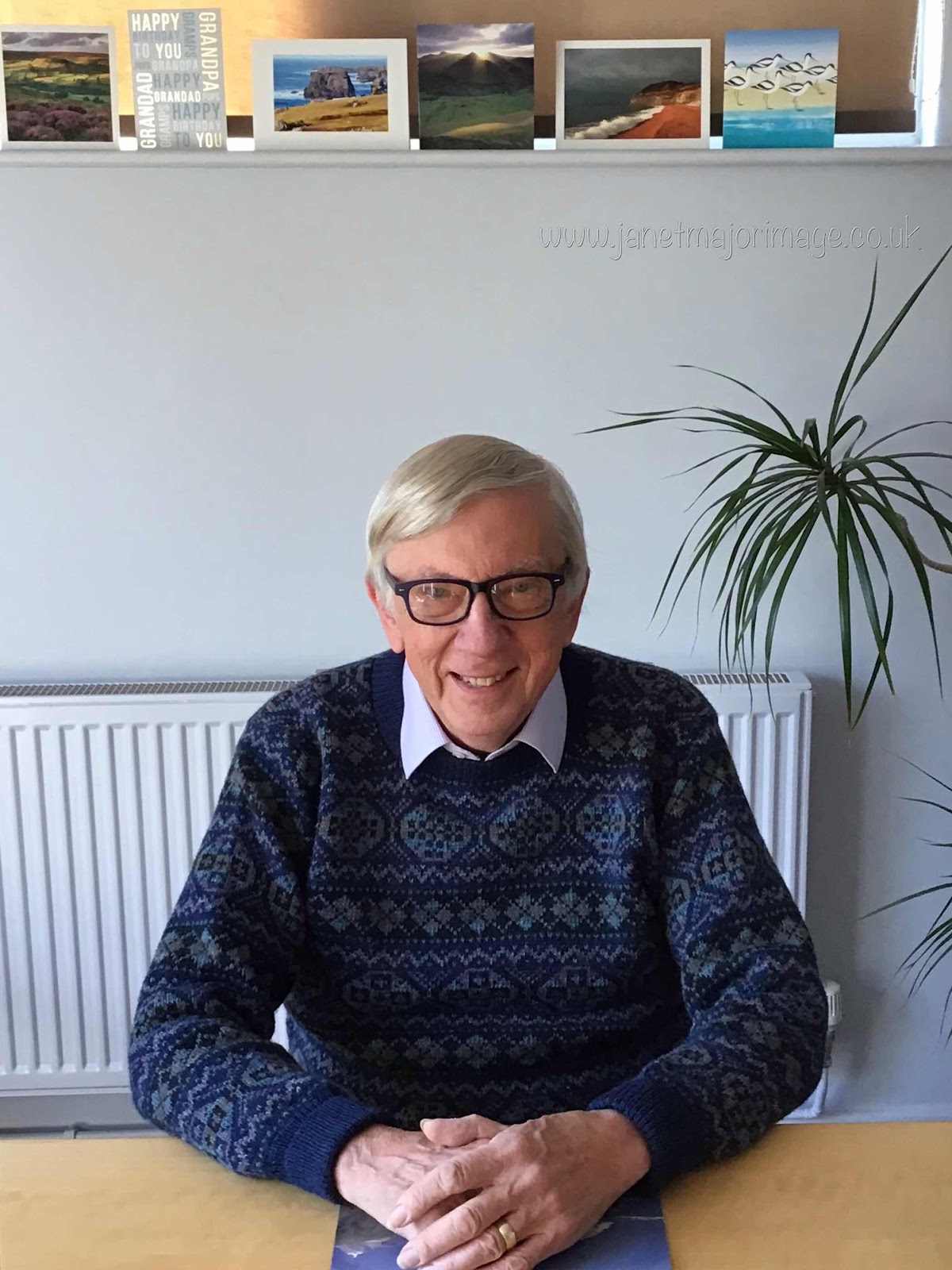
After lunch we decided to shop at Wilma’s as we hadn’t seen her or Irene all week.(3) It was good to have a chance to have a proper chat and M found a couple of jumpers he really liked, this is one of them and Irene and I talked about some of Wilma’s new designs for this year based an Mike Finnie’s artwork.(4)

Wearing the new jumper 


I think the other jumper  is very clever, it is in finer wool and has stripes and both the body  and each sleeve are knit in the round. As a machine knitter is it good to see different designs from those in my usual repertoire. 

Another great day finished off by sharing notes with Kate, who had been on the Whitling a Shawl Pin workshop and visiting St Ninians - one of the very special places of Shetland. 


  1. They were all knitted by her mother or aunt. They best prize had been of £50.00 and had paid for a holiday in Edinburgh for their sisters and their mother in Edinburgh. 
  2. As Joanna could only have 4 at a time she ran this class 8 times during wool week. I was there on the Friday and she showed no sign of it being her 7th time that week! 
  3. Wilma Malcolmson is TerriLaura’s grandmother, we had seen them briefly at the Terri’s Creative Crew evening on Saturday. Wilma trades as Shetland Designer and M very much likes her jumpers. He likes to get a new one each year. 
  4. Mike’s artwork can be found at https://www.redhouss.co.uk/

Thursday, 23 January 2020

Shetland Wool Week 19: 15 Estonian Edgings plus and Fine Lace Knitting

Thurs Oct 3:Day 18 

I had hoped to do Hadewych’s ‘Crossing Borders’ class last year, but it wasn’t to be. I was very pleased to be doing it this year and it was to be another day spent in Hoswick. Again there were just 6 in the class, Maggie and I from England, an Israeli lady who I first met and chatted to in a previous year when we were in Unst, an American  lady and 2 ladies who were friends and part of a group of 4 from Australia. 

Hadewych (1) began by showing us some of her colourful and beautifully finished knitwear. It was obvious she was, like me, a perfectionist in terms of finishing her garments and I realised I was going to like this class even more than I had anticipated.


We had been asked to bring a 15cm square which we would work round during the class. I had knitted mine in the grey wool of my yoked jumper and taken my naturally dyed ground elder yarn with me to use. (2) Hadewych gave out a well illustrated and clear handbook for us to use at home but did not expect us to work through it in the class. 


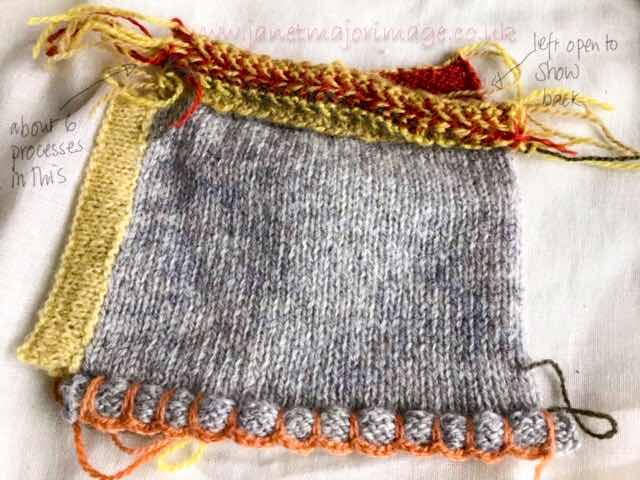
We started off doing what was described as a relatively simple border which resulted in a textured bobble edge and this got us into finding the stitches required at a border. After some time spent on getting perfect facings and learning about zip insertion that stays flat we moved on to Borders in Estonian Knitting. Hadewych had initially learned  from Riina Tomberg and I quickly realised that this could turn into another obsession. 


I was so pleased to be introduced to these techniques and I could see how different combinations of stitches and colours could personalise any knitwear. I had plans in my head for my 2020 knitwear. We will see if I can add some of what I leaned in this great class. (3)


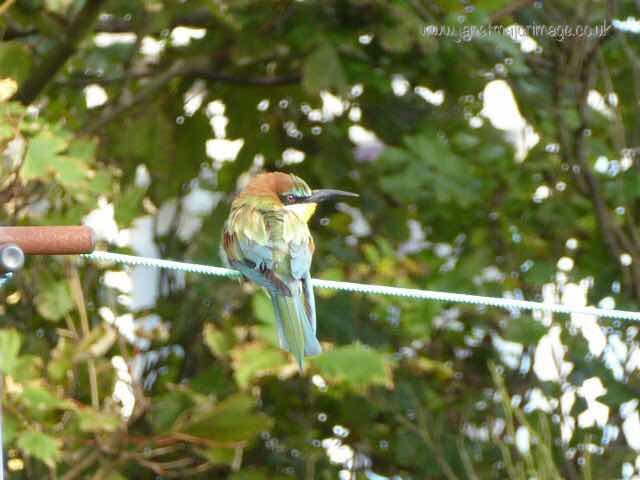
Michael arrived back during the afternoon. He had driven to Ollaberry (a round trip of 80 miles) to look for the Bee Eater he had heard about. He had had a great day, watching it for some time and taking photos. 


We had a fairly swift turn round as we were off to dinner at The String. This was just as good as we had anticipated and it was great to see and talk to other diners who virtually all seemed to be there for Wool Week.

We then walked to the museum where I was going to Carol Christiansen’s talk on ‘Elegant and Handsome Specimens of Knitting: Shetland Lace Close-up’. 

I sat with Kate and we had a catch up on how we had spent the day.(4)

Carol’s talk was excellent. There is no other word for it. It was well illustrated and she spoke for an hour or so. There are about 400 pieces of lace in the Museum  Collection. Carol described the history of lace knitting in Shetland and  referred to 10 years of research. She discussed a couple of earlier pieces of work in the quest to try and define Shetland Lace Knitting and what sets it apart from other Lace Knitting. Most of the pieces in the Museum are knitted from hand spun yarn. Most of the pieces have little documentation. Her current research project was described and we heard how Ann  Eunson is examining and charting some of the motifs and Kathleen Anderson is knitting these as samples. The plan is that a book of these will be published. I took copious notes, as I do, 16 pages and so can do no more than outline  what I noted. (5). As a dedicated fine lace spinner and knitter I found this excellent and good value for my £6 ticket! 

What a wonderful day for both of us. 


  1. Hadewych had a career as a teacher in the Netherlands. As a school pupil she spent some time in Norway and got interested in two colour knitting. She has run many workshops in wool week and also Netherlands, Norway and the Faroe Islands. 
  2. In hindsight  this was not the best choice. I would have been better using strong clashing colours so I could see the separate stages of each process. 
  3. As I was doing the class it brought back memories of machine knitting classes I had done at Metropolitan Machine Knitting with Carol Hocknell based on the work of Audrey Palmer. I determined to get these samples out when I got home! 
  4. An early piece of lace in the collection has been on show in the museum and belongs to the family of Kate, dating from when a distant grandfather was Minister in North Mavine. It is thought the piece was knitted by the nurse to the baby. This is a very complex piece  with a hood and is being  studied by this research project. 
  5. Carol was interviewed for Fruity Knitting podcast 89 where she talks and shows some of the samples of knitting done in the quest to chart these motifs. She has also written a blog post about this latest project on the Museum website here. https://www.shetlandmuseumandarchives.org.uk/blog/the-fine-detail-of-fine-knitted-lace