Showing posts with label Norfolk Horn. Show all posts

Monday, 1 June 2020

Fine spinning and communicating the details


Last summer I started a natural dyeing project, which I am going to write up when it is finished. My current  Fine Spinning project is an unexpected offshoot of this. During the dyeing, for one aspect I needed to dye some silk and wool in the same dye bath and found a blend of the two fibres advertised. The dyeing is being completed under strictly controlled conditions and each different dye bath takes several hours to complete. The silk and merino I had dyed looked marled and when I viewed it under the microscope I was stunned, the ‘silk’ had not taken up the dye at all. In fact the threads looked too smooth to me to be silk. I contacted the supplier who was reluctant to accept my explanation, until the microscopic results were seen. Costs of the fibre were reimbursed but of course not my time. 

So, after this I repeated the dye bath I had been investigating with some hastily spun silk and some separate merino.  As expected both dyed but given the silk was not spun very evenly (1) the colour varied depending on the diameter of the yarn spun. Hence I decided to take upon myself spinning my own fine yarn, both wool and silk as I could be sure of the provenance of both. 


I love fine spinning, in fact that is why I learnt to spin, and I have been a member of the cobweb and gossamer spinning fb group since it started. It was from this group that I came across the  man who runs ‘Fleece Loved Products’ (2) who was developing a custom bobbin for a spinning wheel particularly for cobweb and gossamer spinning. It was great when I realised that he and his wife (a very fine spinner herself ) were to be at Shetland Wool Week. We had some correspondence before we left and decided to meet up at Ollaberry during the week where I could try one of these custom bobbins on my Joy wheel. 


What a real treat that was, sitting amongst the glitterati of the Shetland Fine Spinning ladies and trying out first of all the special bobbin and its support system on my Ashford Joy wheel and then an Ashford e spinner, with custom modifications too. I made some purchases to aid my fine spinning. 


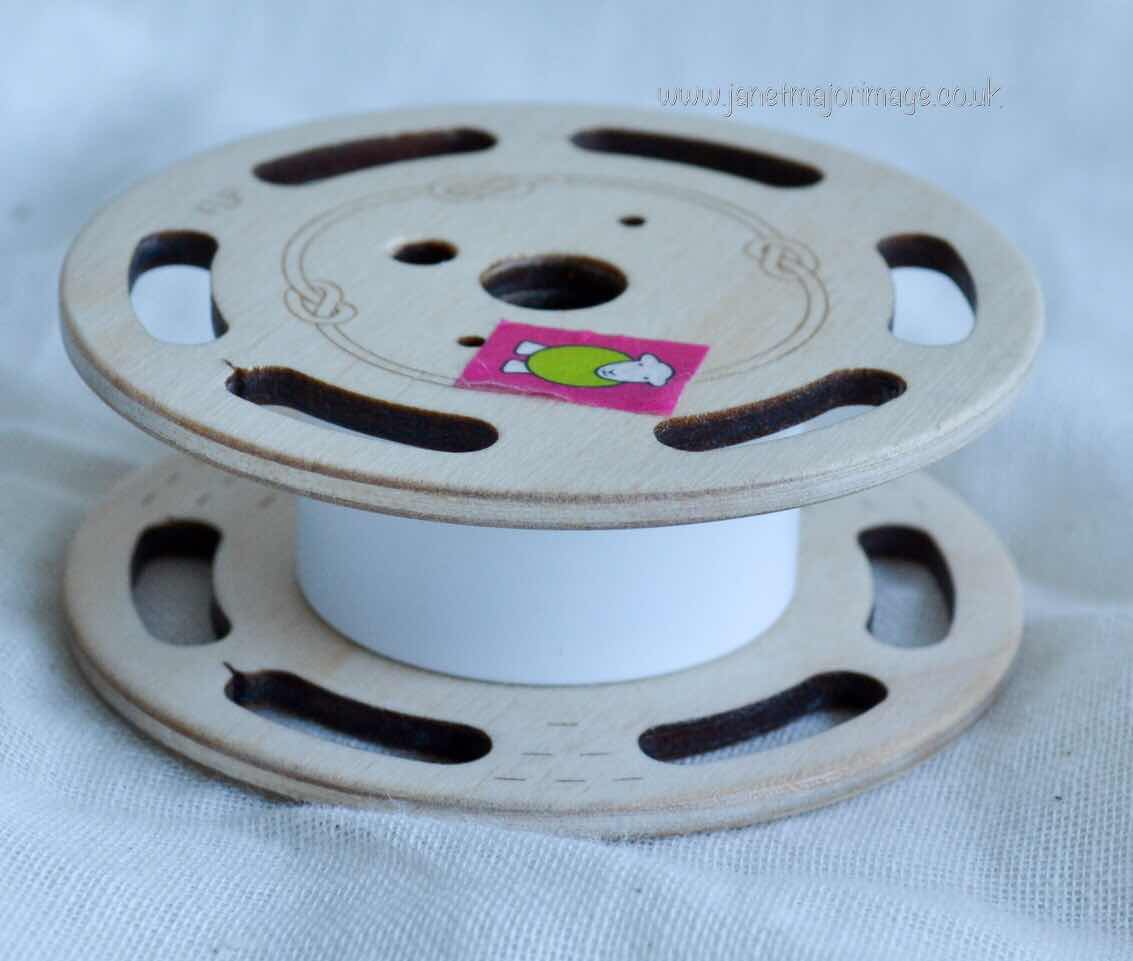
Custom Ollaberry Lace Weight Bobbin, the sheep addition is mine. 


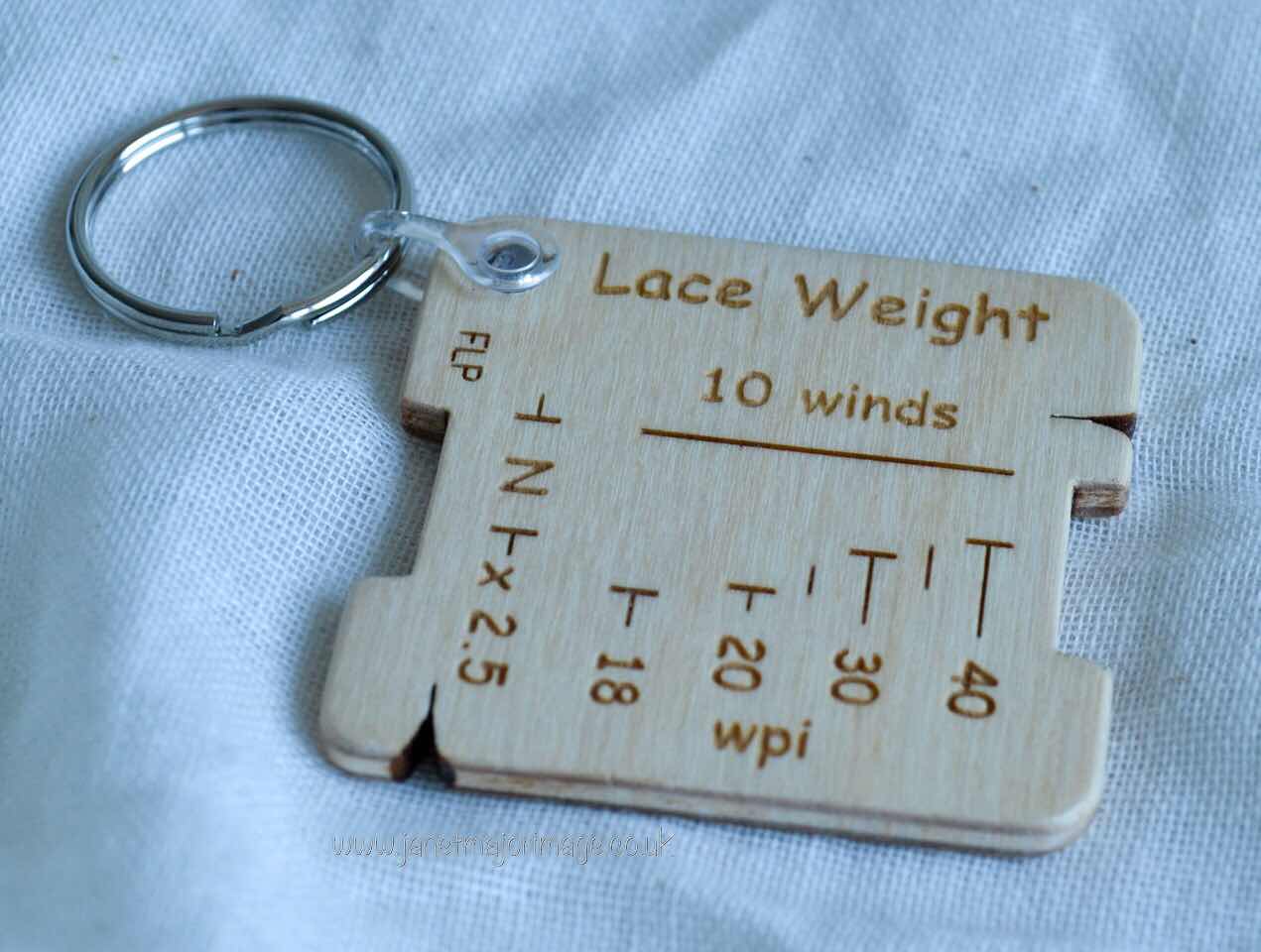
Ollaberry Lace Weight Gauge for Lace and Cobweb Yarns, both sides


So since Shetland Wool  Week I have spun small skeins of fine yarn ready to continue my natural dyeing project. 

So far I have spun: 


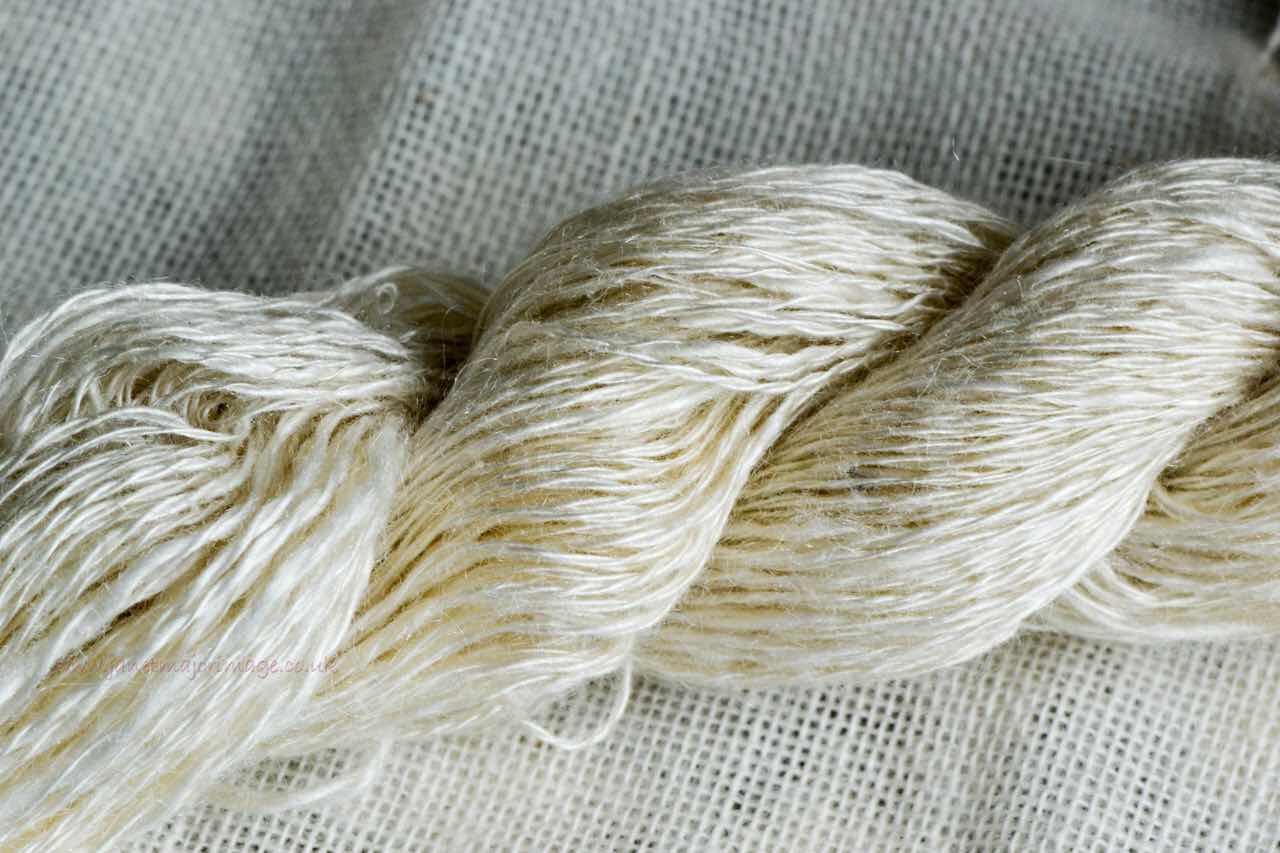
Silk

Lincoln Longwool 

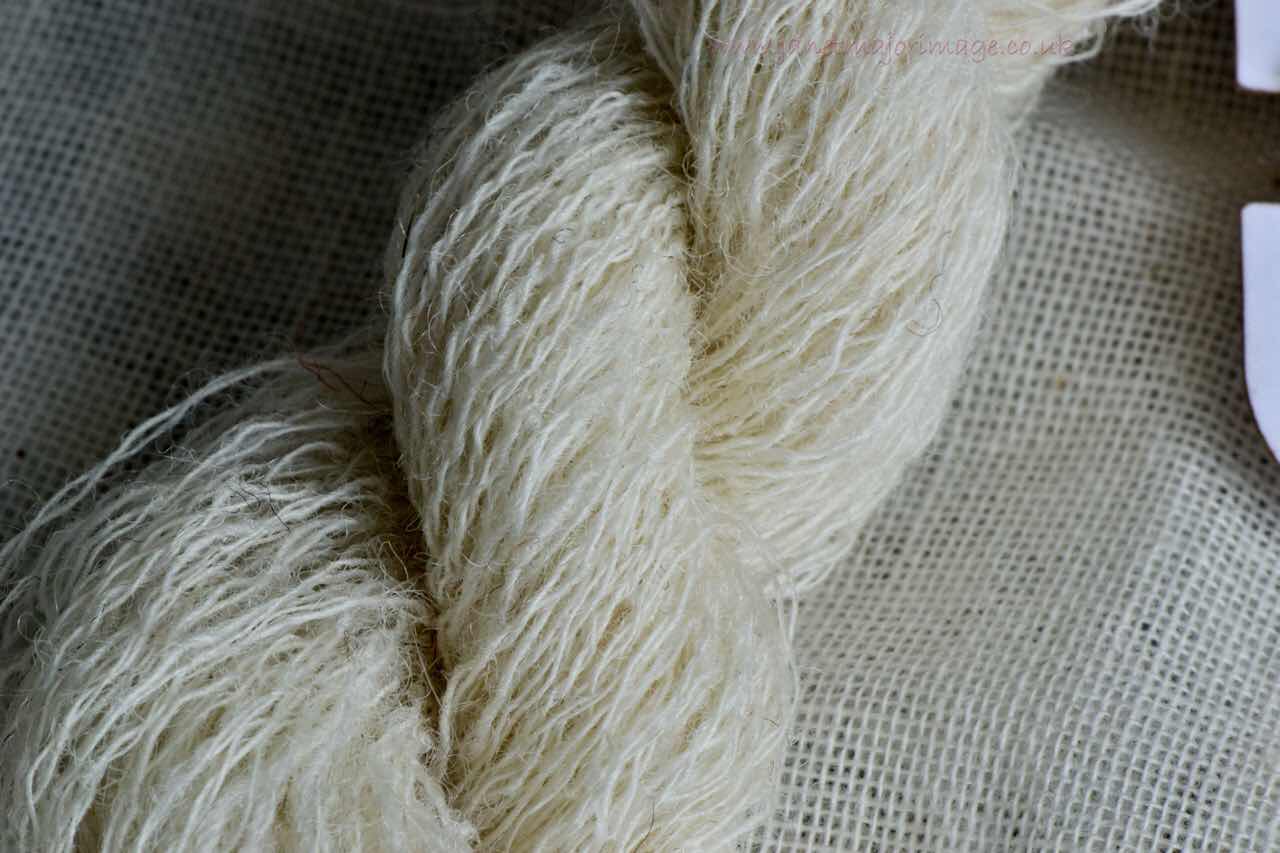
Norfolk Horn (3)


I was going to stop there, but sorting out my spinning store I found some cashmere and Cormo so think these will now be added....


During this time I have followed postings in the above mentioned fb page and keep in touch with ‘Fleece Loved Products’ and would dearly love it if we (spinners of fine yarns) could report our spinning results in a standardised format that we all understand. Seeing a fine yarn draped across a coin of another country is not useful to me or I guess most people across the world either. 


Fleece Loved Products have more than risen to this challenge (2) and are developing aids that would really help fine spinners to measure their yarn accurately and also report it in a standard way. 


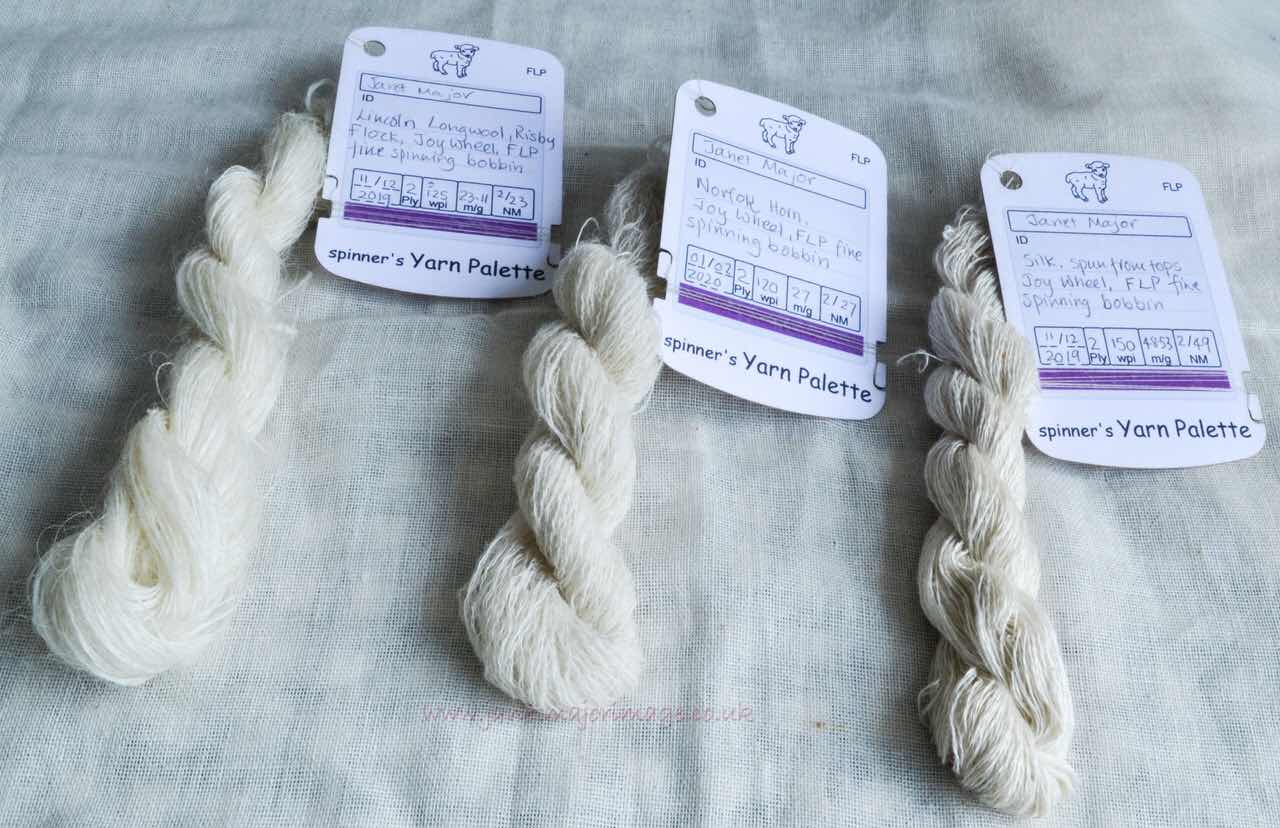
Hence the yarns I have completed follow and I hope provide the information that other fine spinners would want to know. I also have used a microscope and micrometer scale (on a glass slide) to measure the diameter of my yarns and can confirm that the wpi gauge, which is so useful when I spin a fine yarn as I use it, is accurate for diameter when compared with my micrometer measuring. 


You will see I am using a record card called a spinner’s  Yarn Palette. I find it very useful to have all the information attached to the yarn. To me the most useful measure of the gauge of a yarn are m/g and hence the NM number (5). If anyone is interested in trying a sample of this record card in return for some useful feedback I can make a limited number of sets available, just let me know. 


All 3 yarns and their details 


Lincoln Longwool macro
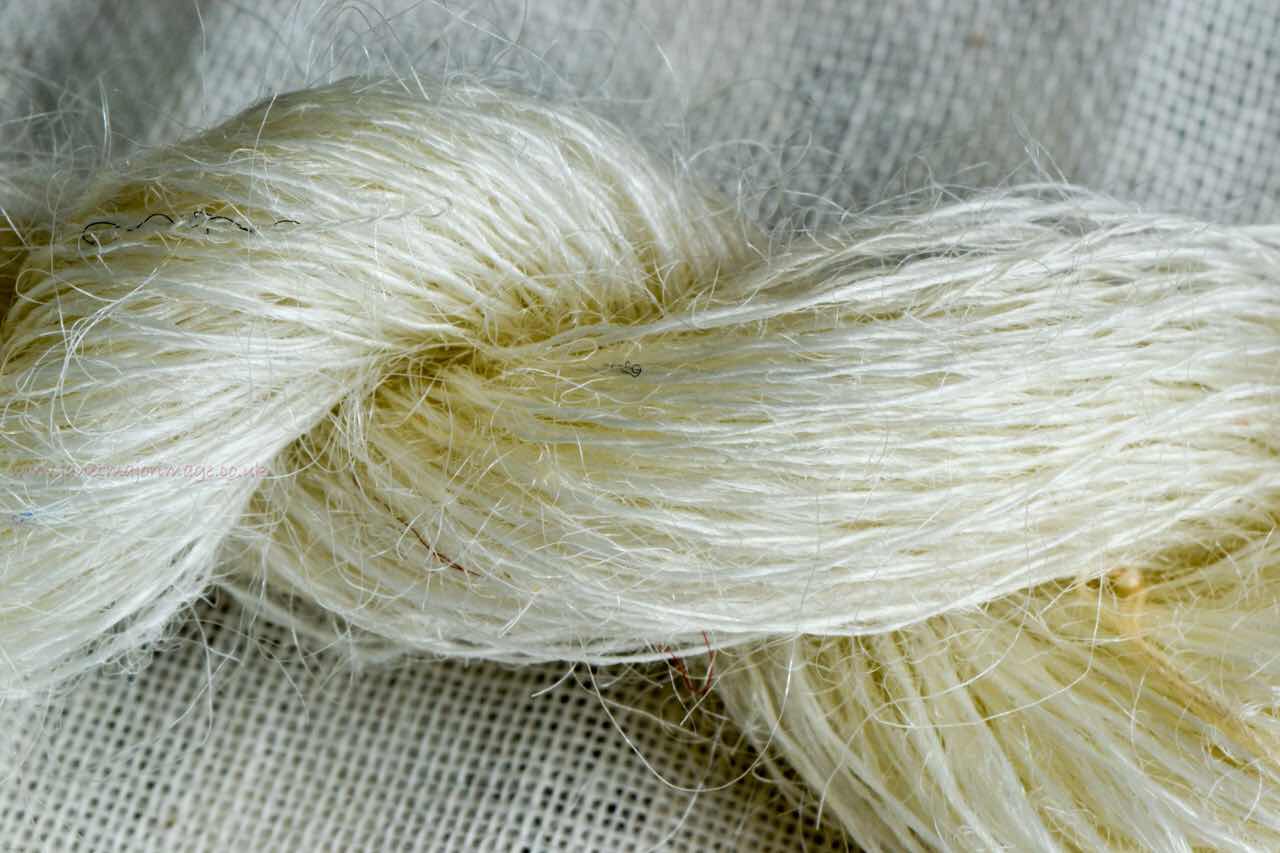


Norfolk Horn macro


Silk macro 


I am not interested  in entering the Bothwell  Spinin ‘The Longest  Thread Competition’   but others might be and I give a link below (5)


I have just got joyfully sidetracked trying to obtain some fine silk and wool yarns that I can use in my natural dyeing project! However, spinning these  different yarns and comparing them has given more questions for me to investigate later!


Notes:

  1. The thicker yarn gave a lighter colour. 
  2. Fleece Loved Products can be contacted at fleecelovedproducts@gmail.com and their spinning products are stocked and normally available from Jellybeans Yarns on Etsy or via the Beaker Button website
  3. Norfolk Horn yarn is local to me and an historically interesting rare breed fleece. Another post, at least, is needed to discuss the historical importance of the East Anglian Textile industry. This resulted in Norwich being the second city of the land and to the wealth of the region. The breed virtually became extinct and rose from the ashes so to speak by a breeding programme that led to the set up of the  Rare Breed Survival Trust. There are theories and myths about when the breed arrived in this country and much work has been done by specialists in archeological textiles detailing what is actually known.  One excellent more general book about East Anglian Sheep Breeds is Black Faces by Peter Wade-Martins. 
  4. The NM number might look something like this NM 1/49 meaning there are 49 metres per g in the singles, if it is 2/49 it means the yarn has been plyed. Jamieson’s and Smith use this method with their cobweb yarn. I feel it is a good system, one instantly knows the fineness of the singles and hence if it is singles in the photo or plyed. There is an additional Card in with the spinner’s  Yarn Palette which explains and takes you through this calculation. 
  5. The Bothwell  Spinin ‘The Longest Thread Competition  https://bothwellspinin.com.au/the-longest-thread-competition


Sunday, 8 March 2020

Scandinavian Slippers


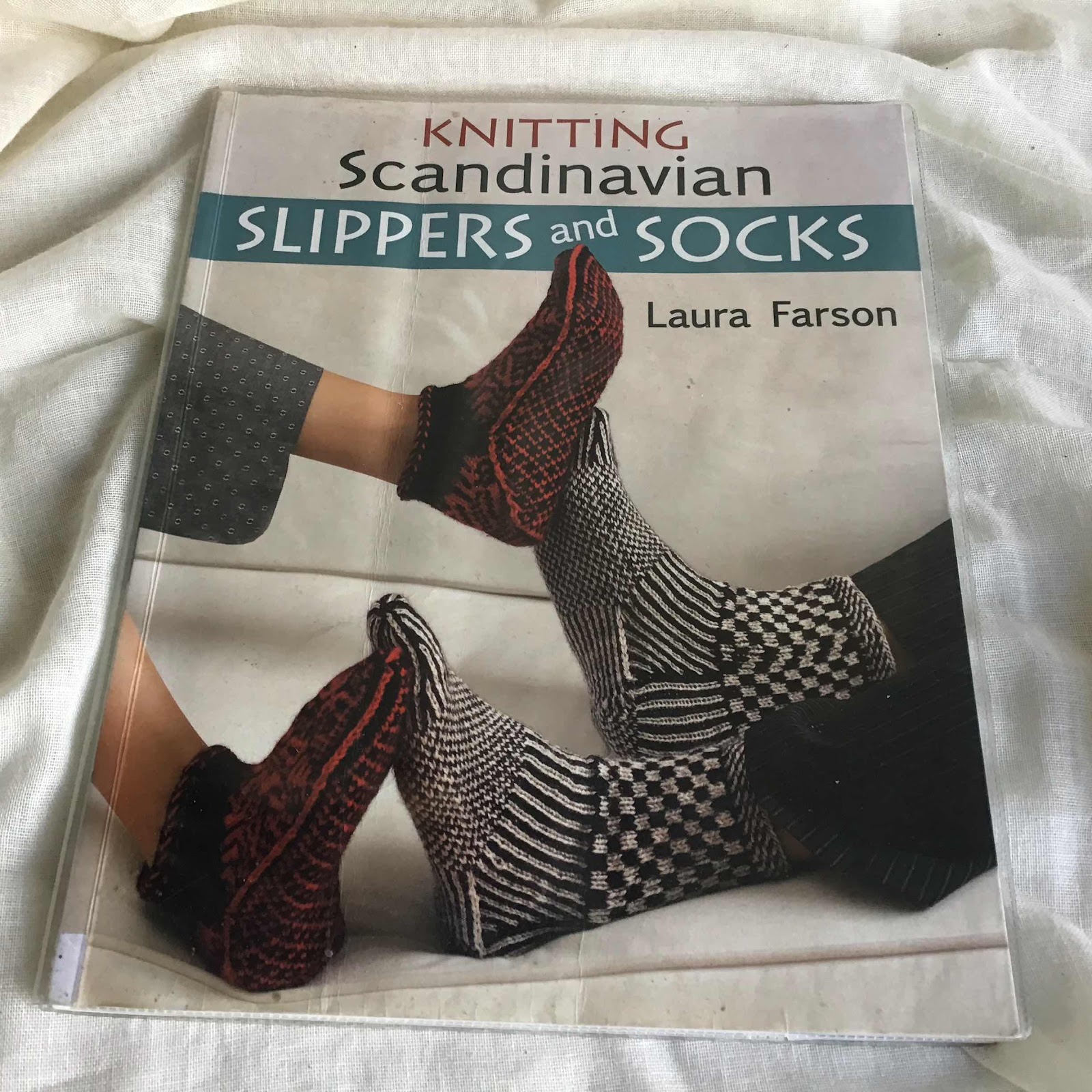
This book (1) caught my eye in the library and I thought I would have my first attempt at twined knitting. 


Rather than just jump in I thought I would knit the sample pair as suggested but do them in ‘my colours’ rather than the different ones recommended. (The different colours are so you can see the different stages, which was a great idea.) 

I used my own Norfolk Horn hand spun yarn from a local farm which measured 11 wpi. I teamed this with some Hebridean  Double Knit (14wpi) yarn which I bought from Denise Bridges (2) when we were last in South Uist. I used this Hebridean yarn double and the pair of slippers took the whole of a 50g ball.

I used my knitting belt and 3 dpns size 3.5mm. The cast on was a 2 strand circular cast on, something I had not done before. 

I found twined knitting slow, you need to keep stopping to untwist the yarns but the effect is great. The fabric this combination of yarns gave was super firm and just what is needed for slippers. 


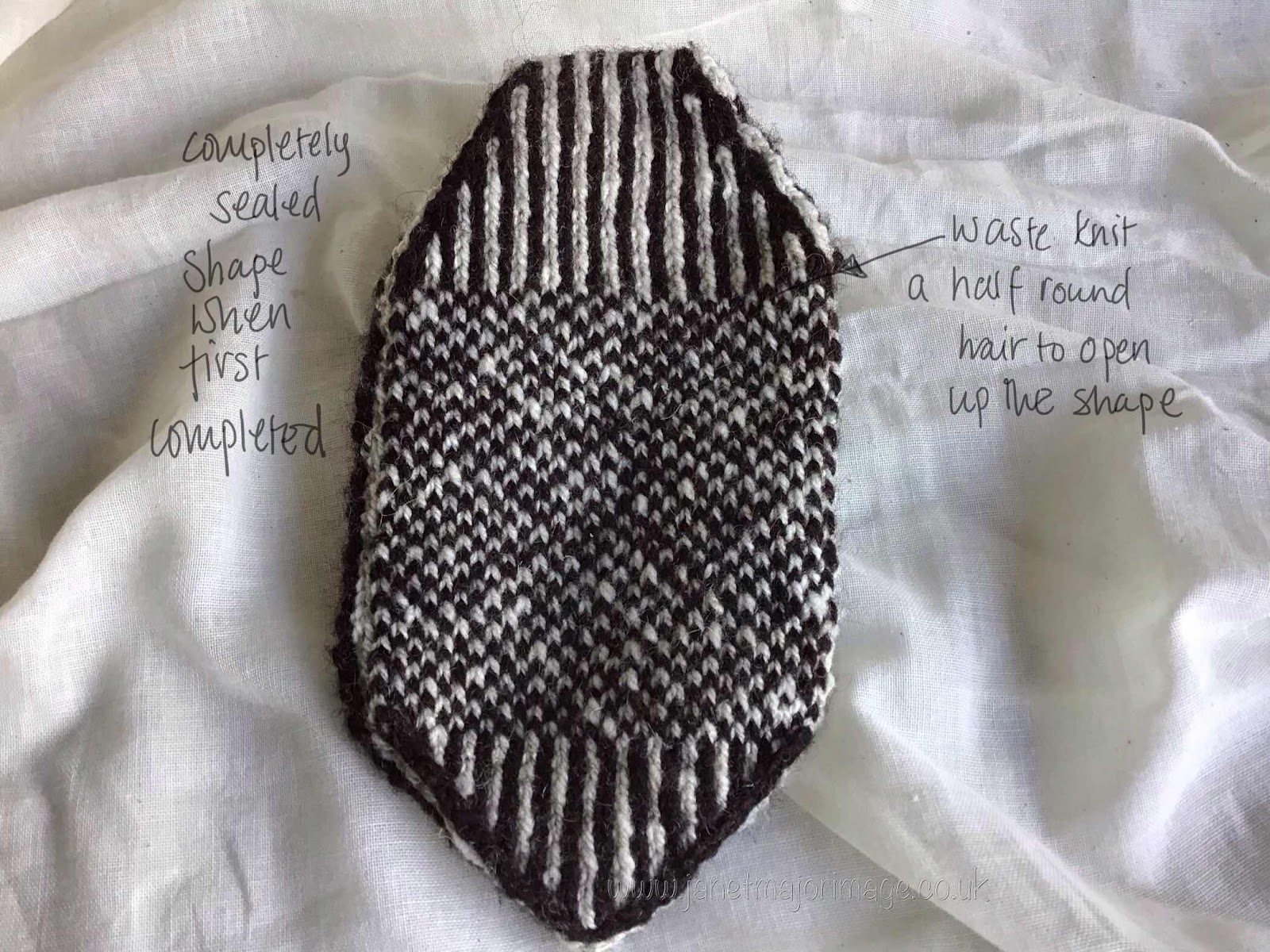
The construction was interesting, you knit a sealed envelope that looks like this.


Stitches are then picked up either side of a waste yarn, which is then removed. Short row knitting gives a triangular insert either side and then a cuff is knitted which could be as long as you wanted. I made mine following the instructions, as this is a trial knit and topped the cuff with Estonian Braid following instructions from my workshop with Hadewych van der Werf in Shetland Wool Week, last year (3)


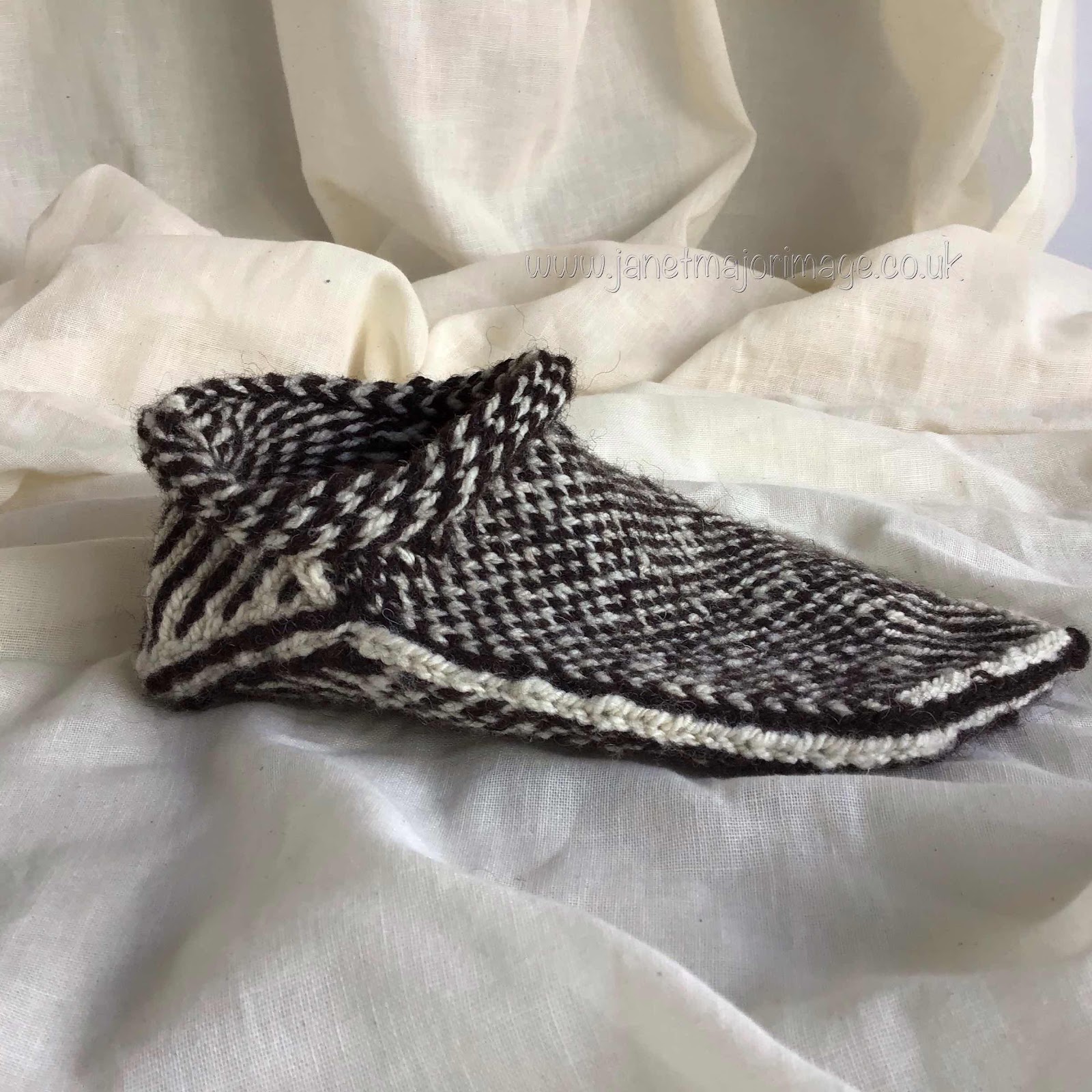
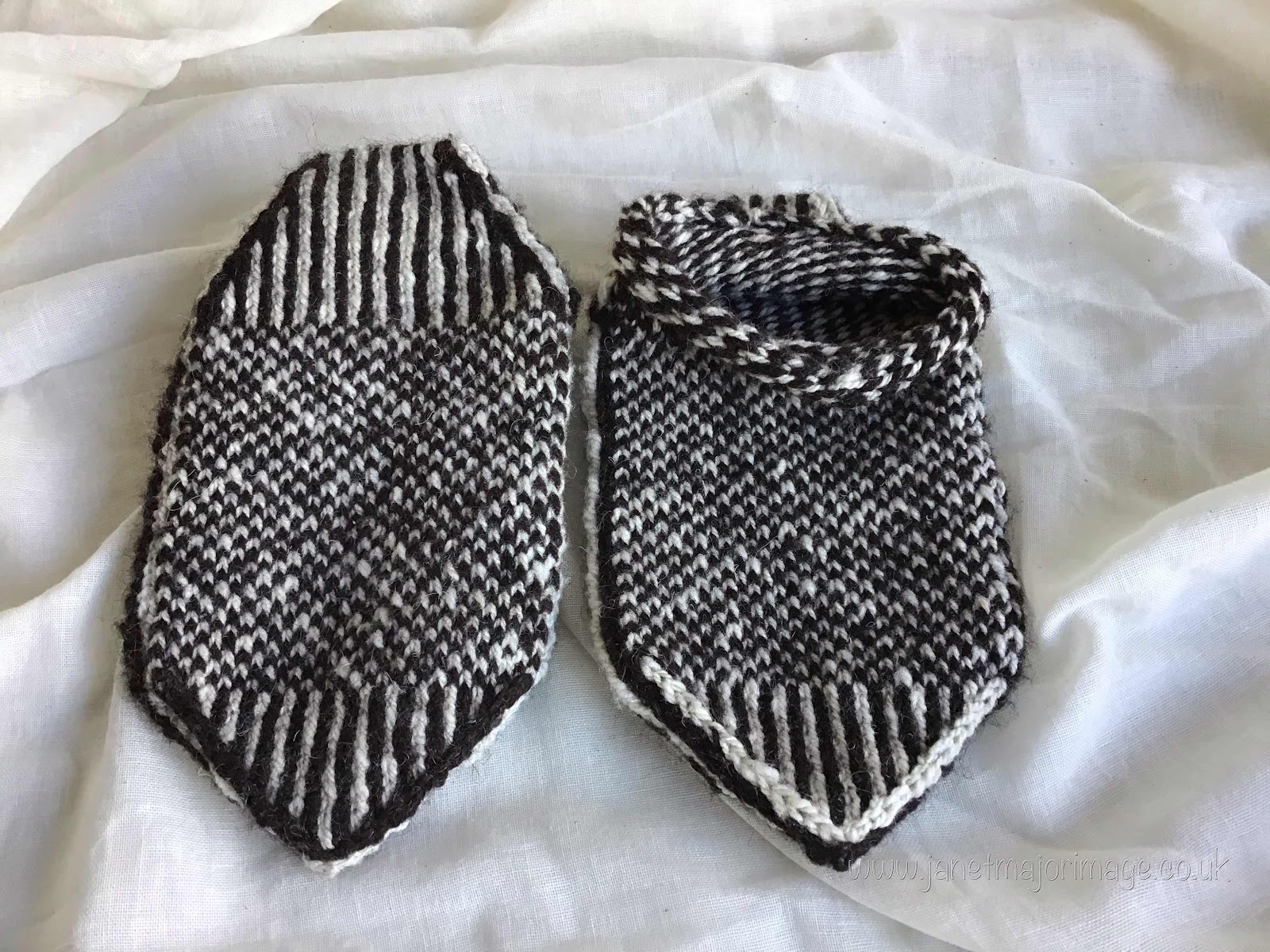
Completed slippers, showing sole and top side and you can see the twined knitting inside.(4)


I was very pleased with the result and the slippers fit well. I will use them as an alternative pair of ‘handbag’ slippers, ie the ones I take with me when visiting friends. 


I am looking forward to knitting another pair inspired by the book, which I have now bought for Kindle at a reasonable price. 


  1. The book is Knitting Scandinavian Slippers and Socks. The explanations are very thorough. I really like Laura Farson’s  style. 
  2. Denise runs the Hebridean Woolshed (www.hebrideanwoolshed.scot). There is a campsite next door which includes a great cafe. A wonderful  part of the world. 
  3. ‘Knitting across Borders’ workshop described on blog post of 23 Jan 2020
  4. The pattern gave a ribbed sole but I did it differently ! 

Monday, 5 June 2017

Medieval Spinning


I feel very lucky to have acquired 3 medieval lead whorls from the vicinity of my village so that I can see how they spin. I am very grateful to the member of the History Group for this opportunity. I have put two whorls in store and am trying with one of them. 
It looks like this : 


Weight is 31.4g total diameter is 2.1. cm, height 1 cm and the diameter of the hole is 8 mm. I first tried to spin by putting a bamboo chopstick through the centre- the elastic band is a purely a safety measure on my part!  The whorl appears to have been used like this:
 

I did manage to spin some local Norfolk Horn fleece and as you can see it is giving  a fine thread. However, the whorl does not spin for long and I couldn't believe it was used for lots of spinning like this. 

So having spent some time, looking at medieval photos and researching further it became obvious that I needed a different shaped spindle. It is likely that a distaff - in medieval times - was held in the left  hand and the spindle was twisted / flicked by the right hand - in a continuous movement. (1) I also obtained advice on the shape of the cop needed, double ended with a swollen centre as this will put less pressure on the whorl which is just pushed up the spindle. 

I knew just the man to help me with my search for a spindle - David Whatley- a very skilled artist and craftsman. So Bank Holiday Monday saw us at his studio in Diss(2)  while I explained what I thought I needed. David had sourced some local spindle wood and sized up the whorl, discussed size with me etc and set about making a spindle. It was fantastic to see the small branch turn into the beautiful spindle. I am in awe of the skill and understanding shown. 
j 

This is the whorl on the spindle and you can see that I have managed to spin quite finely. By increasing the diameter of the yarn produced slightly ( to about 2 diameters of sewing thread) I could get a good result. The pointed top end is a joy to use as very little hand movement is needed to get a rotation. ( I am using it as a more usual drop spindle with a half hitch at the moment). We have talked about a further refinement later for when I use it with the distaff. 

Having completed the spindle wood spindle, David made spindle two out of oak. This has a less fine grain than the spindle wood but came up a beautiful colour with oil. 


I was VERY pleased with these. 

So now I have local fleece, a local whorl and local wood made into spindles and know the story behind each. This is all very special. 

I am in the early stages of preparing some posts about spinning in the past in my local area, so keep watching! 

(2) David is a member of Designermakers 21 in Diss, a very special place housing 12 professional craftspeople. You can visit Thursday - Saturday 10- 5.
www.designermakers21.co.uk


Monday, 10 October 2016

Shetland Day Three- Alloa, bookmark knitting and cochineal


A lovely drive over the A66 into Cumbria with mist on the hills and then SCOTLAND. As Perth camping and caravan site was full ( can you believe it) we stayed at Alloa- just east of Sterling. 

It was National Spinning in Public day and I thought initially  I would spin at Southwaite services - seemed like I would just be entertaining myself  so decided to spin at the campsite when we got there. Lots of vehicles but nobody around.... so I determined to spin on the Ferry the next evening. 

Fortunately I am able to knit while being a passenger, helped these days by a Sat Nav, knowing where we were going and clear motorway signs thus having few interruptions. I was pleased with how the Norfolk Horn bookmark was progressing. Attempt Four was a success. I was knitting a Norwick Drummie Bee motif in the centre from the Unst  xx booklet that I saw launched in Wool Week 2014. It is a really super booklet ( giving knitting instructions translated from old Unst  knitwear ). Again I am linking Norfolk  and Shetland in a piece and I will love using the finished bookmark. 


I rarely read fiction, and have always preferred fact books! I have been reading around   Cochineal, particularly in relation to dyeing - historically - in Norfolk. I have come across a delightful book Cochineal - 'Amy Butler-Greenfield : A Perfect Red'.  It is a gripping book and well researched, so much in it that I did not know. Highly recommended if you are interested in Cochineal. 


Thursday, 13 August 2015

Day 11 Creativity – A balanced hand spun plyed yarn

I have been spinning my Norfolk Fleece yarn each evening that I can. I have arranged it that each skein is approx 25 g. I am hand combing the yarn and spinning it mainly worsted. I say 'mainly' worsted as there are always a few fibres that will try and not 'obey'. I am trying to curb my perfectionist tendencies but to little avail.
I am aiming for completely balanced skeins as I know these knit well.


For those of you who are not spinners this means that the twist you put in when spinning completely balances the twist you put in when putting two yarns together , ie plying but turning the spinning wheel the other way. Once the skein is made you hold it up and it should hang exactly straight, not twist up.

If it does twist up, horror of horrors, then by looking at the twist you can tell if you turned the wheel more when you spun the original yarns or if you were too vigorous in your wheel tuning when plying.

It is possible to correct it at this stage once you know this......

The aim is to avoid this by making a balanced skein the first time!

I am an obsessive 'counter' when I spin. I measure the length ( roughly) when I ply and count the times I treddle. If the skein is not balanced it usually means there was something too interesting on the TV or I got distracted in some other way!

** Getting the number for the counts per length is established by experience and a sample piece for each yarn type I am making. This is what makes spinning such a joy. Each yarn type is unique and is something that is planned for.

Sunday, 9 August 2015

Creativity Day 7 - Spinning Norfolk Horn fleece

Had a busy day decorating the Sewing Room 'to be' - more later.

Then a restful evening spinning the delightful Norfolk Horn fleece ( blog post May 31st 2015)
25g here. All hand combed as it is such a lovely fleece- hopefully more spinning tomorrow evening - although my mind is on more dyeing, so many tempting plants around just now.


If you look back at the previous discussion of Norfolk Horn fleece. Yes, the FSM method of washing the fleece was great, as I always find it is. And yes, I did get more Norfolk Horn Fleece as it is so fantastic to spin. I have now spun it singles lace thinness, just like Shetland to my surprise and thicker 'approx 4 ply / DK' . Will do more accurate measurements when it is washed - and possibly dyed!!!

Sunday, 31 May 2015

Norfolk Horn Fleece


Since our return to live in Norfolk I have been keen to acquire a Norfolk Horn Fleece. It is in the 'at risk' category of Rare Breeds. Through a chance comment on Facebook  and via a couple of helpful people I was told of a shepherd / farmer with some fleece.  I was delighted to find it actually came from the nearby village of Besthorpe where I was born. How amazing is that!
So last Sunday we met and I came home with one, it looked a super fleece and I was keen to spin it. The one I decided on weighed just over a couple of kilos.
However, my favourite method of 'washing' a fleece is the fermented suint method ( see entries here on 8 Feb 2014 and 1 Sept 2015 for my method. So on Tuesday I spread the fleece out - it's in great condition so I skirted the fleece and just removed about 500g then split the remainder  in half and half is now 'washing itself' . 

I took a few locks off the remainder - see the before and after washing photos. 
Before washing

After washing
I did wash these locks in hot water and washing up liquid. Then I have hand combed these and spun them  mainly worstead  about 'shop bought' 4 ply thickness. The skein is lovely, very smooth  and quite springy.

The tiny skein

Now looking forward to Tuesday to see how the FMS washed fleece is. I will then be able to spin more - think I might try Aran thickness next. Very tempted to see if I can get some more of this lovely fleece although I have a large fleece stock and promised myself to set about spinning more from my stash.